

DeFi vaults are siting on a multi-billion dollar structural flaw. And a quiet smart money wallet just revealed exactly how the market is positioning to fix it before the next blowup.
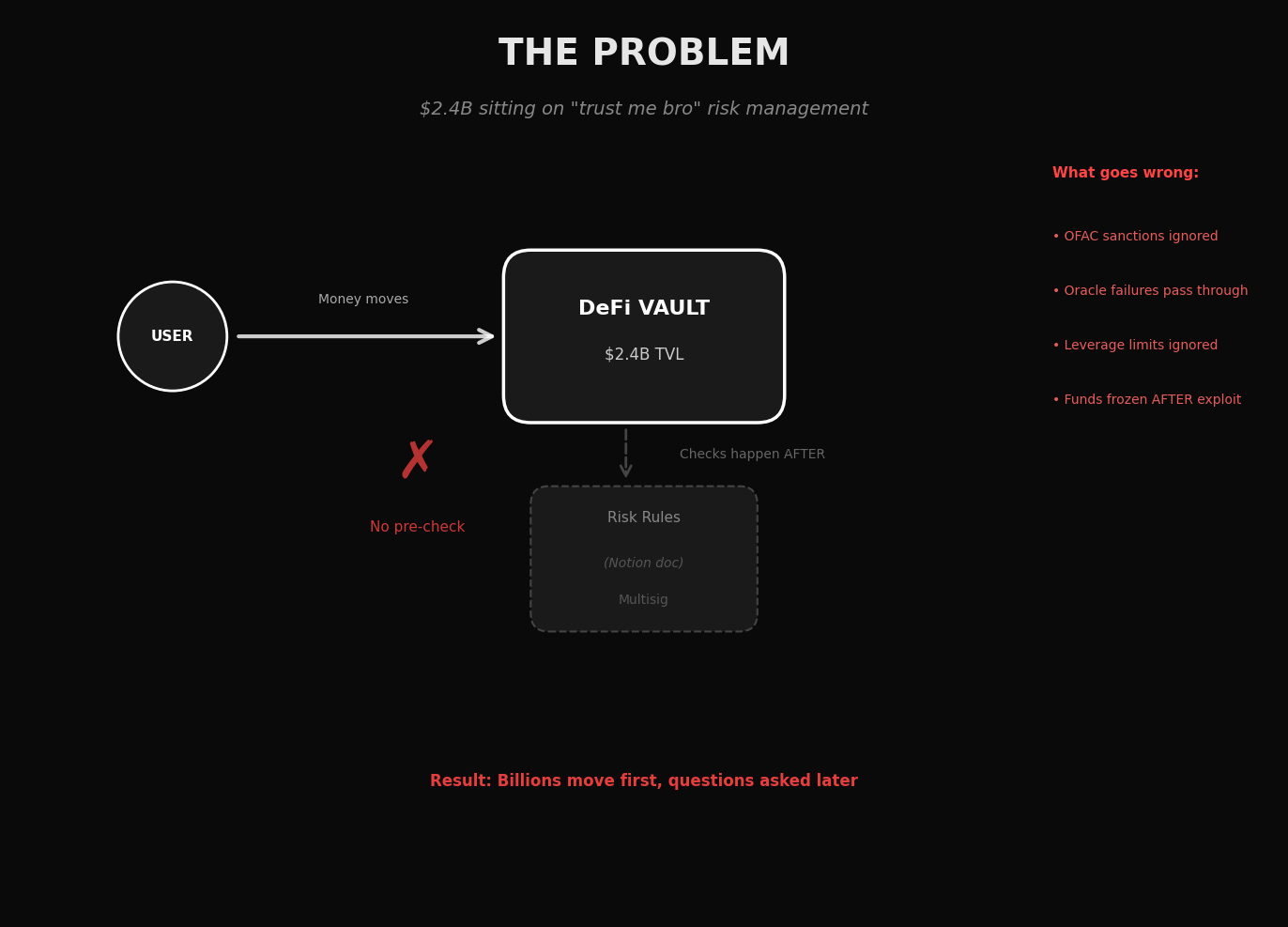
I noticed it while tracing a 0x3f8… intermediate wallet that's been quietly funneling ETH into freshly deployed vault contracts across Aave, Morpho, and Spark over $2.4B in combined vault TVL operating with risk parameters that liv in someone's Notion doc. That's the actual number. Billions in curated vault strategies, and the enforcement layer is basically "trust me bro" plus a multisig that might freeze funds after something already went wrong.
The pattern clicked when I cross-referenced the proxy upgrades on those vault contracts with testnet deployment activity on Sepolia. Samee upgrade pattern, same timing window, and all pointing toward one protocol that hasn't hit CT radar yet Newton.
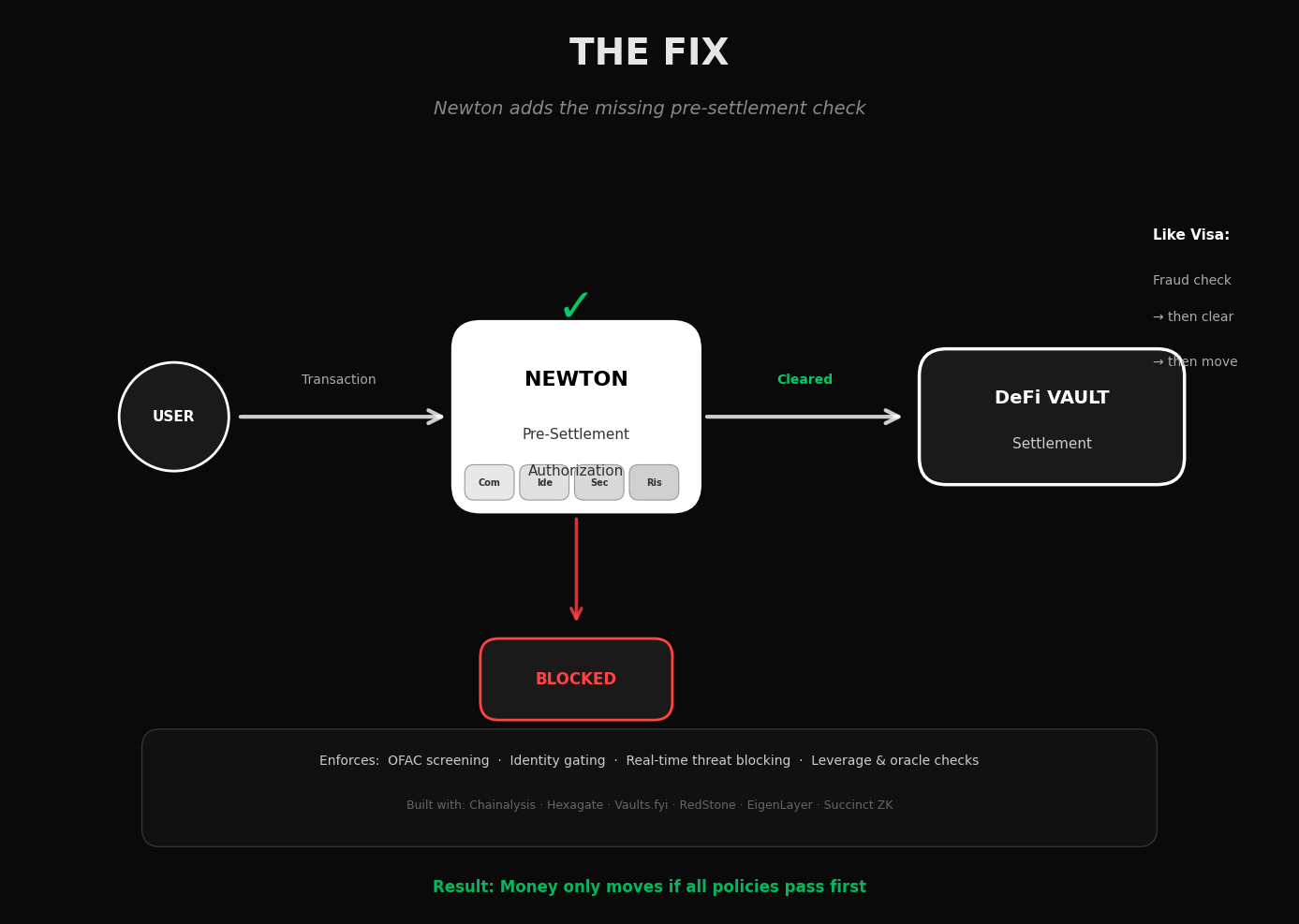
So what is @NewtonProtocol actually? It's an onchain authorization layer that checks every transaction against active policies BEFORE settlement. Not monitoring tools that tell you what happened. Not analytics dashboards that flag suspicious stuff post-mortem. Newton enforces rules before money moves. Think of it like Visa's authorization network when you swipe a card, fraud checks hapen in milliseconds, then the transaction either clears or gets denied, then money moves. DeFi never had that unified pre-settlement enforcement. Newton adds the check that was missing.
What Newton enforces across four domains Compliance: OFAC screening, sanctions checks. Identity: verification gating and eligibility rules. Security: real-time threat detection and blocking. Risk: counterparty exposure, APY deviation, leverage thresholds, oracle health checks
The policy stack isn't some generic template. Newton built it with Chainalysis and Hexagate for compliance/security, Vaults.fyi for vault-specific risk parameters, RedStone and Credora for credit and oracle infrastructure. Security is secured through EigenLayer restaking, Succinct ZK proving, Rhinestone modules, and Octane on execution. I verified the Newton deployer address against EigenLayer's AVS registration contracts ther's actual activity, not just partnership logos on a landing page.
The real edge most people are missing: Magic Labs is the core developer behind Newton. These are the same guys who invented embedded wallets 57 million wallets created, 200K+ developers, and they literally power Polymarket's entire wallet infrastructure. This isn't some anon team shipping untested contracts. Now that Magic Labs has deployed Newton's Vault SDK (shipped on June 23rd), the distribution pipes are already there.
Token mechanics $NEWT powers the marketplace. Mechanically, it functions as network gas and fees for compliance compute, plus operator staking security. The real question is long-term velocity does real enterprise transaction volume sustain it, or will it rely entirely on basline staking demand? Unlock schedules aren't public yet, and that matters for entry timing.
Newton starts with vaults as beachhead, then scales to RWAs, stablecoin issuers, and eventually AI agents needing programmable compliance. The "Internet of Policies" marketplace sounds buzzwordy but the composable enforcement layer concept is mechanically sound. Vaults either integrate Newton's pre-settlement checks or they keep running billions on spreadsheet risk management.
The honest concern: enforcement infra isn't sexy. In a market chasing memecoins and airdrop farming, Newton might struggle for retail mindshare even if institutional flow piles in. And some vault teams will resist adding a dependency layer that can reject transactions it clashes with permissionless composability ideals.
The mainnet beta and SDK officially shipped last week, and those Sepolia testnet patterns I was tracking actually translated into live integrations. Now the real test begins. If enterprise transaction volume sustains the network, Newton becomes one of the most meningful infra deployments of Q3. If it's just post-launch hype, it fades. I'm monitoring the early mainnet operator data before the rest of CT wakes up to it.
Are vault protocols actually ready to let a protocol say "no" before money moves, or is the space still too ideologicaly attached to settlement-first composability?