
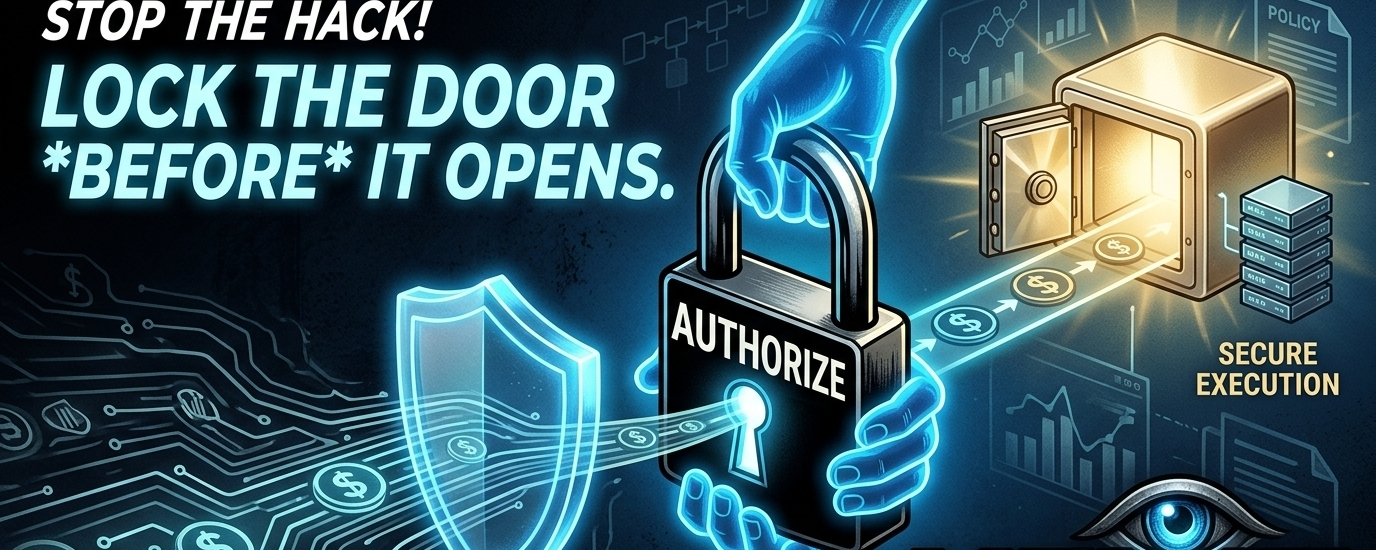
I remember sitting through endless post mortems where the team tried to fix a drain after the pipes had already burst and the house was underwater. It is the classic Web3 blunder where we celebrate the finality of a transaction while ignoring the absolute chaos that led to its execution. Watching a transaction settle is technically impressive but deciding whether it should settle in the first place is where the real power lives. That is why NEWT caught my eye lately.
Instead of waiting for risks to manifest after the funds have vanished into the ether $NEWT introduces an authorization layer that evaluates every single move before a line of code actually fires.
Think about how traditional finance handles a swipe at the register. A payment is not accepted simply because you have a balance. It goes through a silent gauntlet of authorization where banks check for fraud and compliance before the money ever leaves your account.
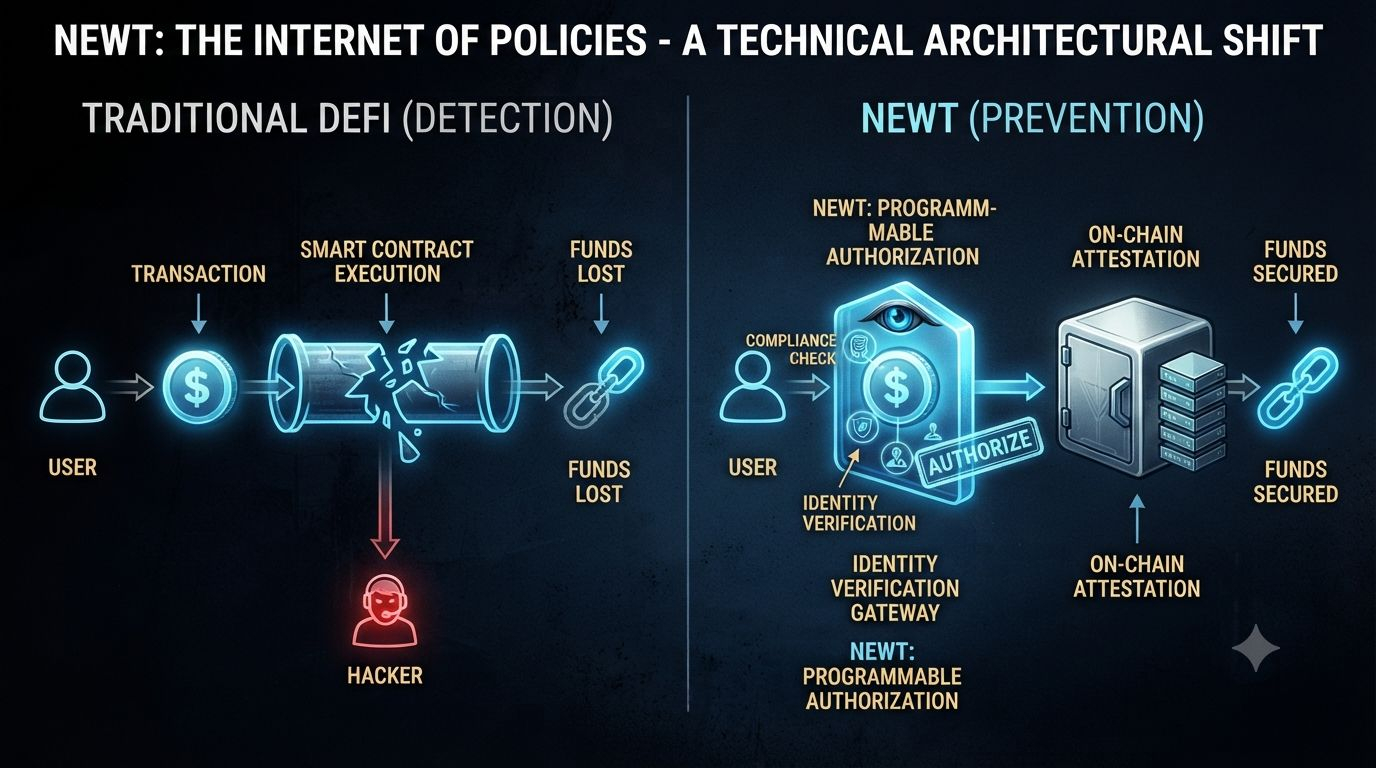
DeFi has been running around like a toddler with a loaded weapon because we have treated security as an afterthought or a cleanup crew. NEWT changes the game by turning policy from a dusty document sitting on a server somewhere into a hard rule enforced directly on the chain. This is the difference between catching a thief after they loot your store and simply locking the door before they arrive.
This architecture really hits home when you look at how the big institutional players are forced to operate. Right now their investment strategies are trapped in a weird purgatory where their operational rules exist on paper while the blockchain runs completely wild. Through the work done with the vault SDK those requirements become programmable and enforceable in real time.
We are talking about risk thresholds and sanction screening and counterparty checks that no longer live in disconnected silos. These are now coordinated policies that act as a gatekeeper for value.
It creates a playground that institutional money can actually inhabit without feeling like they are betting the entire fund on a prayer.
I am not saying this fixes everything because the latency of these checks is still a ghost in the machine that needs exorcising. However the pedigree here is hard to ignore given the infrastructure already powering millions of wallets. They are not trying to reinvent the wheel or replace the entire ecosystem with some vaporware promise.
They are acting like the connective tissue that links compliance and security into one unified network. We are moving from an era of wild west speculation to an era of controlled intent. If smart contracts were the engine that started this revolution then programmable authorization is the steering wheel that might actually keep us on the road.