Here’s a reflective piece in the style you described:
I keep watching the same places long after everyone else has moved on. Not because I expect something to happen, but because the absence of movement usually tells me more than the movement itself. I've learned to pay attention to what remains unchanged after the headlines fade. Most of the market spends its time reacting. I spend more of mine noticing what never seems to require a reaction at all.
I've seen enough cycles to recognize the familiar order. The language arrives first. Then the diagrams. Then the conviction. Utility is usually the last thing to appear, if it appears at all.
Newton Protocol sits somewhere inside that pattern without fitting into it comfortably.
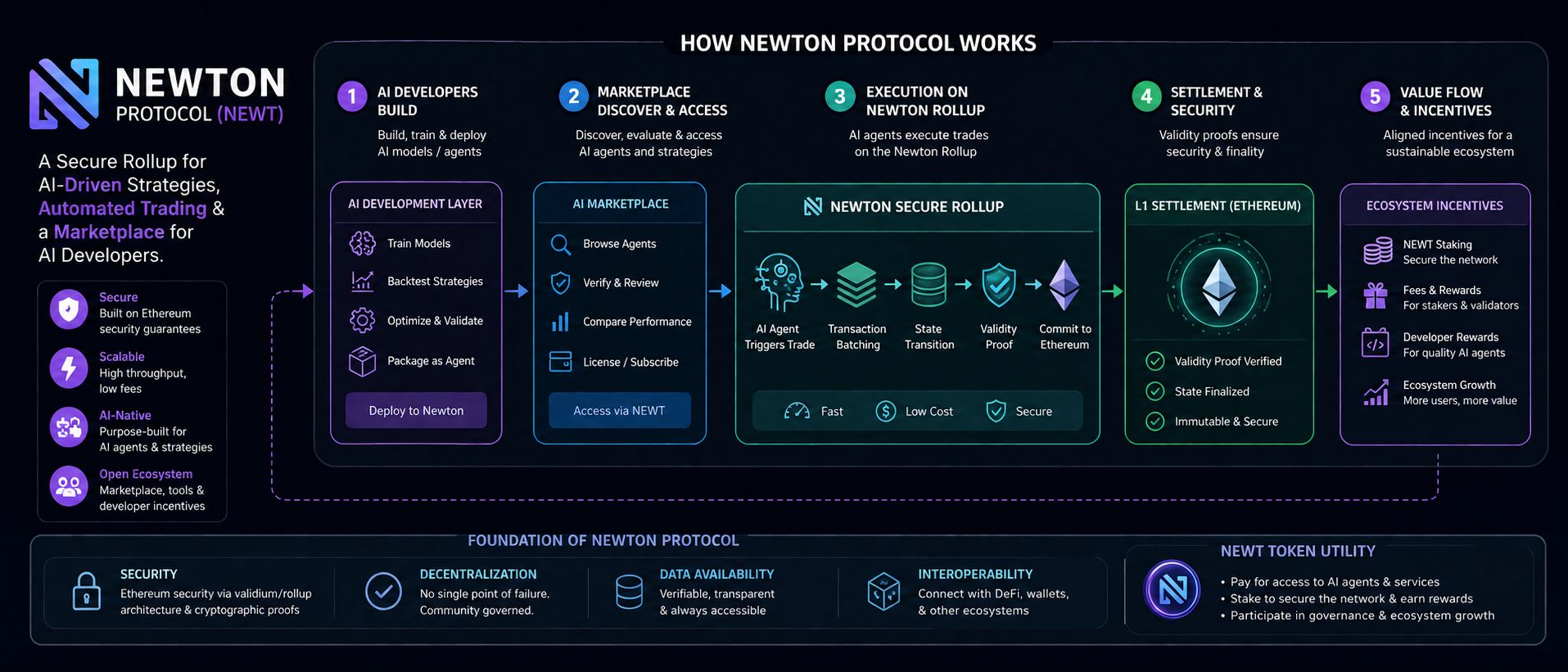
A secure rollup for AI-driven strategies sounds inevitable when it's written down. Automated execution, shared infrastructure, a marketplace where models can be discovered instead of rebuilt. None of it feels implausible. None of it feels immediately necessary either.
That difference matters more than people admit.
Markets rarely wait for necessity. They price the outline before the object exists. They respond to architecture before anyone has developed a habit of living inside it. By the time the infrastructure is ready, attention has often found something else to anticipate.
I keep wondering who actually notices the absence this protocol is trying to fill.
Most traders still rely on familiar routines. Most developers still solve problems close to where they already work. Automation exists, but much of it remains fragmented, private, difficult to trust outside the people who built it. A shared execution layer sounds like an obvious improvement until I look at how people behave. They don't usually adopt better systems because they're better. They adopt them when continuing without them becomes more expensive.
We're not always there.
The marketplace is interesting for reasons that have little to do with technology. It assumes people will eventually value reputation for AI agents the way they value liquidity or security today. That feels reasonable. It also feels early. Trust is still attached to individuals, communities, and recognizable names. Packaging intelligence into something transferable doesn't automatically make people comfortable using it.
There's another layer beneath that. Infrastructure often succeeds by disappearing. The better it works, the less anyone talks about it. Yet crypto has spent years rewarding the opposite. Visibility attracts capital long before invisibility earns dependence. Those incentives don't naturally align.
So the project exists in an uncomfortable space.
Too technical for people looking for quick narratives. Too early for users who don't yet experience the problem every day. Too visible to be ignored, not yet invisible enough to become indispensable.
I don't read that as failure.
I've watched enough infrastructure projects spend years looking unnecessary before quietly becoming expected. I've also watched others carry flawless designs into markets that never developed the habits required to support them. The difference was rarely obvious at the beginning.
What keeps my attention isn't whether Newton Protocol works as described. Most protocols eventually function well enough. What interests me is whether behavior changes around it without anyone deciding that it should.
That part can't be engineered.
People often confuse possibility with demand. Markets encourage that confusion because possibility trades well. Demand moves more slowly. It forms through repetition, inconvenience, and small adjustments that don't look important until they're everywhere.
I don't know which side of that line this belongs on yet.
For now, I keep watching the parts that don't move. The places where adoption hesitates. The silence between technical progress and ordinary use. Sometimes that's where the signal begins.
Sometimes it's where it stays.