
@NewtonProtocol
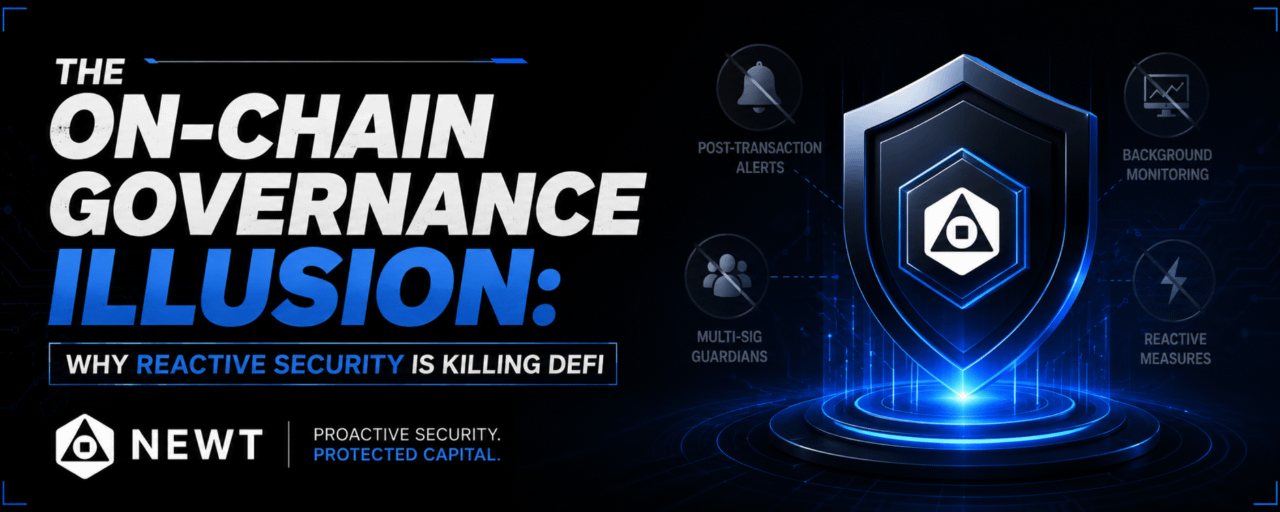
Most capital allocators look at a decentralized vault managing millions in Total Value Locked (TVL) and assume its historical background monitoring equals actual safety.
We are conditioned to think that continuous background tracking and post-transaction alerts are enough to protect capital. We assume that if something goes wrong, a multi-sig guardian or an automated circuit breaker will catch it in time.
But when a smart contract exploit happens, or market volatility spikes instantly, those reactive measures are completely useless. The capital is drained before the off-chain alert even hits the curator's dashboard. There is a fundamental, dangerous gap between on-chain execution speed and off-chain risk governance.
This systemic vulnerability is exactly why the rollout of VaultKit on the Newton Mainnet Beta shifts the entire paradigm.
Developed by the infrastructure pioneers at Magic Labs, @NewtonProtocol doesn’t try to fix security after the fact. It implements proactive, pre-transaction authorization. VaultKit allows vault curators to encode their risk mandates directly into enforceable on-chain policies.
Every single transaction is checked against these rules before it is allowed to settle. If an automated script tries to interact with a blacklisted address, violate collateral requirements, or breach a localized spending limit, the Newton engine physically blocks it at the mempool level. It simultaneously generates a cryptographic, timestamped attestation explaining the failure to capital allocators.
To make these automated decisions irrefutable, the protocol integrates RedStone’s manipulation-resistant price feeds and Credora’s real-time credit risk intelligence. The policy engine isn't guessing; it operates on verified ground truth.
Security in decentralized finance cannot be an afterthought. It cannot rely on humans reacting to an alert at 3 AM. If you want institutional-grade assurance, risk management must be hardcoded into the execution layer itself.
The market is currently undergoing a massive structural shift toward intent-based, automated finance. Projects that fail to implement immutable safety rails will simply be phased out by institutional allocators who demand absolute compliance. By establishing an open registry for automated policies, $NEWT isn't just launching another token; it's building the invisible risk infrastructure for the next generation of on-chain capital.
