
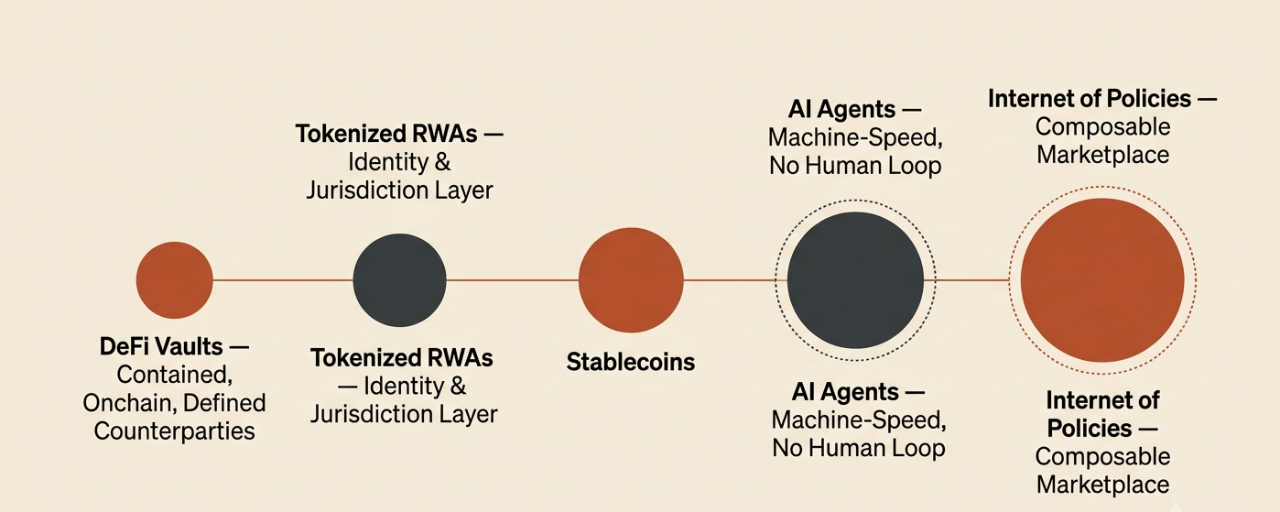
Start with DeFi vaults expand to tokenized realworld assets then stablecoins then AI agents, then something called an Internet of Policies marketplace. Most projects list a roadmap like this and nobody reads it carefully. Worth reading this one carefully.
The vault first choice isnt random. Vaults are a contained problem. Assets are already onchain. Counterparties are already defined. Policy rules leverage caps, oracle health checks, counterparty exposure limits are documentable and finite. It's the easiest version of the problem Newton is trying to solve, because the variables are manageable and institutional participants already understand what compliance looks like here.
RWAs come second. Harder than vaults. Investor eligibility is more complex, transfer restrictions are jurisdiction specific and underlying assets live offchain even if the tokens don't. Newton's identity layer verifiable credentials, selective disclosure, KYC without data exposure matters more here than in pure DeFi contexts. The credential portability piece is notable: a KYC credential verified once can be represented to multiple platforms without repeating full verification. Real cost implications for institutions running onchain RWA products.
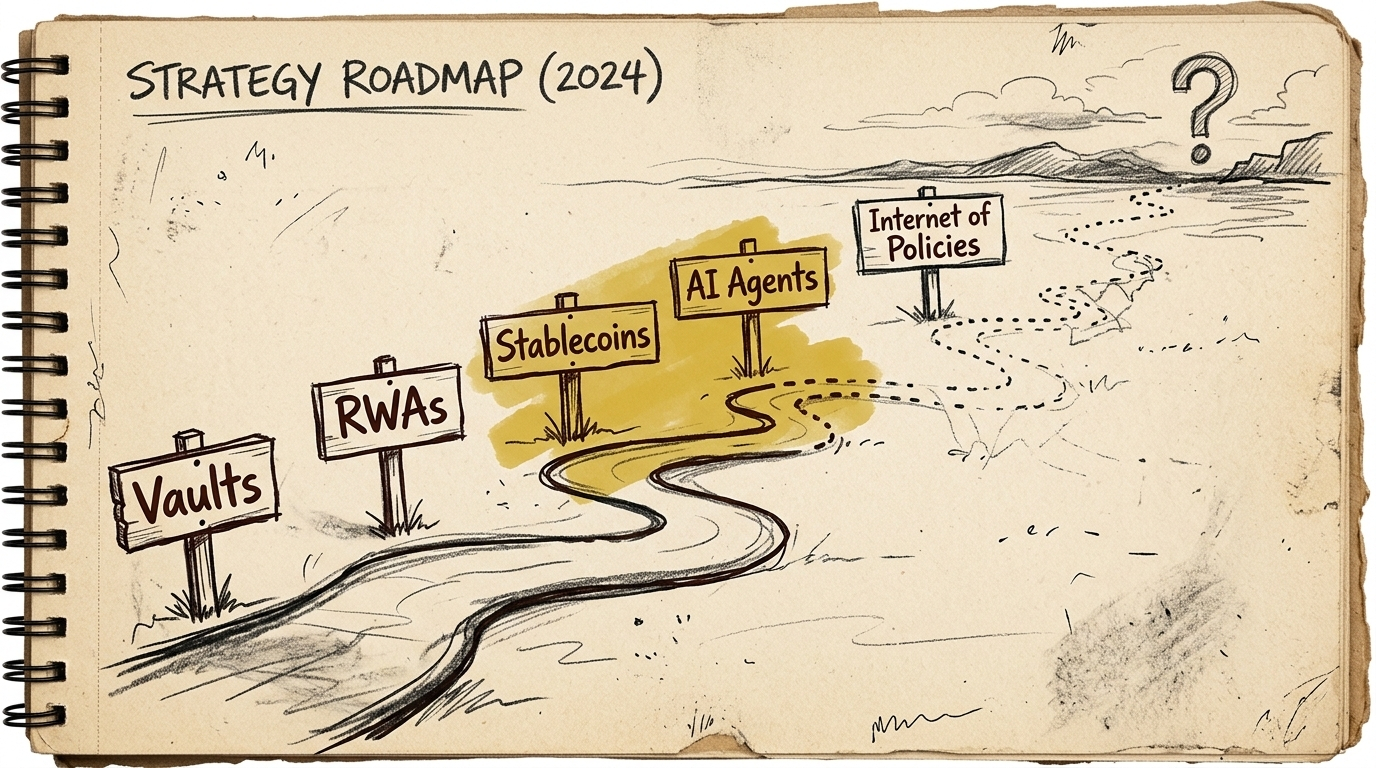
AI agents are third, and this is where the roadmap gets harder to evaluate. Agents initiate transactions at machine speed. No human review loop. Authorization guardrails have to work programmatically or they don't work at all. Newton handles this the same way it handles human-initiated transactions agent submits an intent, operators evaluate it, attestation comes back, agent can't execute without one. That part is straightforward. What isn't clear is how the policy gets defined. A human sets the agent's intent and constraints. But defining a complete policy for an agent operating across multiple protocols and market conditions is harder than the whitepaper makes it sound.
The Internet of Policies framing a marketplace of composable policy modules is the longest horizon piece. Policy authors publish reusable modules, applications compose them, Newton becomes infrastructure any compliance workflow can plug into. Each component is real content-addressed storage on IPFS, composable Rego modules, pluggable data providers. Whether it assembles into a functioning marketplace or just a technical capability nobody adopts at scale is a different question.
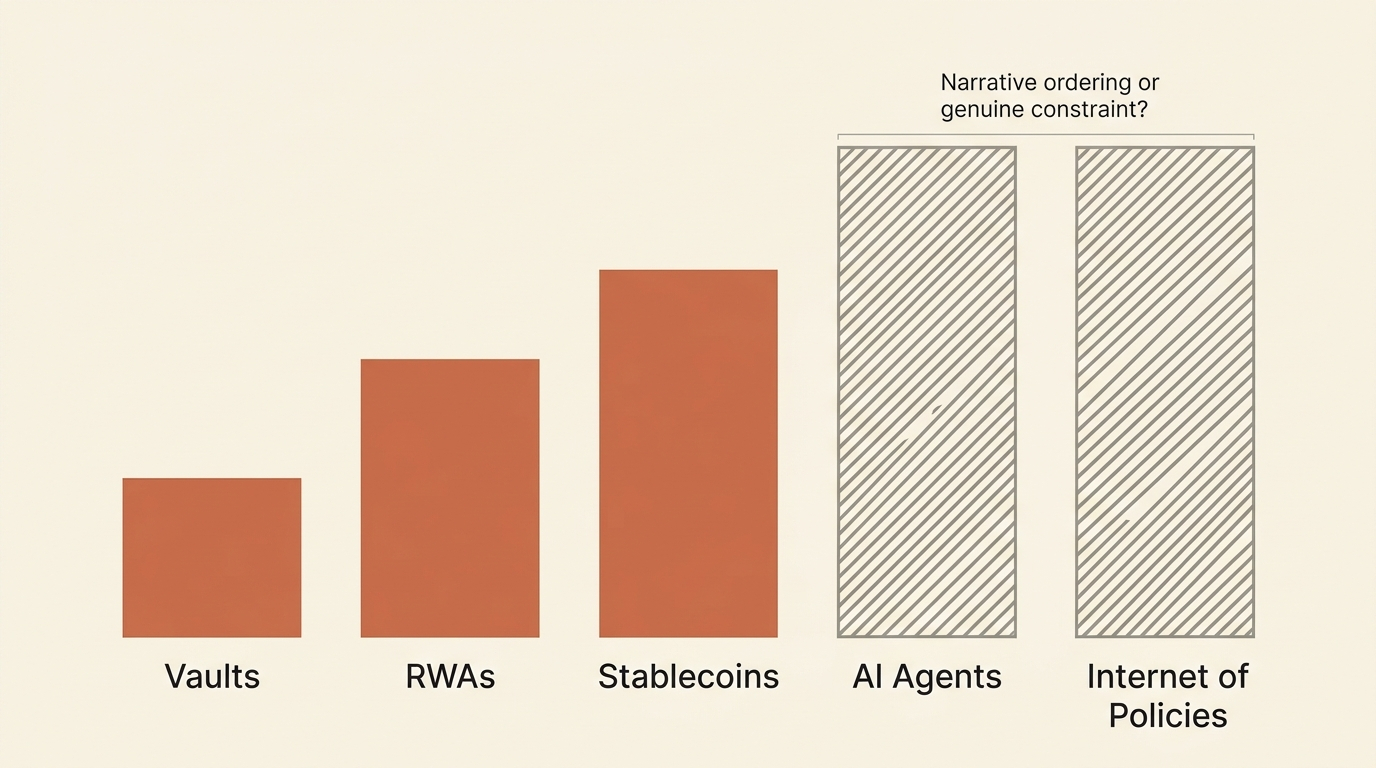
What I haven't worked out is whether the sequencing reflects genuine technical constraints on what Newton can do today, or just a narrative ordering designed to make the scope sound reasonable.