
I've been watching this space long enough that my first reaction to any new protocol is a sigh. Not a dramatic one just the quiet exhalation of someone who's seen too many white papers and too many promises dissolve into nothing. You learn to recognize the patterns. The grandiose language, the carefully constructed origin stories, the way everything sounds inevitable until it isn't.
So when Newton Protocol crossed my radar, I did what I always do. I scrolled past the hype, ignored the token ticker, and tried to figure out what they were actually building. The answer, as far as I can tell, is something that might actually matter. And that's precisely what makes me uncomfortable.
The problem they're trying to solve is one I've thought about more than I'd like to admit. I remember the early days of DeFi the wild west feeling, the thrill of moving money without asking permission. But I also remember watching friends get rugged, watching protocols drain overnight, watching the same mistakes repeat because nobody had thought to build guardrails. The crypto ethos was always about freedom, but freedom without structure is just chaos wearing a different mask.
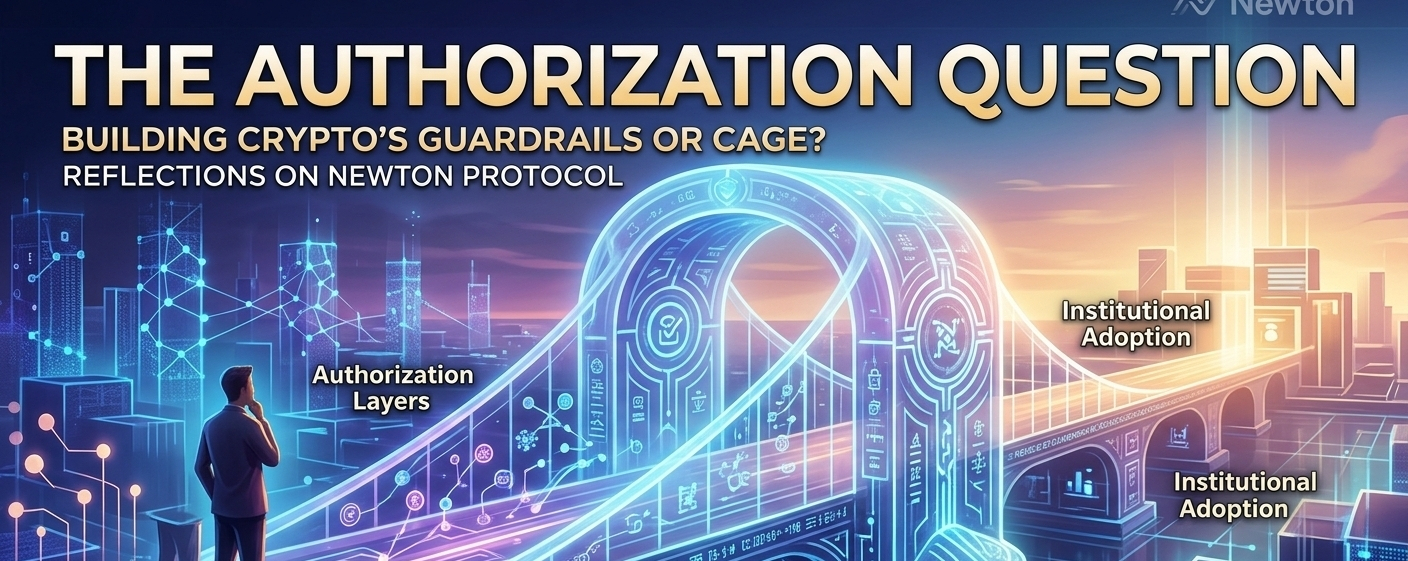
Newton Protocol seems to understand this. Their pitch is that they're building an "authorization layer" a way to check whether a transaction should happen before it actually does. It sounds mundane until you realize that in all these years, nobody really built that. We built the highways, the cars, the gas stations, and then we just let anyone drive however they wanted. No rules of the road. No traffic lights.
The technology they're using feels serious. Something called Rego, borrowed from traditional finance, where it's been used for years. Trusted Execution Environments that keep sensitive data encrypted even while it's being processed. Proofs that can be verified by anyone, because in crypto, verification is everything. I won't pretend to understand all the technical details I've learned to be suspicious of people who speak too confidently about things that are genuinely complex but the pieces seem to fit together in a way that feels deliberate rather than opportunistic.
What gives me pause is the timing. Are we ready for this? Is crypto ready for guardrails? Every time I hear someone talk about institutional adoption, I feel a twinge of something between hope and dread. Institutions bring money, but they also bring expectations. Compliance. Rules. The very things we supposedly came here to escape.
And yet, the numbers are hard to ignore. Stablecoins with hundreds of millions of holders. Tokenized assets moving billions of dollars. DeFi vaults that hold more value than most countries' GDP. At some point, you have to ask whether the infrastructure supporting all of this is adequate, or whether we've been getting by on luck and good intentions.
Newton Protocol has partnerships that sound impressive Magic Labs' 50 million wallets, Polymarket integration, RedStone data oracles. But I've seen impressive partnerships before. I've seen integration announcements that led nowhere, collaborations that fizzled, roadmaps that got quietly abandoned when the market turned bearish. The crypto industry is great at announcing things and terrible at following through. The token launch followed the familiar trajectory exchange listings, HODLer airdrops, the standard playbook. It's hard not to notice the pattern.
What keeps me watching, though, is the underlying insight. The people behind this seem to understand that crypto's next phase can't just be more of the same. They're not selling liberation; they're selling infrastructure. Not revolution, but evolution. It's a harder sell, maybe, but also a more honest one. They're betting that the future of crypto is institutional, that stablecoins and tokenized assets need guardrails to scale, and that you can build cypherpunk infrastructure for an institutional era without betraying the original vision. I'm not sure they're right, but I admire the conviction.
I still don't know if I believe. Part of me wants to believe wants to think that we're finally building something that can bridge the gap between crypto's ideals and the real world's demands. That maybe authorization layers aren't cages but frameworks, ways to make the space safer without making it smaller. Another part, the part that's been burned before, whispers that maybe we're building the cage ourselves, one governance layer at a time. That the institutional adoption we're chasing will fundamentally change what crypto is, and not necessarily for the better.
The future isn't here yet. Newton Protocol might be building something that belongs there, but whether the present is ready to accept it—whether we're ready to accept it is still an open question. I think about this sometimes, late at night, when the noise of the market fades and I'm left with nothing but the ideas themselves. There's something compelling about what they're trying to do, something that feels less like a cash grab and more like a genuine attempt to solve a real problem.
But I've thought that before. About other projects. About other promises. And most of them are gone now, their websites parked, their communities scattered, their tokens worth less than the paper they were never printed on. So I'm not closing the book on this one. I'm just... reading slowly. Turning the pages with care. Waiting to see whether the story holds together, or whether it's just another chapter in a book I've already read too many times.
Maybe Newton Protocol is different. Maybe this time, the infrastructure actually arrives before the need becomes desperate. Maybe the authorization layer becomes as fundamental as the blockchain itself, something we can't imagine living without. Or maybe it's another beautiful vision that the market wasn't quite ready for, another project ahead of its time, another lesson about the gap between what we build and what we actually use.
I don't know yet. And for now, that's the only honest answer I have.
