
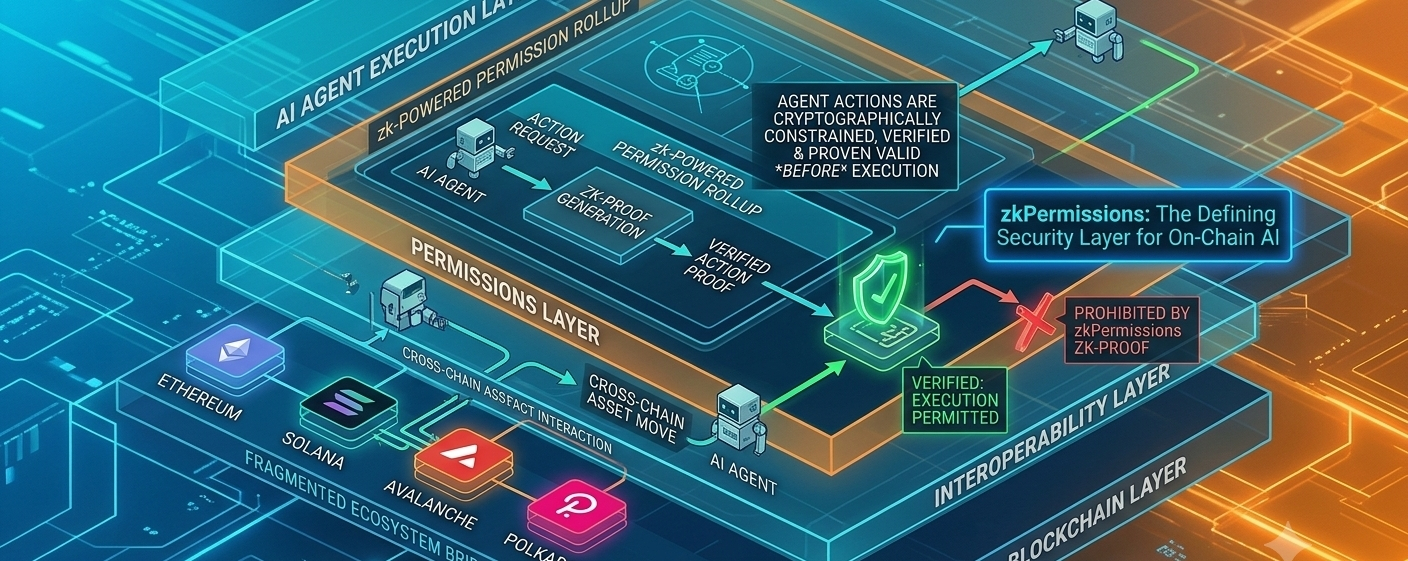
After spending quite a bit of time studying where autonomous agents and blockchain infrastructure are quietly converging, I keep coming back to one idea that feels far more important than most people currently realize: permissioning may become the defining security layer for AI operating across chains, and systems like zkPermissions are pointing toward what that future could actually look like.
At first glance, zkPermissions feels like another technical experiment built around the growing excitement surrounding Zero-Knowledge Rollups infrastructure. But the more time I’ve spent digging into how cross-chain AI agents will eventually behave in production environments, the more I’ve started seeing this architecture less as an innovation demo and more as foundational infrastructure quietly solving a problem the industry has not fully appreciated yet.
The uncomfortable reality is that autonomous AI agents interacting across multiple chains introduce a security surface far larger than most current systems were designed for. It is one thing for humans to sign transactions manually. It is something entirely different when machine agents begin executing decisions independently, moving assets, interacting with contracts, and coordinating actions across fragmented ecosystems at machine speed.
This is where a zk-powered permission rollup becomes genuinely interesting.
Instead of trusting agents with broad execution authority, zkPermissions introduces a model where actions can be cryptographically constrained, verified, and proven valid before execution itself becomes possible. That feels subtle, but I suspect it represents a major architectural shift.
The longer I study this space, the clearer one thing becomes: the future of autonomous systems on-chain will depend less on making AI smarter, and far more on building quiet, resilient infrastructure layers that make powerful systems safe enough to trust for the long run.
#newt $NEWT @NewtonProtocol $SOL

