
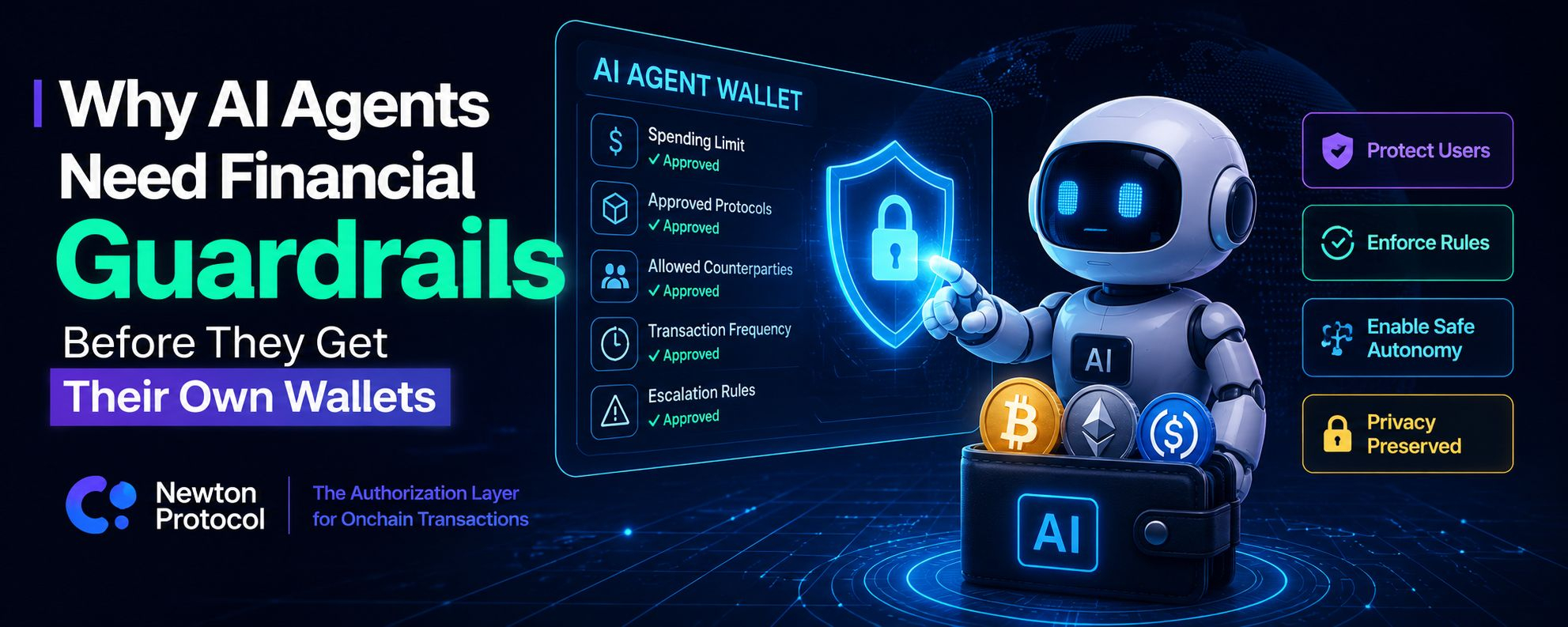
The crypto industry is becoming increasingly excited about AI agents. @NewtonProtocol
We imagine AI trading for us, managing treasuries, moving liquidity, paying subscriptions, and even running entire businesses without human intervention.
But there is one question I don't see enough people asking:
What happens when an AI makes a bad financial decision?
Traditional finance assumes humans are responsible for every transaction.
AI changes that assumption completely.
An autonomous agent can operate at machine speed, execute hundreds of transactions in seconds, and interact with protocols across multiple chains without ever asking for permission again.
That creates an entirely new risk model.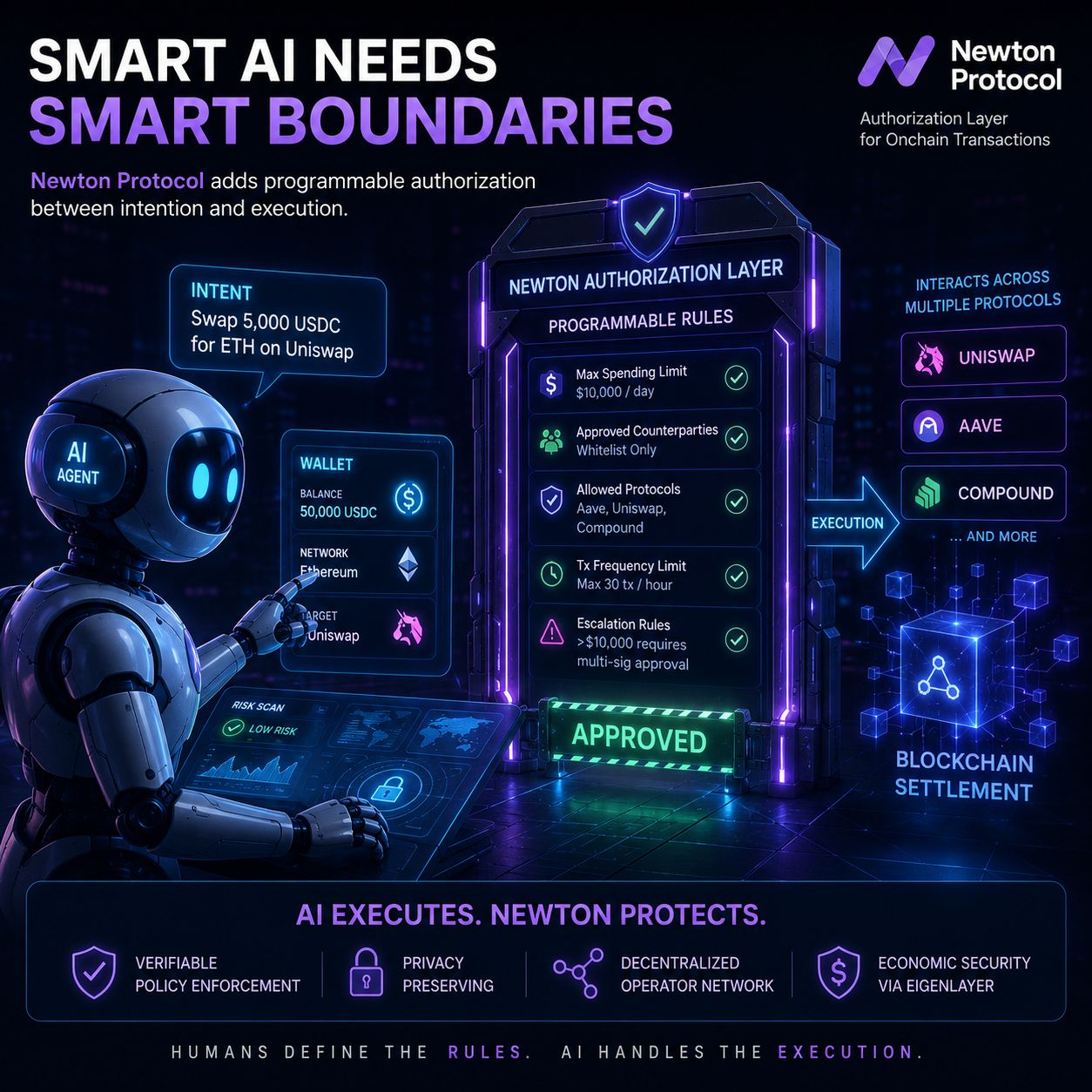
An AI wallet could accidentally interact with a malicious contract.
It could exceed spending limits.
It could send funds into restricted jurisdictions.
It could even make decisions that technically follow instructions while completely violating the original intent.
The more I studied Newton Protocol, the more I felt that crypto doesn't simply need smarter AI.
It needs smarter boundaries for AI.
Newton introduces programmable authorization rules that sit between intention and execution.
Instead of asking humans to manually approve every action, users define the rules once:
• Maximum spending limits
• Approved counterparties
• Allowed protocols
• Transaction frequency restrictions
• Escalation rules for large transfers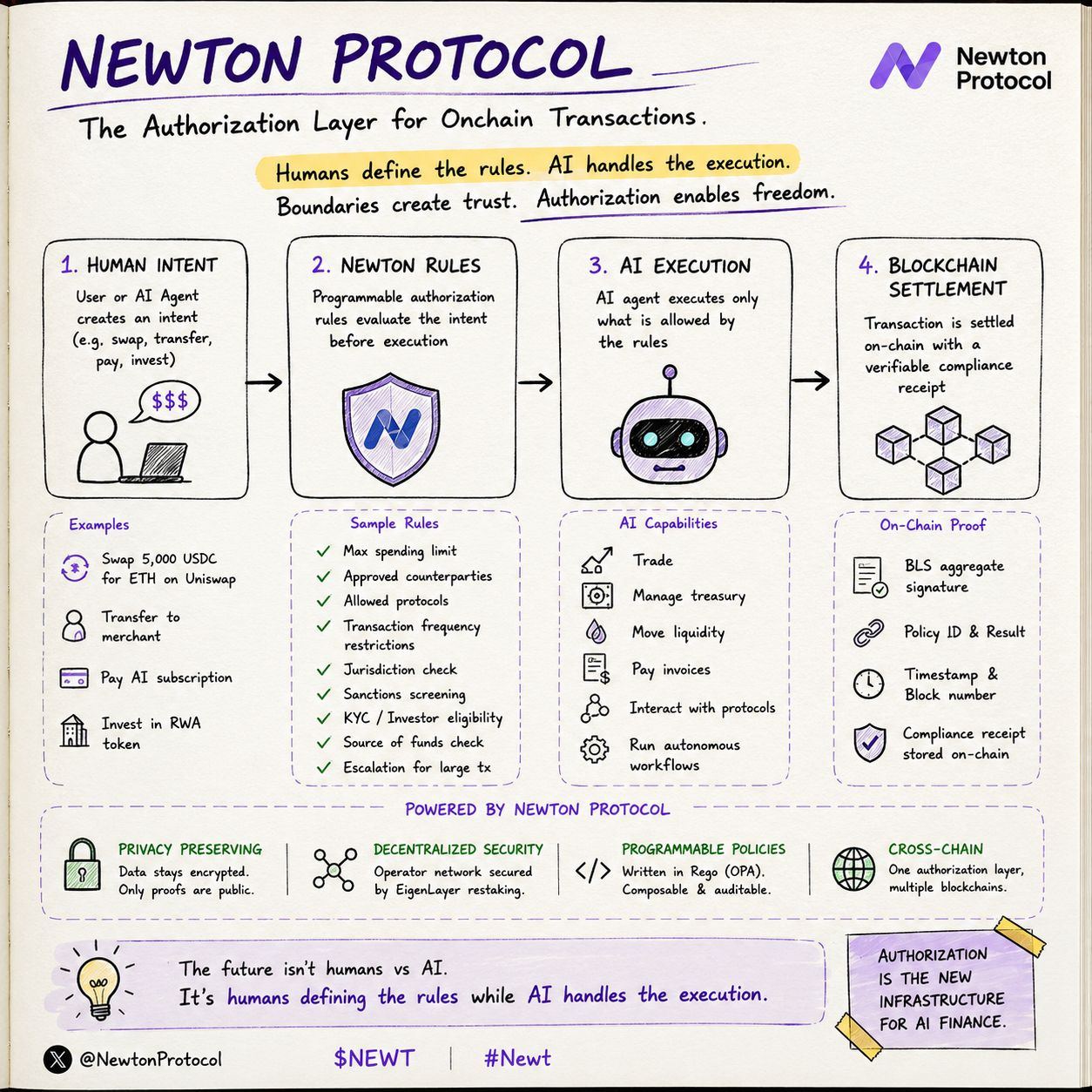
The AI remains autonomous, but it operates inside predefined guardrails.
That idea feels important.
Because the future of finance probably isn't humans competing against AI.
It's humans defining the rules while AI handles the execution.
And if AI becomes the new user of blockchain networks, authorization may become just as important as intelligence itself.