
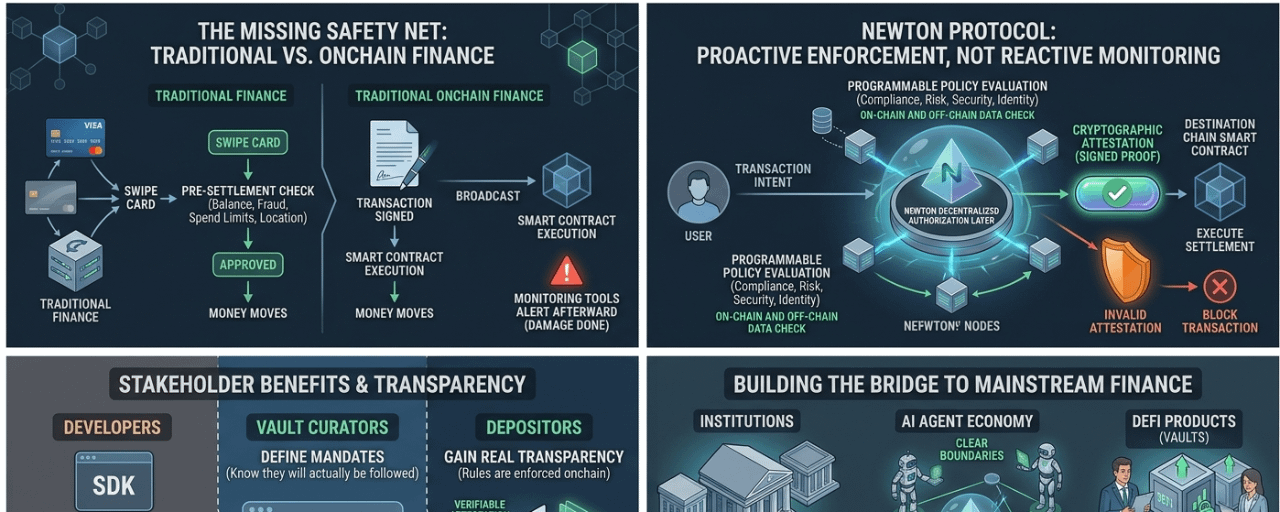
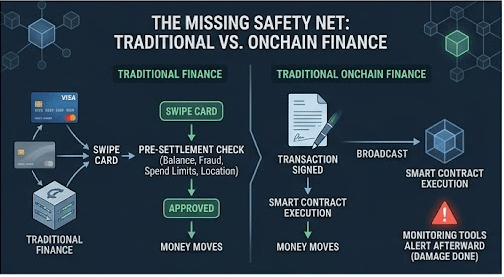
I’ve always thought it was strange how traditional finance works. When you swipe a credit card, the network doesn’t just let the money move and figure out later if it was okay. It checks everything first, balance, fraud signals, spending limits, location and only then approves the transaction. The decision happens before the money leaves your account.
Onchain systems have never had that kind of safety net.
Smart contracts execute whatever reaches them. Once a transaction is signed and broadcast, it’s basically going to happen. Monitoring tools can alert you afterward, but the damage is already done. Newton Protocol changes that fundamental sequence.
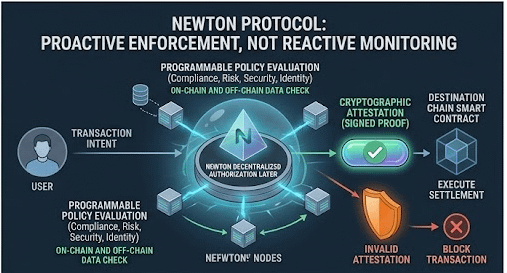
Newton acts as a decentralized authorization layer. Before any transaction settles, it evaluates the action against programmable policies. The system verifies compliance rules, risk parameters, security conditions, and identity requirements using both on chain and off chain data. A network of operators performs assessments and issues cryptographic attestations, signed proofs confirming that the transaction is authorized to proceed. Only then can the transaction go forward; if an attestation is missing or invalid, the transaction is blocked.
This is proactive enforcement, not reactive monitoring.
From a user’s perspective, the difference is huge. Developers can add policy checks through the SDK without rebuilding their entire application. Vault curators can define mandates and know they will actually be followed. Depositors gain real transparency because the rules are enforced onchain and the attestations are verifiable. For AI agents and automated strategies, it means they can operate with clear boundaries instead of blind trust.
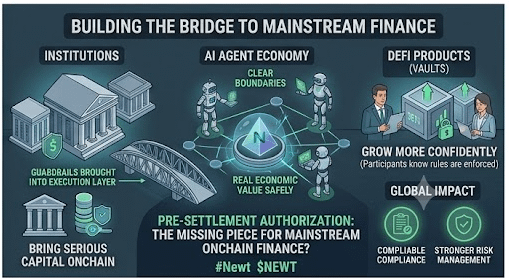
I’ve been thinking about this a lot. @NewtonProtocol doesn’t make blockchain less permissionless. It makes it more usable at scale. Institutions have been hesitant to bring serious capital onchain because the guardrails were missing or lived offchain where they could be bypassed. Newton brings those guardrails into the execution layer itself.
The impact goes beyond just security. Compliance becomes composable and auditable. Risk management gets stronger because bad actions are stopped before they execute. DeFi products like vaults can grow more confidently when participants know the rules are enforced. AI agents gain a credible path to handling real economic value safely.
In my view, this is one of the most important pieces of infrastructure the industry has built. We’ve spent years improving oracles, governance, and monitoring. Newton addresses the more fundamental problem: giving onchain systems the ability to make decisions before money moves, just like the traditional financial system has done for decades.
The analogy to Visa’s authorization network isn’t just nice marketing. It describes exactly what was missing. Markets have priced stories, tokens, and narratives for a long time. With Newton, they can start to price and govern programmable rules and intelligence with the same level of confidence.
The onchain economy no longer has to operate blind. With verifiable pre settlement checks, it can finally see and decide before the money moves.
This shift feels like the bridge we needed to bring the next wave of capital and innovation onchain. The technology is live. The real question is how quickly the ecosystem will embrace it.
What do you think? Is pre settlement authorization the missing piece for mainstream onchain finance?
