

A few weeks back, I was scrolling through announcements from different blockchain projects new partnerships, AI stuff, tokenization plays and something random hit me. Everyone’s hyped about speed and fancy features, but I kept wondering: once these systems start running on their own, who the hell actually decides what they’re allowed to do? It’s the kind of question that doesn’t get much airtime when prices are moving, but it feels pretty damn important.
That question stayed with me so I started reading about Newton Protocol. Somewhere along the way. I realized it was not the token that had my attention it was the infrastructure behind it.
I keep hearing the same topics come up: RWAs, AI, stablecoins and institutions moving into crypto. But I rarely hear anyone talk about the infrastructure that has to support all of it.
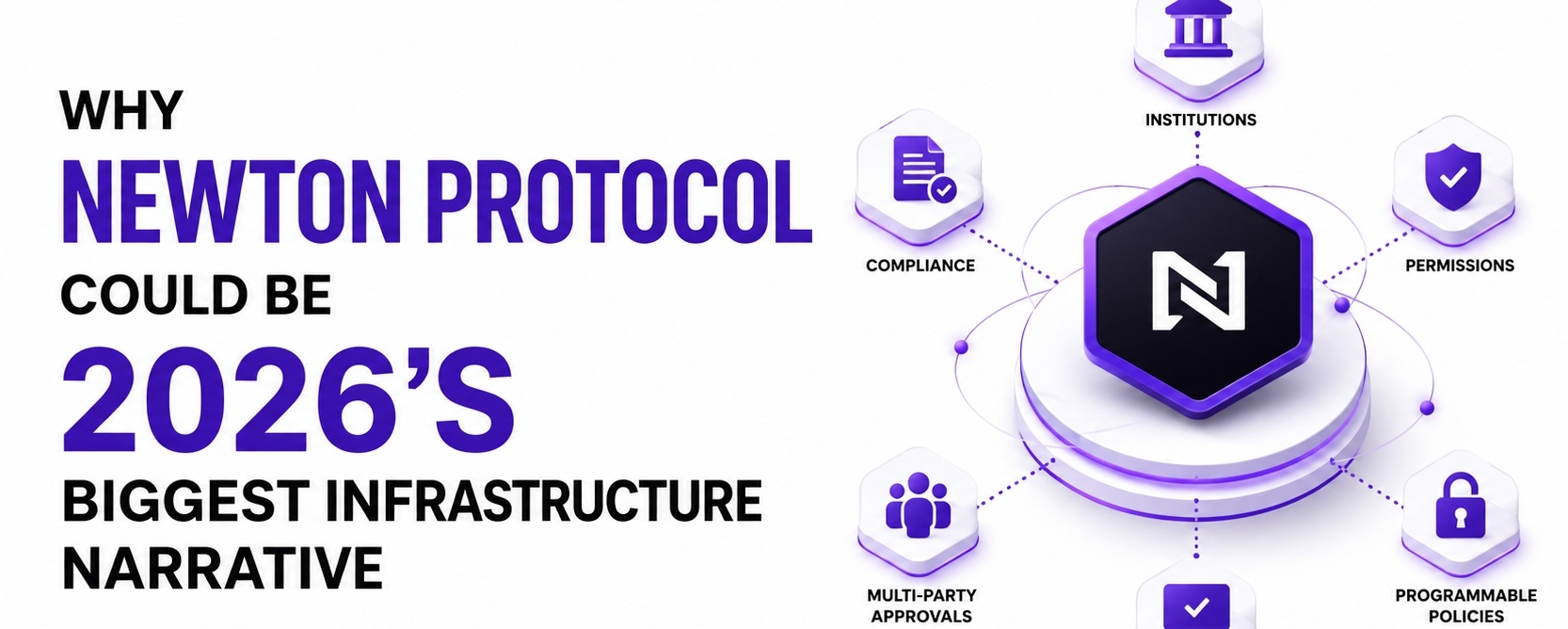
I’m talking about who can approve what, under what conditions, and how you can actually prove the rules were followed. That’s the space Newton Protocol is building in.
Most chains focus on “did the transaction go through?” Newton takes it further: “should this transaction even be allowed?” They let you set programmable policies things like spending limits, compliance rules, multi-party approvals, delegated permissions, whatever you need. It’s not just moving money. It’s making sure the right people (or systems) can only do the right things.
I think this is going to matter a lot more soon. Banks and companies can’t just hand over private keys and pray. AI agents that handle real financial tasks need guardrails. As we bring blockchain into actual business and regulated environments, this kind of authorization layer stops being a nice-to-have and becomes essential infrastructure.
What I like about Newton is they’re not trying to be another general-purpose chain. They’re building a specialized authorization network that works alongside existing blockchains. Developers define policies in a way machines can understand, and decentralized validators check that everything stays within bounds. It feels like real-world rules meeting blockchain transparency.
I also appreciate that they’re not screaming for attention. Their docs focus on solving actual coordination headaches instead of chasing hype. In a sea of flashy roadmaps, that grounded approach stands out to me.
Timing-wise, it lines up nicely. Tokenized treasuries, private credit, and other real assets are picking up steam. AI agents are getting smarter and more autonomous. Both need reliable ways to manage permissions and verify actions across parties. Infrastructure that handles this cleanly could become table stakes.
Looking back, crypto started with this pure “remove all intermediaries and rules” energy. We’re maturing now. It’s less about eliminating trust entirely and more about making trust verifiable. Programmable permissions, clear governance, accountable automation — these are the things that will let decentralized systems actually scale into real economies.
I haven’t built anything production-level on Newton yet, so I’m not here claiming it’s perfect. But just reading the architecture shifted how I think about blockchain design. Instead of bolting authorization on top as an afterthought, they put it into the protocol itself. That feels like the right direction.
Of course, great tech alone doesn’t win. Newton still needs developers to build on it, projects to integrate it, and real use cases to prove the value. There’s competition coming too. From here it all comes down to execution and whether the ecosystem keeps growing.
Maybe that's how every major technology cycle unfolds. The spotlight starts on the products, but the lasting value often ends up in the infrastructure underneath.
Cloud needed proper identity systems. The internet needed solid protocols for secure communication. Blockchain feels like it’s hitting that same phase with authorization and policy enforcement.
That’s why I’m paying attention to Newton Protocol. It’s not the loudest project out there, but it’s trying to solve a problem that gets more urgent every time we move from speculation to actual economic activity. Whether 2026 becomes its breakout year depends on adoption and delivery, but the problem they’re tackling already feels very real.
Risk Disclaimer: This is just my personal research and opinions. Not financial advice. Do your own digging before putting any money into anything. Always.