
I've been trying to figure out what actually survives in crypto.
Not what pumps for a few weeks.
Not what dominates my timeline.
Not what influencers suddenly decide is the next big narrative.
What survives.
That question has changed the way I look at this market.
When I first started trading, I thought the edge came from being early. I spent hours reading whitepapers, tracking wallets, watching new listings, and refreshing charts late into the night. Every cycle felt like a race to discover the next opportunity before everyone else.
Eventually I noticed something.
The stories kept changing, but the behavior never did.
One year everyone talked about Layer 1 chains. Then it was DeFi. NFTs followed. Meme coins took over for a while. Now AI is everywhere.
Every narrative arrives with confidence.
Every narrative promises to change everything.
Only a small number of projects are still being discussed a few years later.
That experience made me care less about narratives and more about infrastructure.
The market always pays attention to applications first because they're easy to understand. Infrastructure is different. It usually stays in the background. It isn't exciting until people realize they depend on it.
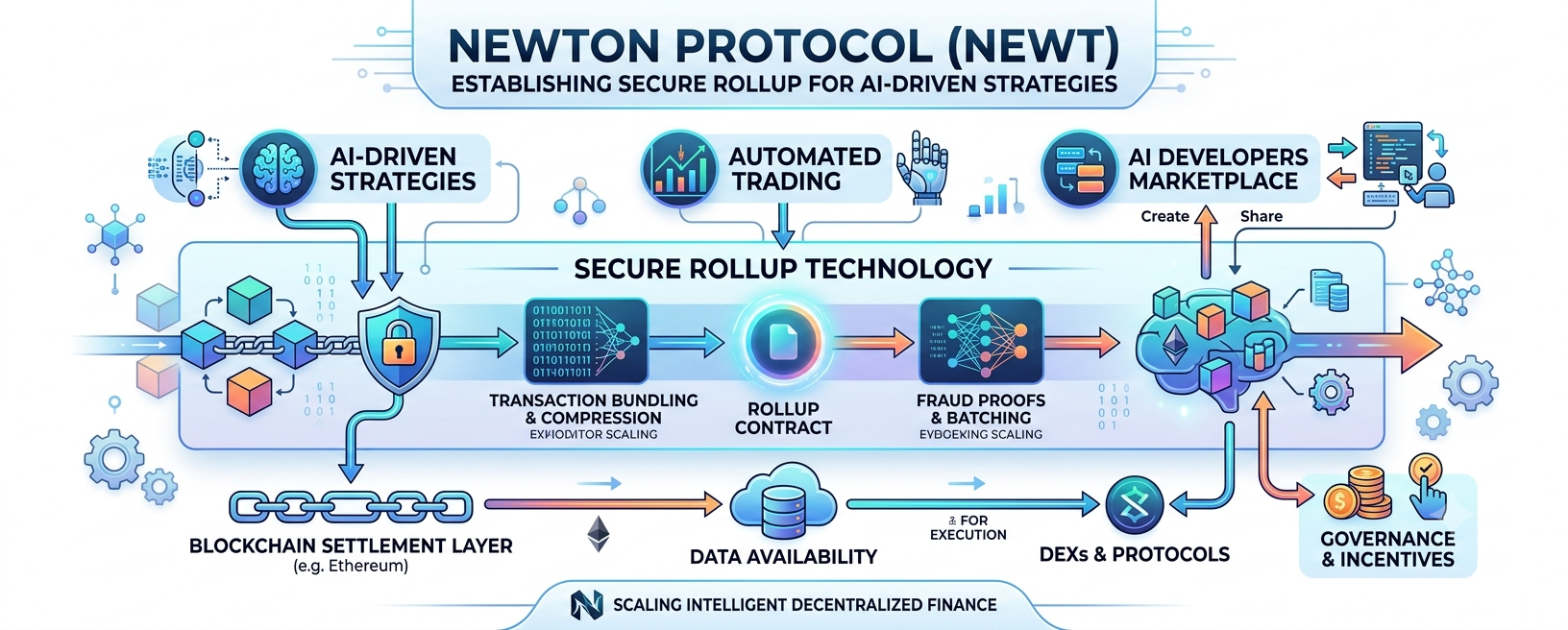
Lately I've been reading about Newton Protocol (NEWT).
Not because I expect quick gains.
Mostly because it sits at the intersection of two trends that seem impossible to ignore—AI and on-chain finance.
AI is becoming part of almost every conversation in tech. We already see trading assistants, research agents, portfolio analysis tools, and automated execution systems becoming more capable every month.
But one question keeps bothering me.
What happens when AI starts controlling real capital instead of simply giving suggestions?
An AI that analyzes markets is one thing.
An AI that can move funds, execute trades, manage liquidity, or interact with smart contracts is something completely different.
That's where trust becomes the real challenge.
In crypto we often talk about removing trust through code. If AI becomes another decision maker, then the environment around that AI has to be transparent and verifiable.
Otherwise we're replacing one black box with another.
That's one reason Newton Protocol caught my attention.
The idea isn't just to build another AI product. It aims to provide infrastructure where AI-driven strategies can operate on-chain in a more secure and accountable way.
To me, that's a more interesting problem than building another chatbot for crypto.
Good infrastructure doesn't attract attention because of flashy features.
It becomes valuable because it quietly makes everything else work better.
As a trader, I also think about execution.
People often assume automated trading is simply about turning on a bot and watching profits appear.
Reality is much less exciting.
Good automation is mostly about consistency.
Following rules.
Managing risk.
Reacting without emotion.
Recording performance.
Improving over time.
Machines don't panic during sharp corrections. They don't become overconfident after a winning streak. They simply execute the logic they're given.
That doesn't guarantee profits.
A bad strategy is still a bad strategy.
But disciplined execution is often more valuable than emotional decision-making.
If AI tools become common in trading, then secure infrastructure becomes just as important as the models themselves.
Another part of Newton that I find interesting is the idea of an ecosystem for AI developers.
History usually rewards platforms that make building easier.
The internet became powerful because developers could create websites.
Smartphones became powerful because developers filled app stores with useful software.
Crypto followed the same pattern with smart contracts.
If AI developers can build and share automated strategies in an open ecosystem, innovation doesn't rely on a single team anymore.
Thousands of people experiment.
Some ideas fail.
Others become industry standards.
That's usually how technology moves forward.
Still, I don't think any of this guarantees success.
Crypto has a long history of strong ideas struggling because adoption never arrived.
Infrastructure only creates value if people actually build on top of it.
Developers matter.
Users matter.
Security matters.
Liquidity matters.
Execution matters.
Even if the technology is solid, the token doesn't automatically capture that value.
That's something every investor should think about before getting carried away by a narrative.
I've become much more skeptical over the years.
Not because I think innovation has stopped.
The opposite.
I think the industry is finally moving toward harder problems instead of easier marketing.
Building secure systems for AI isn't as exciting as launching another meme coin.
But it might matter far more over the next decade.
Maybe Newton becomes an important piece of that future.
Maybe another project solves the problem better.
The market will decide.
What interests me isn't predicting the winner.
It's recognizing where the industry is spending its engineering effort.
AI is improving.
Automation is improving.
Blockchain infrastructure is improving.
Eventually those paths will meet.
When they do, the projects focused on security, verification, and reliable execution may end up being far more important than the loudest projects on social media.
That's why I'm paying attention.
Not because I think every AI token deserves attention.
Not because I believe every prediction surrounding AI will become reality.
But because infrastructure has a habit of becoming obvious only after it's already essential.
After spending years in these markets, that's one lesson I trust more than any headline.