
For the longest time, I believed smart contracts were the final answer to trust. Once code was deployed on-chain, I assumed everything else would simply fall into place.
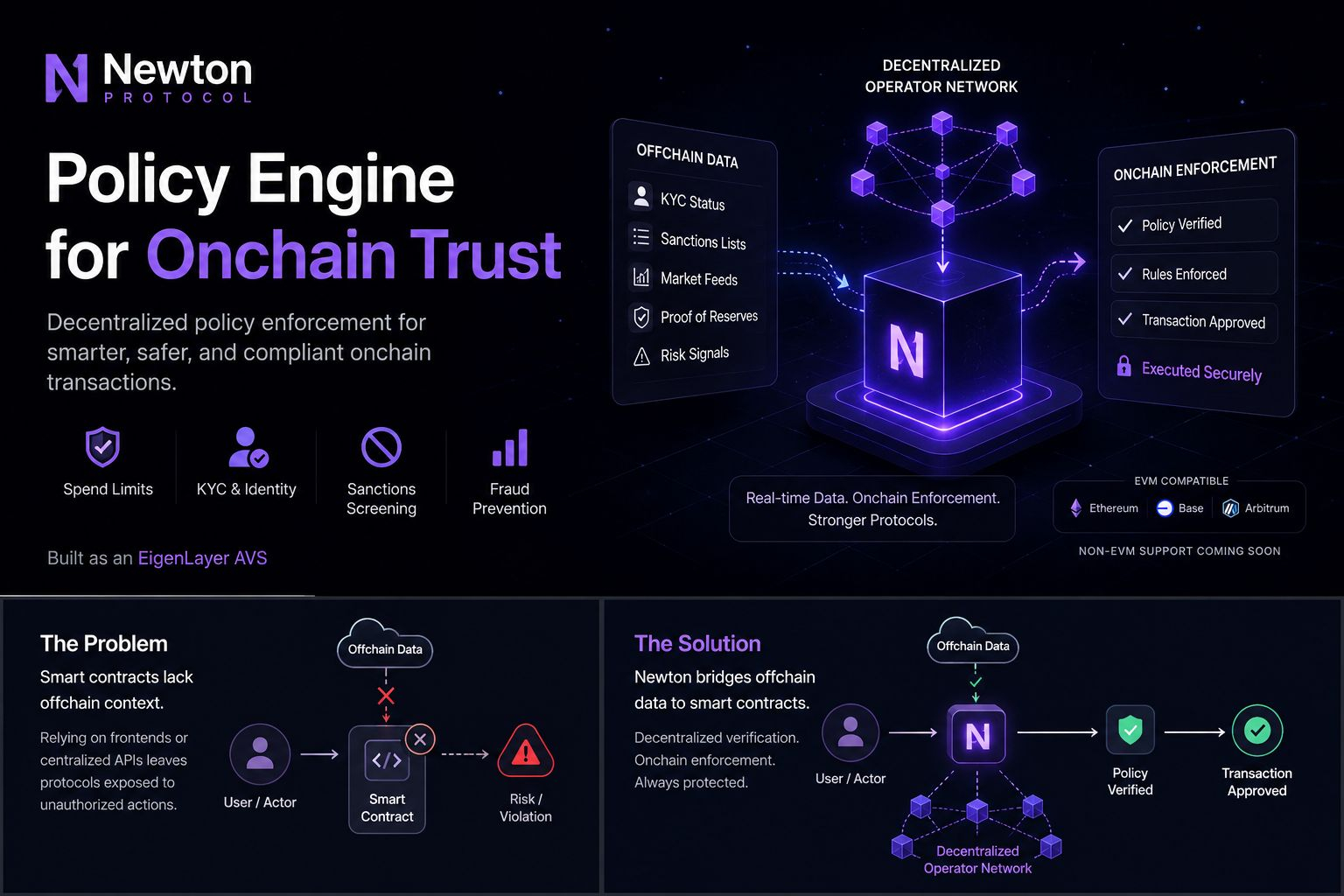
But the more I learned about how real applications operate, the more I realized that smart contracts have one major limitation—they only understand what's on the blockchain.
They can't tell whether a wallet belongs to a sanctioned entity. They don't know if a transaction violates a company's spending policy. They can't verify KYC status or judge whether an AI agent is acting responsibly.
That doesn't mean smart contracts are flawed. It just means they were never designed to understand the world outside the blockchain.
This is why Newton Protocol caught my attention.
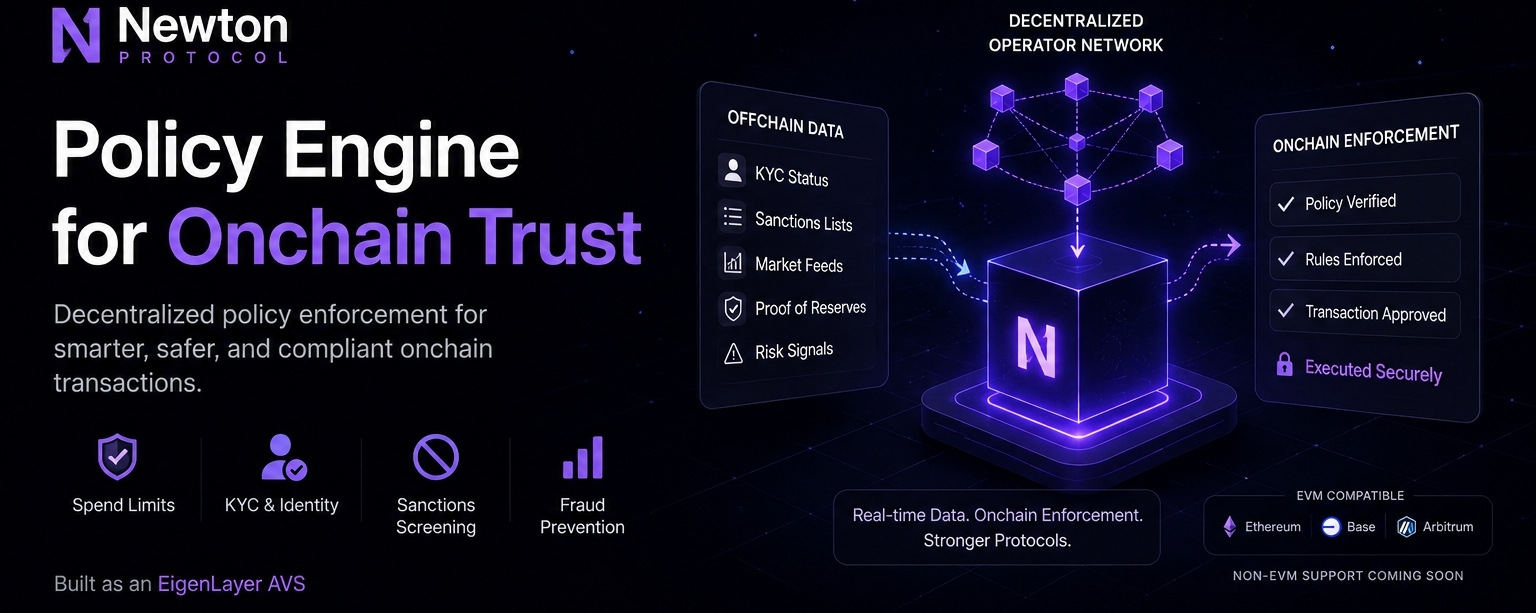
Instead of depending on centralized servers or frontend restrictions that users can bypass, Newton introduces a decentralized policy layer. It allows developers to define rules using trusted off-chain data and enforce those rules directly through smart contracts.
Imagine a protocol that can automatically reject transactions from sanctioned wallets, apply daily spending limits, require verified identities for sensitive actions, or pause activity when specific risk conditions are met.
The interesting part isn't the individual features—it's what they represent.
As blockchain technology expands into finance, AI, gaming, and real-world assets, applications need more than secure code. They need context. Security today isn't just about preventing hacks; it's about making better decisions before a transaction is approved.
That's where I think Newton fits into the bigger picture.
We often talk about decentralization as removing intermediaries. But perhaps the next stage is building decentralized systems that can also make informed, policy-based decisions without relying on a single trusted authority.
Smart contracts gave us trustless execution.
Protocols like Newton could give us trustless decision-making.
And that feels like a meaningful step toward making Web3 ready for the real world.
What do you think? Should on-chain applications remain completely permissionless, or do decentralized policy engines have an important role in the future of crypto?
