

Everyone seems to agree that crypto's biggest obstacle is scalability. Every new cycle brings another blockchain promising lower fees, faster confirmations, or higher transaction throughput. Those improvements matter, and they've undeniably pushed the industry forward. But after watching the ecosystem mature over the past few years, I kept coming back to a different question. If blockchains are already processing transactions in seconds, why do users, institutions, and even experienced developers still hesitate before clicking "Approve"?
The answer isn't speed. It's permission.
Crypto has become remarkably efficient at moving value. What it hasn't become equally good at is controlling how that value moves once permission has been granted. That difference sounds small until you realize it sits underneath nearly every exploit, wallet mistake, and security concern that users face today.
Most people experience authorization as a simple pop-up in their wallet. A decentralized application asks for approval, the wallet displays a message, and the user signs it. On the surface, the interaction feels harmless. It's just another confirmation screen among dozens encountered every week.
Underneath, something much more significant is happening.
That approval often grants permissions that remain active long after the original transaction finishes. Many users don't revisit those permissions. Some forget they exist entirely. Months later, if a smart contract is compromised or behaves unexpectedly, those old approvals can become a pathway for unwanted asset movement.
The blockchain did exactly what it was instructed to do.
The wallet functioned correctly.
The smart contract executed as programmed.
Yet users still lose funds because the problem wasn't execution. The problem was authorization.
That's the gap Newton is trying to address.
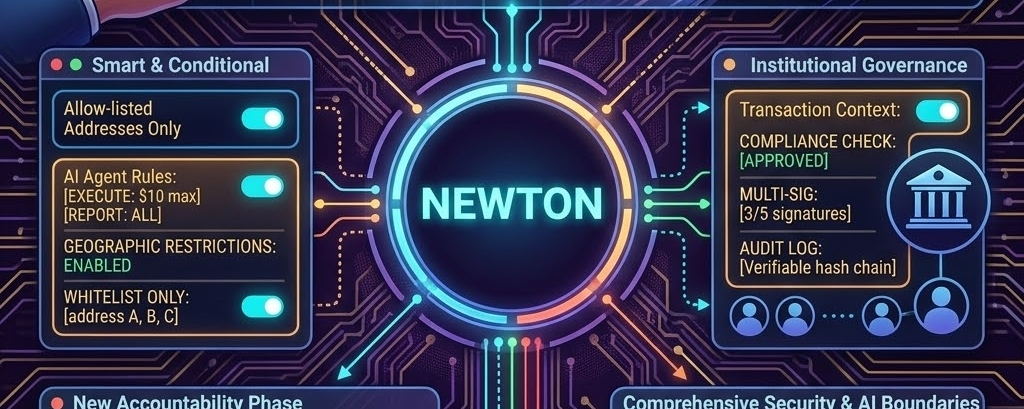
Instead of focusing on moving transactions faster, Newton focuses on making permissions programmable. Rather than treating authorization as a simple yes-or-no decision, it introduces the idea that permissions themselves should contain rules.
Imagine allowing an application to spend up to a certain amount per day instead of unlimited access. Or permitting transfers only to approved addresses. Or requiring additional verification if a transaction exceeds a predefined threshold.... Those conditions sound familiar because they're common in traditional financial systems. Yet much of decentralized finance still relies on relatively broad permissions compared to what institutions expect.
Newton attempts to bridge that difference.
From a user's perspective, nothing dramatic changes. They still interact with wallets and decentralized applications much as they do today. The interesting work happens underneath, where authorization policies can evaluate transactions before execution instead of after problems occur.
That distinction changes how security is approached.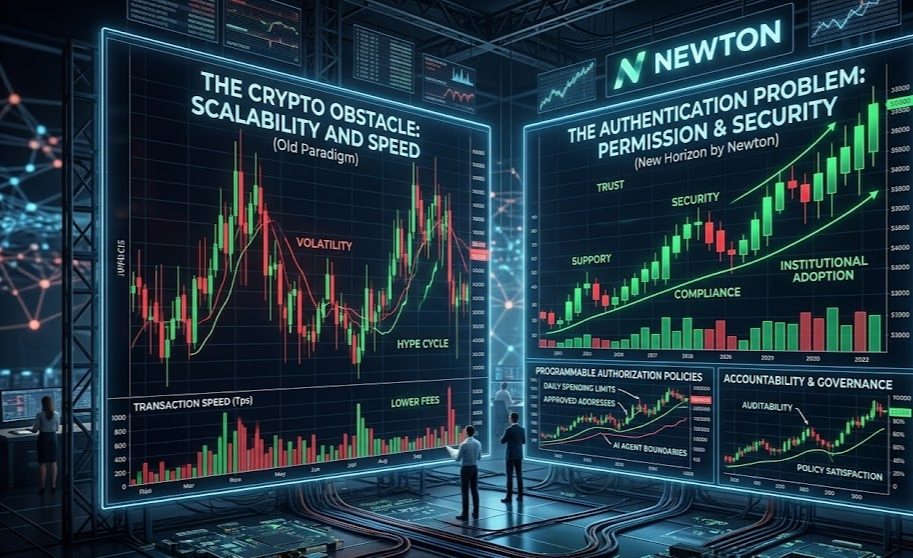
Most blockchain security today focuses heavily on prevention through education. Users are constantly reminded not to click suspicious links, verify contract addresses, protect private keys, and revoke unnecessary approvals. Those habits remain important, but they also place enormous responsibility on individuals.
Newton shifts part of that responsibility toward programmable rules.
Instead of relying entirely on perfect user behavior, the system aims to define boundaries that software itself can enforce. If an AI agent attempts to exceed a spending limit, the transaction simply doesn't qualify for authorization. If a payment falls outside predefined conditions, execution stops before assets move.
Understanding that helps explain why Newton talks frequently about AI.
Artificial intelligence is gradually evolving from software that answers questions into software that performs tasks. Today's AI can summarize documents, generate code, or organize information. Tomorrow's AI may manage subscriptions, execute treasury operations, rebalance portfolios, or negotiate digital services on behalf of users.
Those capabilities introduce a new challenge.
An AI capable of spending money also needs clear limitations.
Giving an intelligent agent unrestricted wallet access creates obvious risks.
Mistakes, unexpected outputs, or manipulated prompts could lead to unintended financial consequences...
Intelligence alone doesn't solve that problem. Authorization does.
Newton's framework attempts to let AI operate inside carefully defined boundaries rather than unlimited authority....
Meanwhile, institutions face a similar issue from a different direction.
Banks, payment providers, and asset managers rarely reject blockchain because transactions settle too slowly. Public networks already offer settlement speeds that satisfy many financial workflows. Their hesitation usually centers on governance, compliance, auditing, and accountability....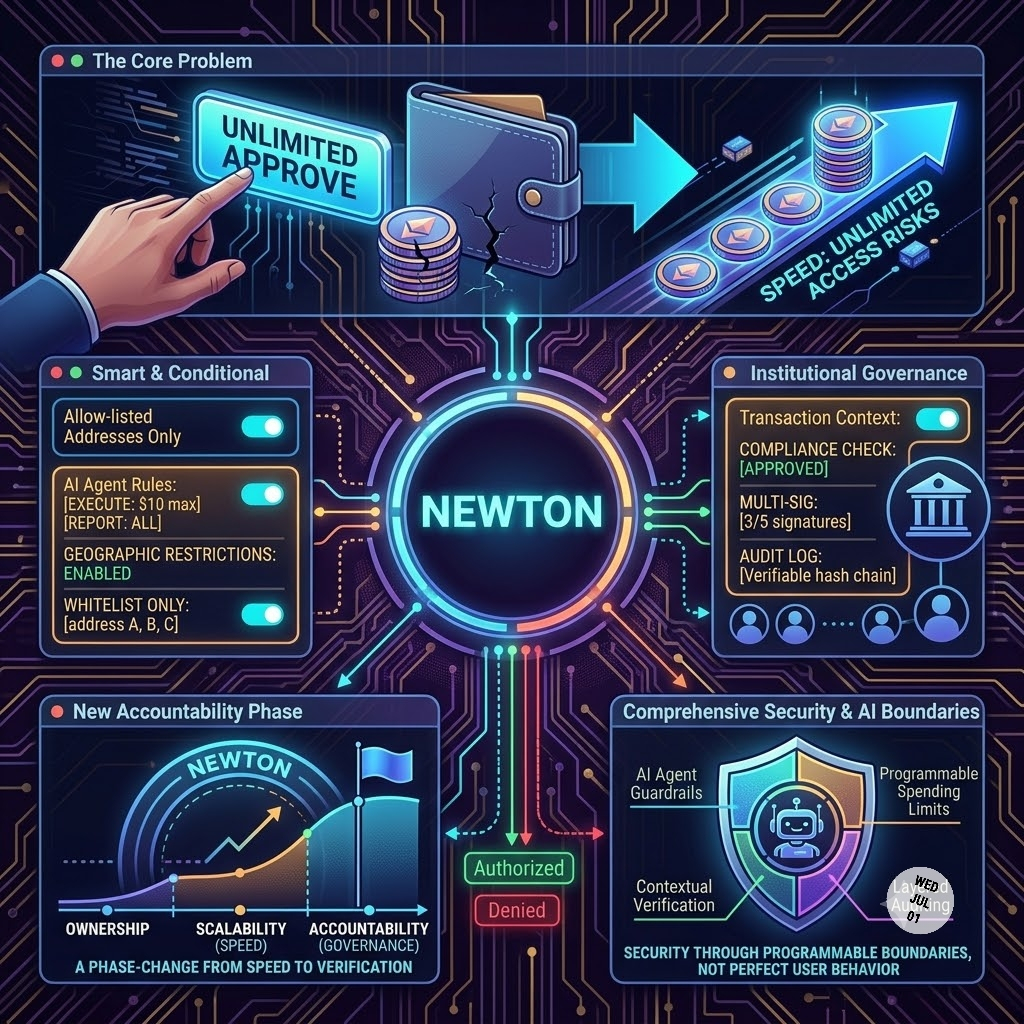
Every financial organization operates under internal policies.
Who approved this payment?
Why was it allowed?
Did it follow company rules?
Can that process be verified later?
Traditional finance has spent decades building systems that answer those questions. Blockchain executes transactions transparently, but transparency alone doesn't automatically explain authorization decisions.
Newton aims to provide that missing context.
Rather than merely recording that a transaction occurred, its authorization model seeks to demonstrate that predefined policies were satisfied before execution happened. That subtle difference could matter significantly for organizations that must document every financial action.
Of course, solving authorization introduces its own complexity.
Flexible permission systems inevitably require configuration. Someone must define the rules. Organizations must decide appropriate spending thresholds, approval chains, geographical restrictions, or operational limits. Poorly designed policies can become frustrating for users or restrictive for businesses....
Security often asks people to trade convenience for confidence.
Finding the right balance remains one of the hardest challenges in software design, and blockchain is no exception.
There is also the question of adoption.
Crypto already offers multisignature wallets, access-control frameworks, and enterprise security products. Newton isn't entering an empty market. Success depends on convincing developers that programmable authorization should become foundational infrastructure rather than another optional security feature.
History suggests that technical quality alone rarely guarantees widespread adoption...
Network effects matter.
Developer experience matters.
Documentation matters.
Community participation matters.
If developers find it easier to build secure applications using Newton than without it, adoption becomes more likely. If integration feels complicated or unnecessary, even strong technology can struggle to gain traction....
Still, broader industry trends seem to be moving toward the exact problems Newton addresses.
Real-world assets are increasingly appearing on blockchain networks. Stablecoins continue expanding across payment systems..
Autonomous AI agents are becoming more capable every month. Institutions are experimenting with tokenized financial products while demanding stronger governance controls.
Each of those trends shares one common requirement.
Not faster transactions.
Smarter authorization.
What struck me while studying Newton wasn't that it introduces entirely new ideas....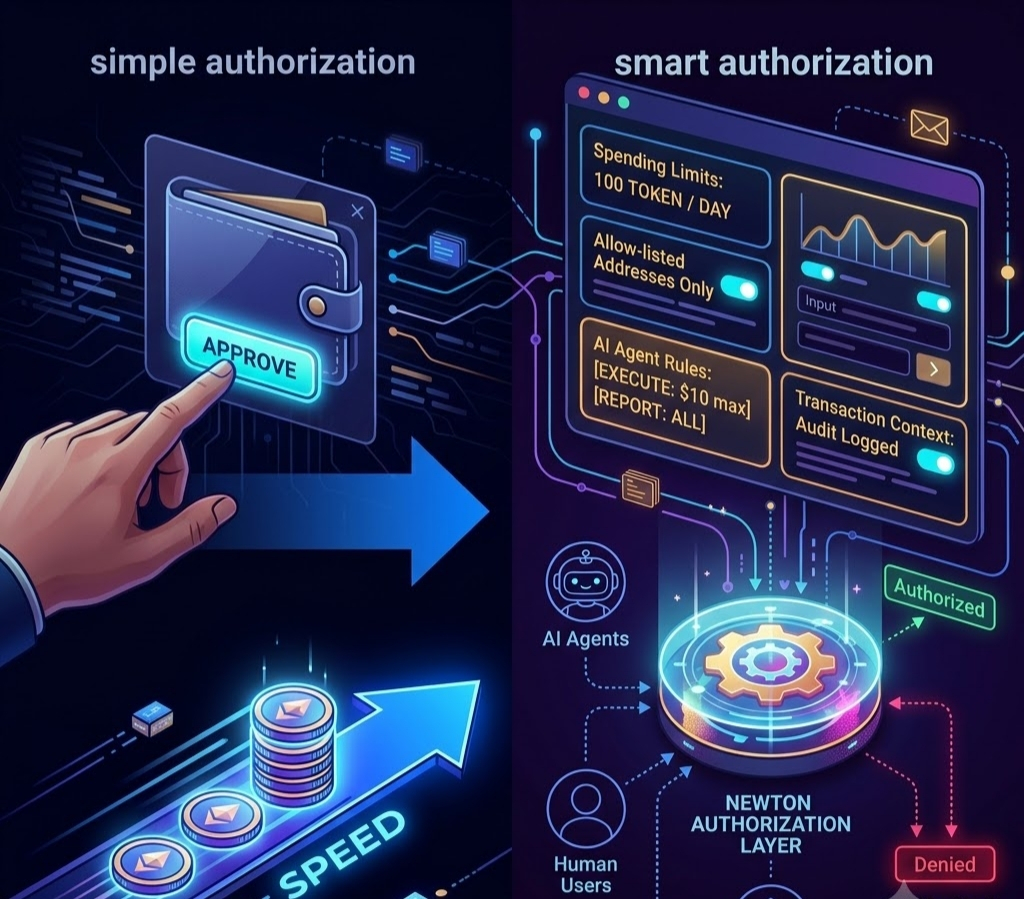
Financial systems have relied on conditional permissions for decades. The interesting part is bringing those concepts into decentralized infrastructure where rules become transparent, programmable, and verifiable rather than hidden inside proprietary systems.
That feels less like inventing something entirely different and more like filling an important gap that became obvious as blockchain matured.
Early crypto emphasized ownership.
The next phase emphasized scalability.
The phase now emerging seems increasingly focused on accountability.
If that direction continues, authorization may quietly become one of the most important infrastructure layers in Web3—not because users talk about it every day, but because they'll increasingly expect every application, wallet, and AI agent to operate within rules they can actually understand.
In the end, Newton isn't asking whether blockchains can move money more quickly. It's asking whether digital systems should earn permission every time they move it—and that question may matter long after the race for speed has been won.
