


 Most people look at Newton Protocol and see "another AI rollup." I spent the afternoon looking at the one thing everyone else seems to ignore: the transaction itself.
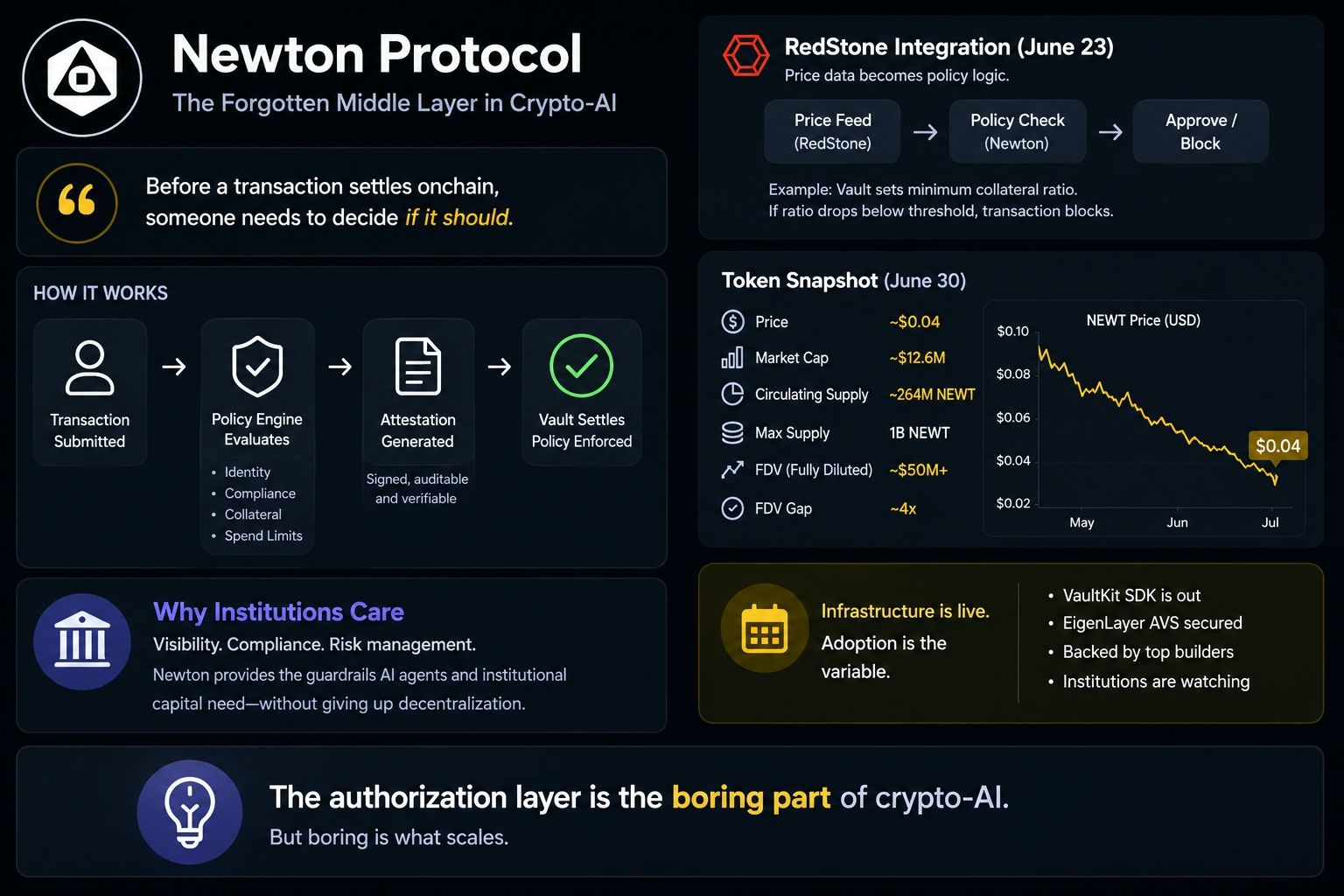
Newton's core insight is actually pretty simple. Before a transaction settles onchain, someone needs to decide if it should. The protocol runs policy checks in real-time—identity verification, jurisdiction compliance, collateral adequacy, spend limits. Each check produces an attestation. The vault settles. The policy gets enforced.
Here's what's interesting: this is the exact kind of infrastructure that institutions need before they'll let AI trade real money. They want to know who's trading, where they're trading, and under what conditions. Newton gives them that visibility without sacrificing decentralization.
The RedStone integration on June 23 was the first signal. Price data feeds into policy logic. A vault manager sets a minimum collateral ratio. Newton checks RedStone's feed. If the ratio drops below the threshold, the transaction blocks. That's not just DeFi—that's DeFi with training wheels for institutional risk tolerance.
The token sits around ~$0.04 with a ~$12.6M market cap and ~264M circulating against a 1B max supply. The FDV gap (~4x) feels wide, but that's also the gap between "infrastructure built" and "institutions adopted."
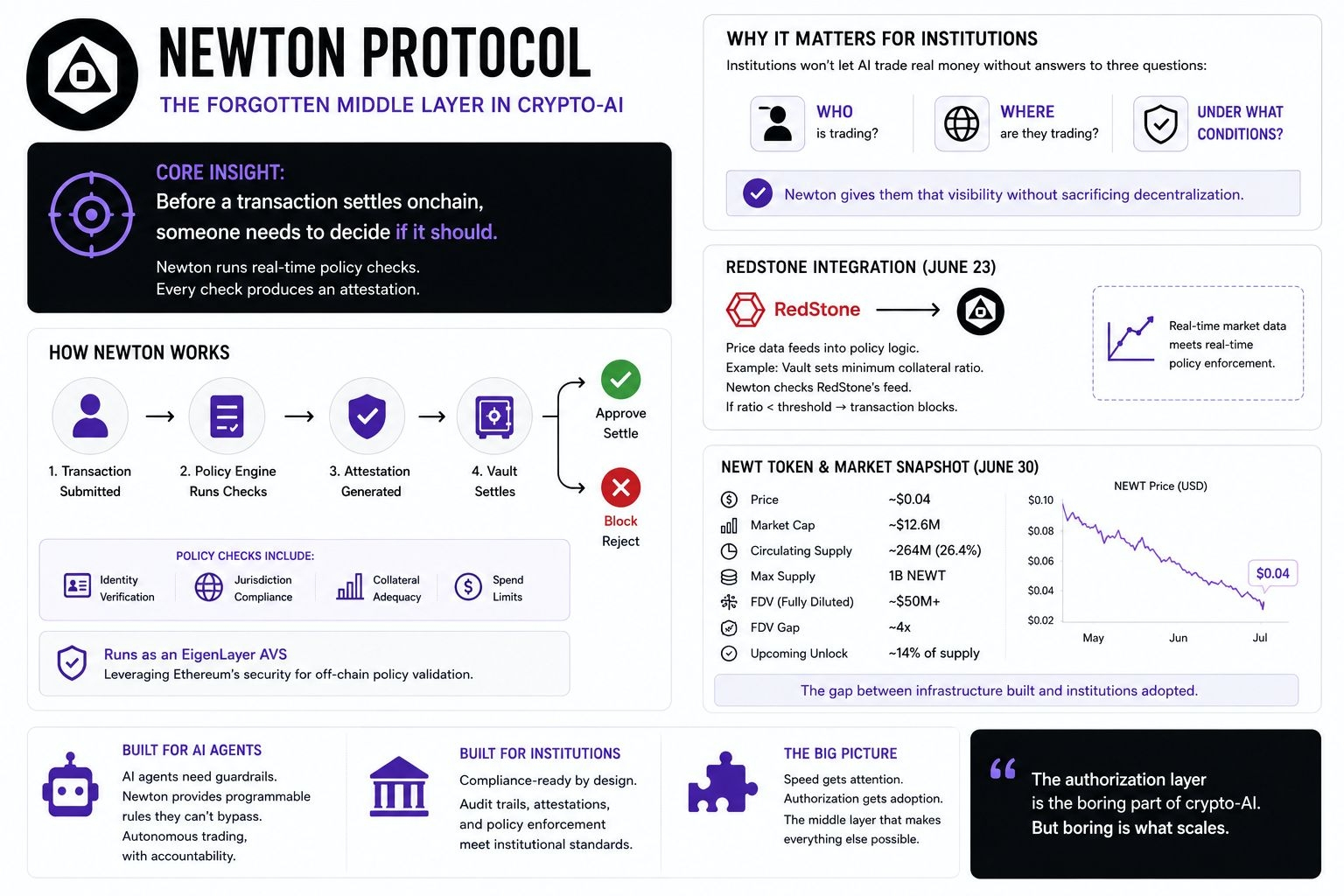
What I keep thinking about: the authorization layer is the boring part of crypto-AI. But boring is what scales.
Hmm.
