
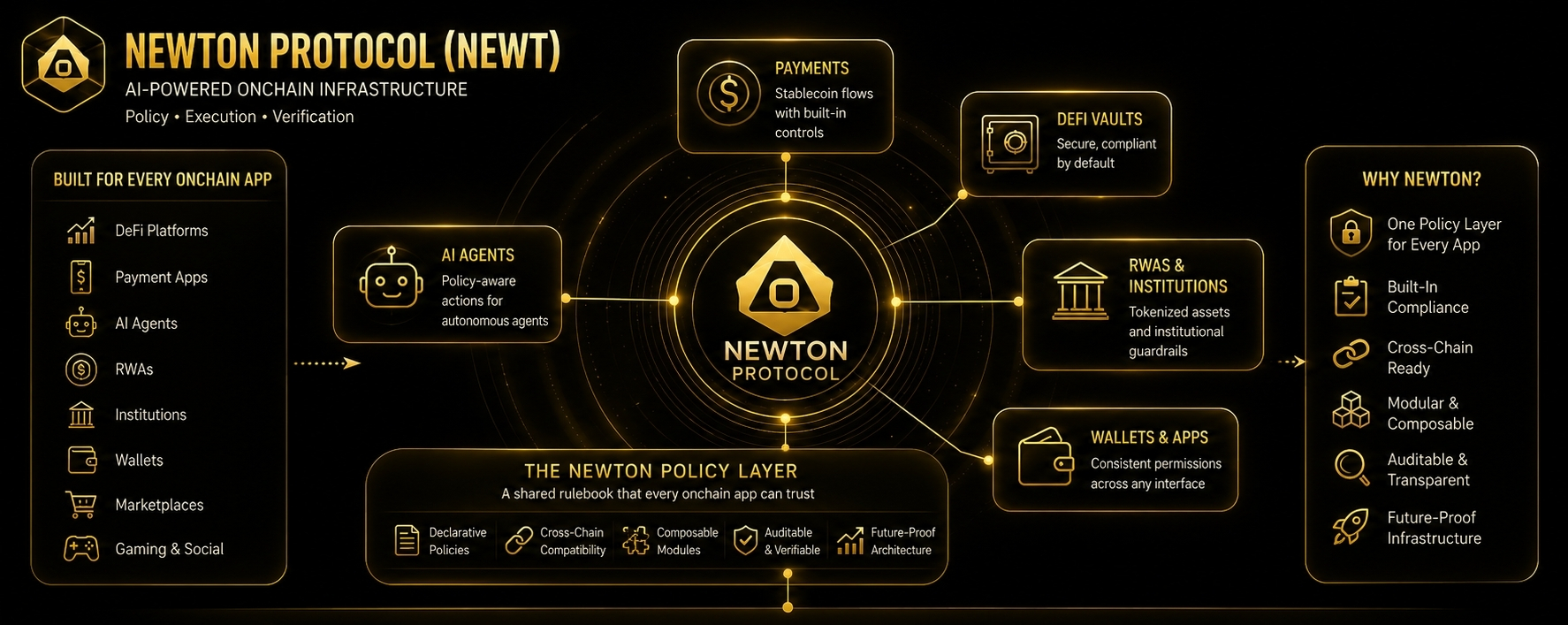
How often do we mistake intelligent decisions for trustworthy systems without asking what happens after those decisions are made?
That question stayed with me while I was exploring AI-related blockchain projects. At first, I expected to spend my time comparing models, automation capabilities, and performance metrics. Instead, I found myself thinking about something much less visible. Every autonomous system eventually reaches a point where it must leave the world of computation and interact with real assets, real markets, and real users. That transition from thinking to acting may be one of the least discussed parts of AI infrastructure.
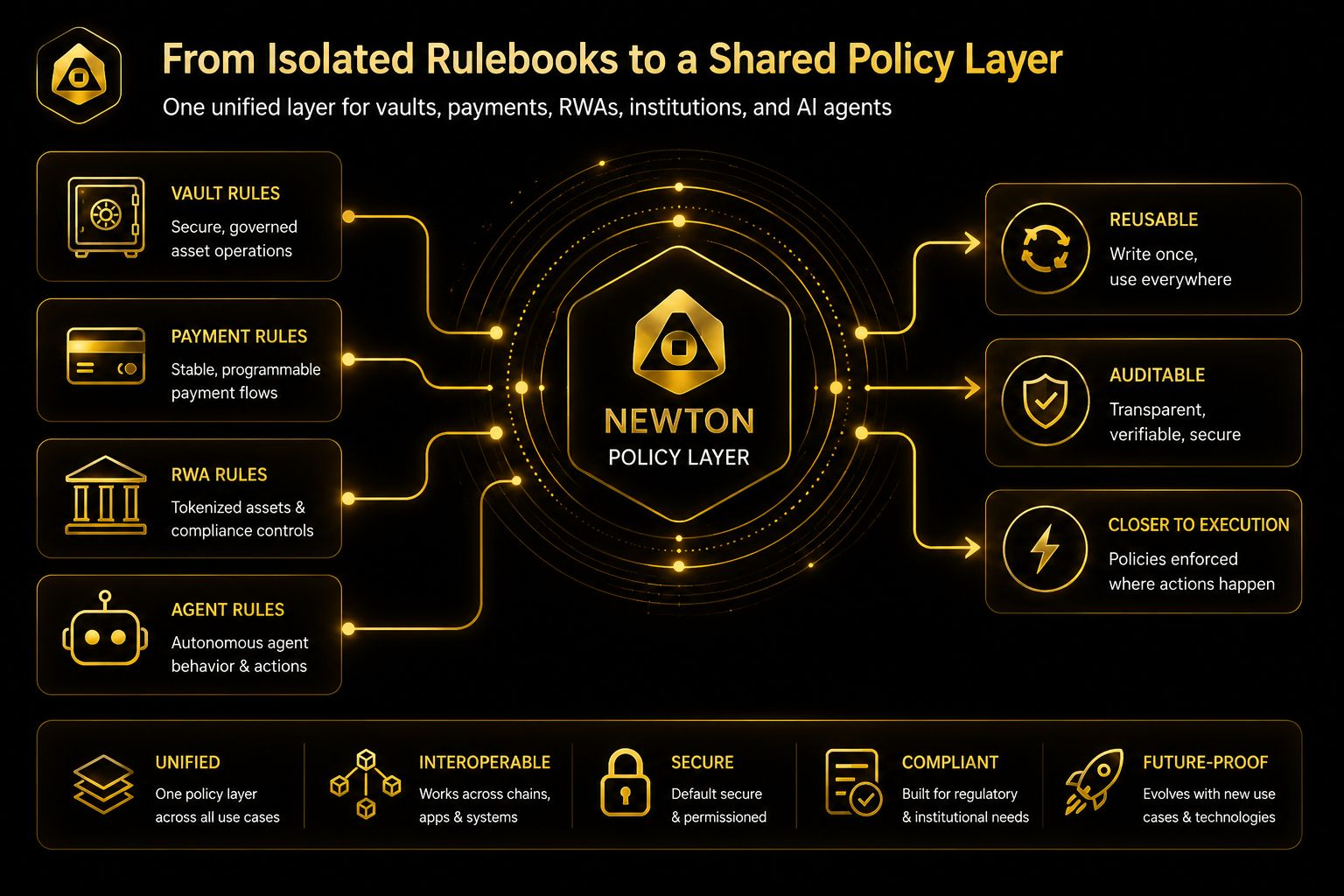
This perspective is what drew my attention to Newton Protocol (NEWT). Rather than concentrating only on improving AI capabilities, the project appears to focus on creating an execution environment where automated strategies can operate within a verifiable blockchain framework. I found that interesting because execution is often treated as a technical detail, even though it is the stage where accountability actually begins.
When people discuss AI-driven trading, conversations usually revolve around prediction accuracy or the sophistication of algorithms. Those topics are important, but they also assume that accurate decisions automatically produce reliable outcomes. Reality is usually more complicated. Even a strong model can lose credibility if the surrounding infrastructure cannot clearly demonstrate how decisions were executed or whether every action followed predefined rules.
While reading about Newton Protocol, I started viewing infrastructure differently. Instead of seeing blockchain as simply a settlement layer, I began considering its role as a record of behavior. If autonomous systems continue handling increasingly valuable financial activities, the ability to verify what happened may become just as important as optimizing what should happen next.
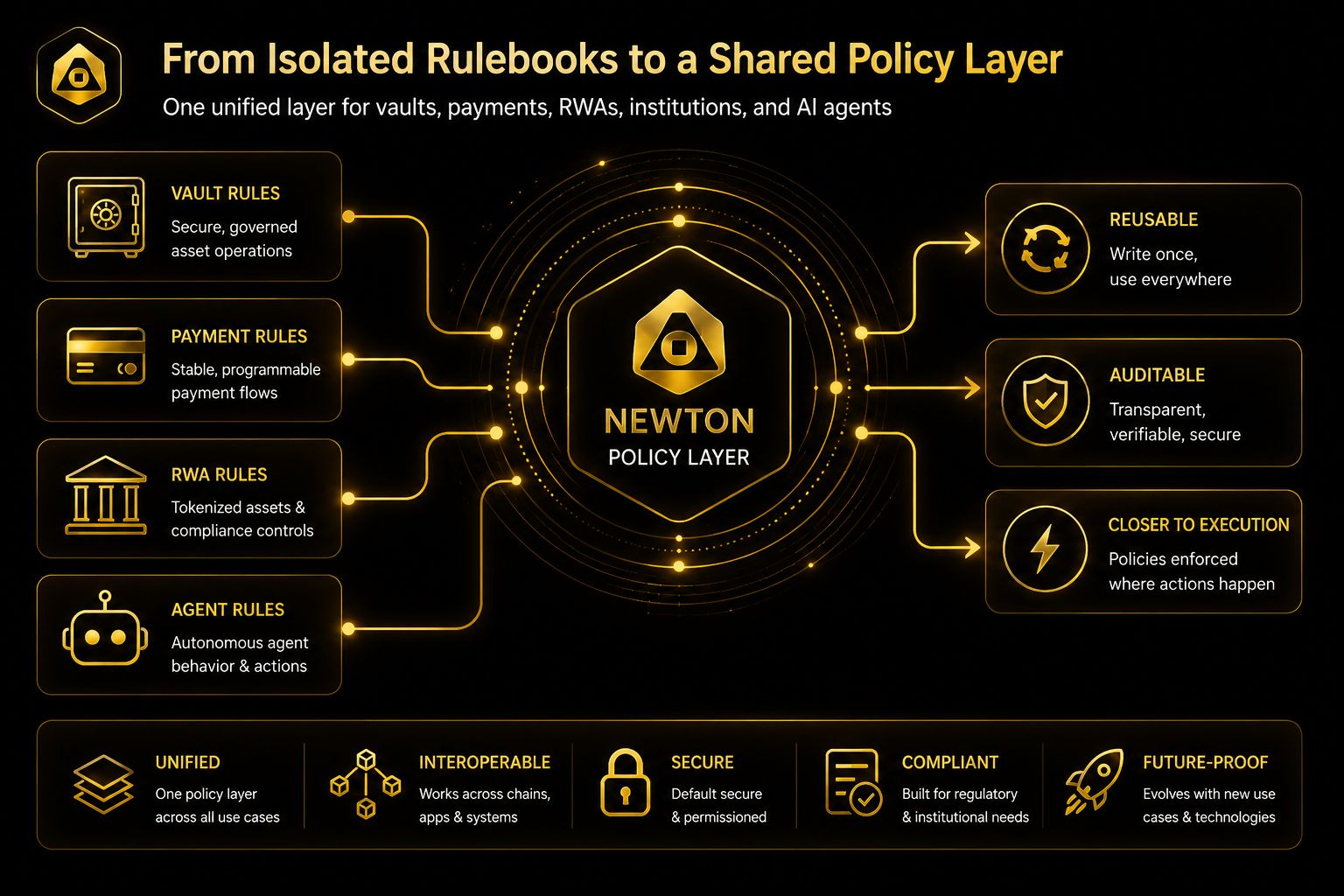
Another detail that caught my attention was the relationship between developers and users. AI developers often build sophisticated models, yet distribution, evaluation, and transparency remain fragmented across different environments. A marketplace designed specifically for AI strategies creates an interesting dynamic because it connects innovation with accountability. Developers are no longer only writing code; they become participants in an ecosystem where strategies can be examined, compared, and continuously improved through observable performance rather than assumptions.
That idea also made me reconsider how trust develops in decentralized systems. Trust rarely appears because someone claims a system is reliable. It usually grows when independent participants can inspect outcomes, compare records, and verify actions without relying entirely on reputation. Infrastructure quietly shapes that process, even when users rarely notice it directly.
The concept of secure rollups became particularly interesting from this perspective. Rollups are frequently discussed in terms of scalability, transaction costs, or network efficiency. Those benefits certainly matter, but another possibility emerged while I was reading. A secure execution environment can also reduce uncertainty by creating consistent conditions where automated actions remain traceable. The technology becomes less about increasing speed and more about preserving confidence as AI systems perform increasingly complex tasks.
I also noticed how easily the broader crypto market becomes distracted by visible innovations while overlooking foundational architecture. New applications often receive immediate attention because their functionality is easy to observe. Infrastructure evolves more quietly. Yet history across technology repeatedly shows that durable ecosystems usually depend on invisible foundations rather than visible interfaces. Stable roads matter long before faster vehicles can fully demonstrate their value.
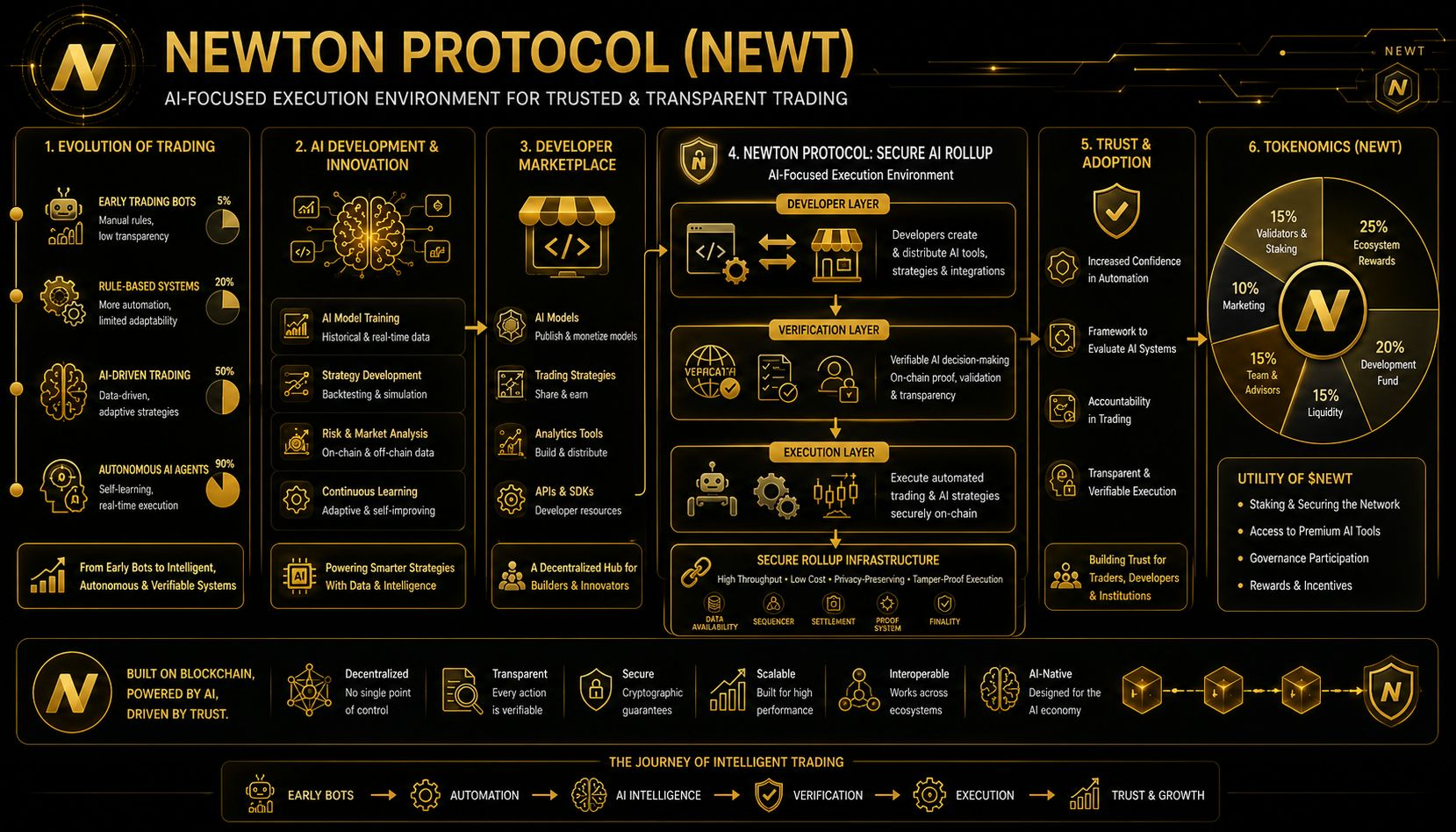
Researching Newton Protocol gradually shifted the questions I ask when evaluating AI projects. I still care about model quality, computational efficiency, and intelligent automation, but I now find myself asking something different first. What mechanisms exist after the decision has already been made? Can execution be verified? Can independent observers understand what occurred? Does the surrounding infrastructure strengthen confidence instead of simply assuming it?
Perhaps the future conversation around AI and blockchain will not revolve solely around creating increasingly intelligent systems. It may increasingly revolve around creating environments where intelligence can remain understandable, accountable, and verifiable long after its decisions have already entered the real world.
