I'm still not sure we're paying attention to the right problem.
Maybe that's just what happens after spending years watching both AI and crypto develop on separate tracks. AI kept getting better at producing answers. Crypto kept trying to build systems that didn't depend so heavily on trust. They seemed like different conversations for a long time.
Now they're colliding, and the questions feel less comfortable.
The obvious discussion is about whether AI can make good financial decisions. That gets all the attention because it's easy to compare models, benchmark results, or argue about which system is more capable. But capability doesn't automatically translate into confidence.
What happens after the decision matters just as much.
Once an agent has permission to execute trades, move assets, or interact with protocols on its own, the conversation changes. It's no longer just about intelligence. It's about accountability. About whether anyone can verify what happened without simply assuming the software behaved as expected.
That distinction keeps sticking with me.
I've seen enough in crypto to know that infrastructure rarely becomes visible until markets become unpredictable. During calm periods, people mostly notice interfaces and outcomes. During stressful ones, they suddenly care about the systems underneath.
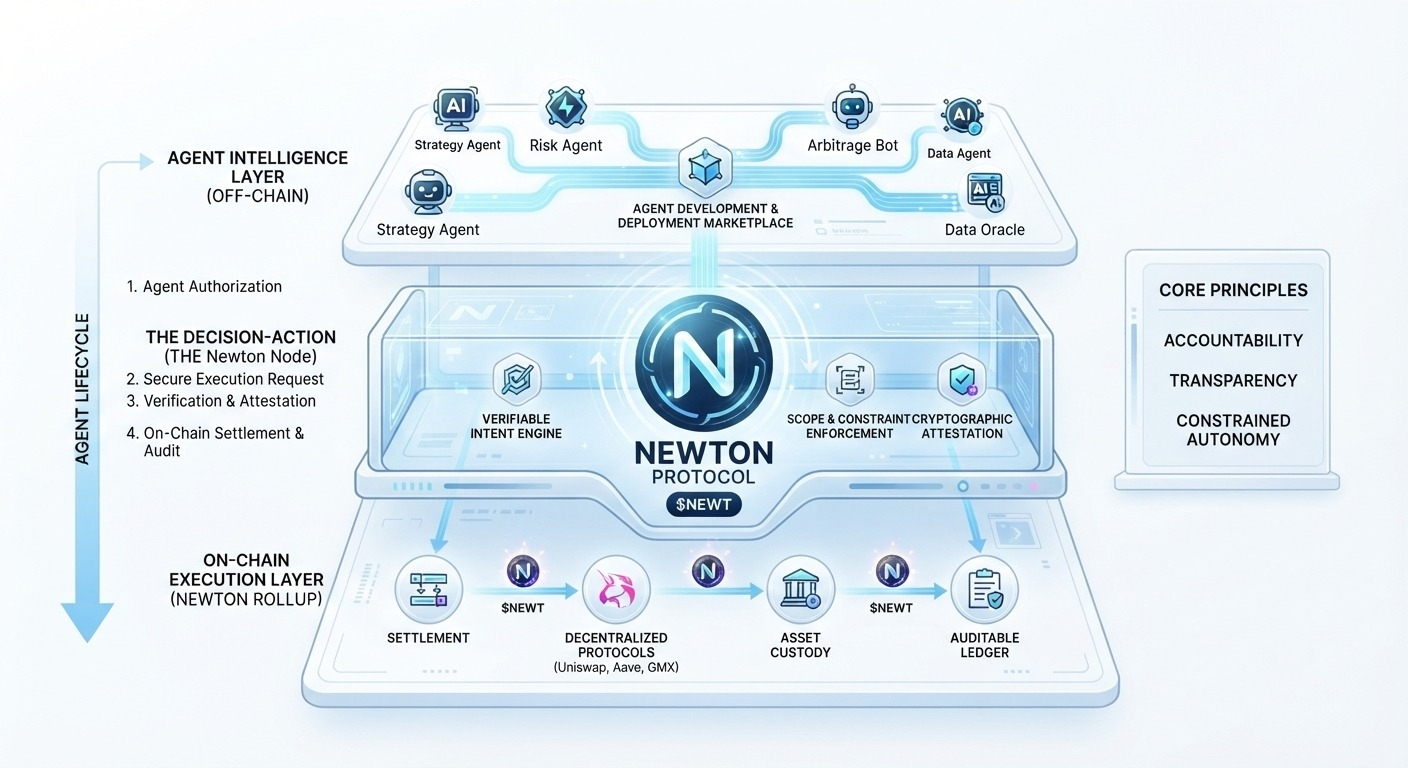
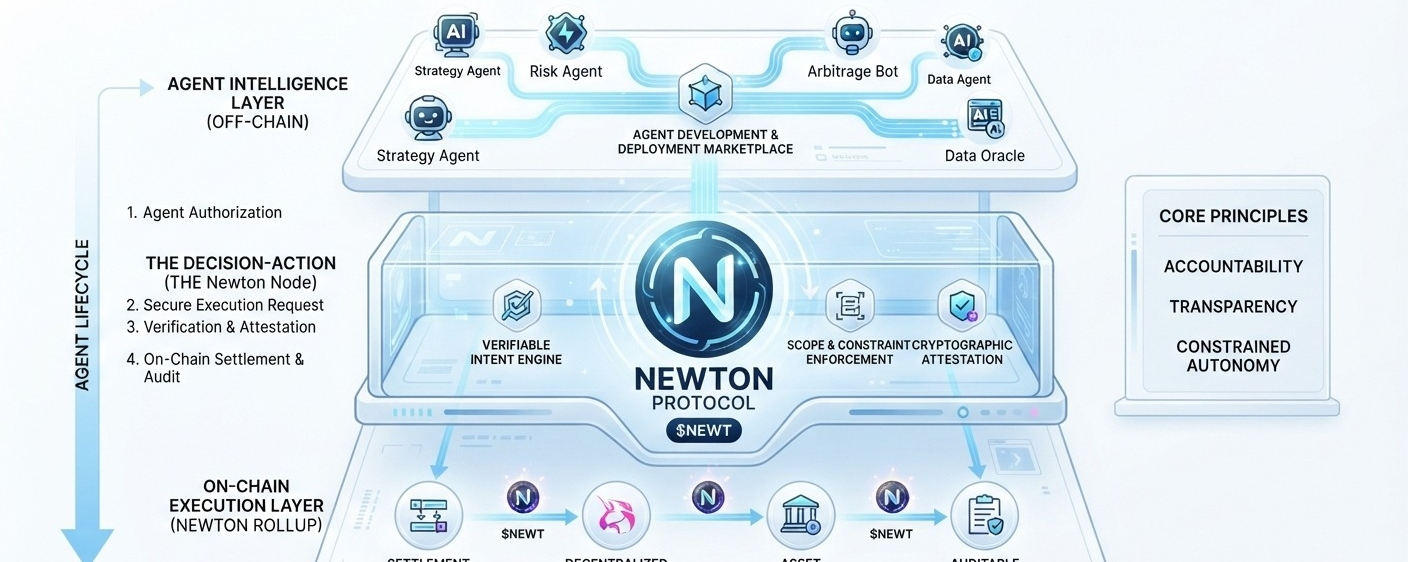
That's partly why Newton Protocol caught my attention. Not because it promises smarter agents, but because it seems to be asking a quieter question: what should the execution layer look like if autonomous systems are going to participate in finance at all? A secure rollup for AI-driven strategies feels less like a feature and more like an acknowledgment that execution deserves its own trust model. The marketplace for developers to deploy and monetize agents makes me equally curious and cautious. It sounds useful, but it also shifts responsibility in ways that aren't easy to reason about.
If an agent becomes popular because it performs well, is that enough? Or does trust eventually depend on whether its behavior can be constrained, observed, and verified when conditions stop cooperating?
I don't have a clean answer.
The older I get, the less interested I am in systems that look impressive under ideal conditions. The more interesting question is what survives when incentives become messy and volatility exposes every shortcut.
Maybe the future of AI in finance won't be decided by whichever agent thinks the fastest. Maybe it'll depend on the infrastructure that quietly determines how those decisions become actions, and whether anyone still trusts that machinery once real money is moving through it.