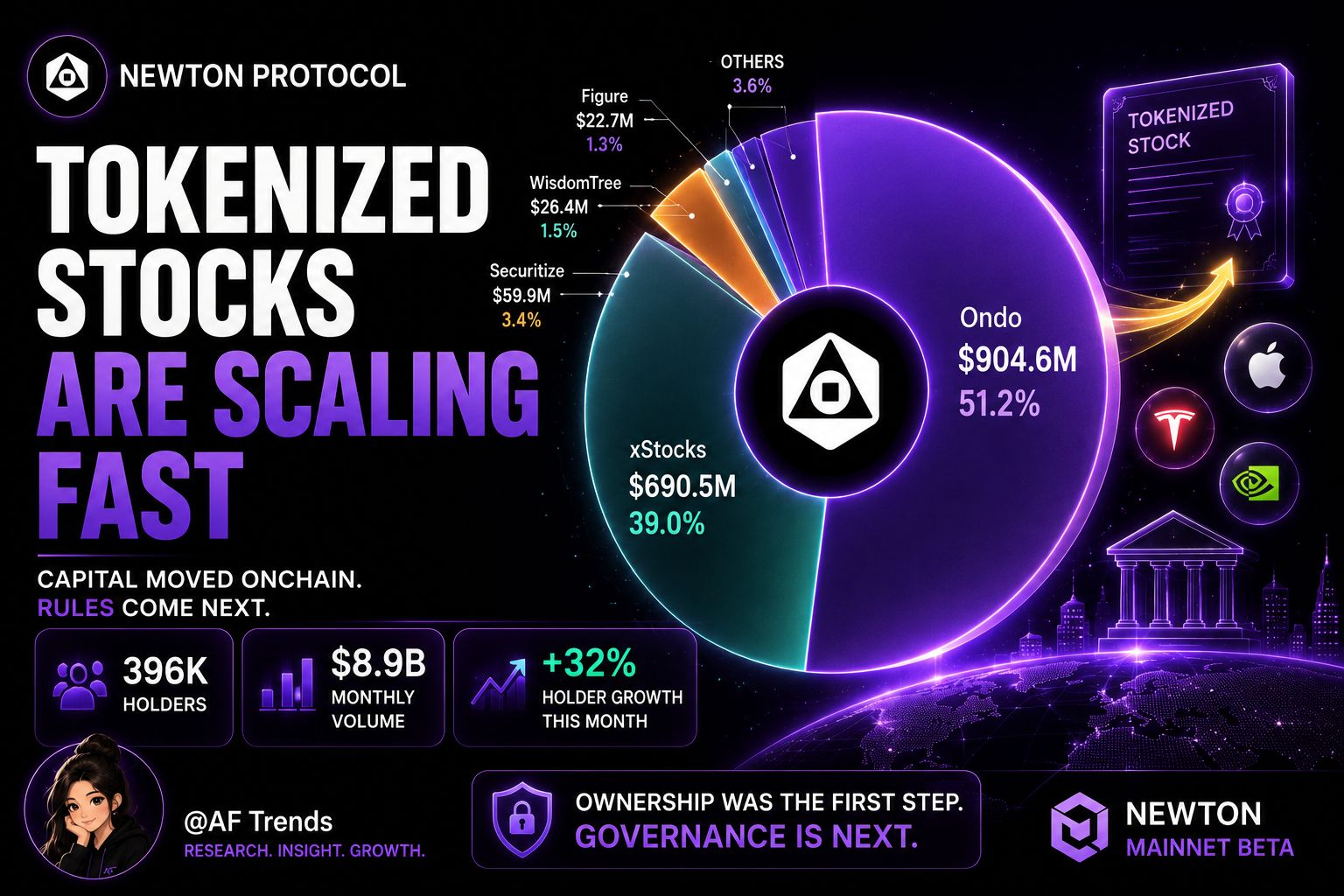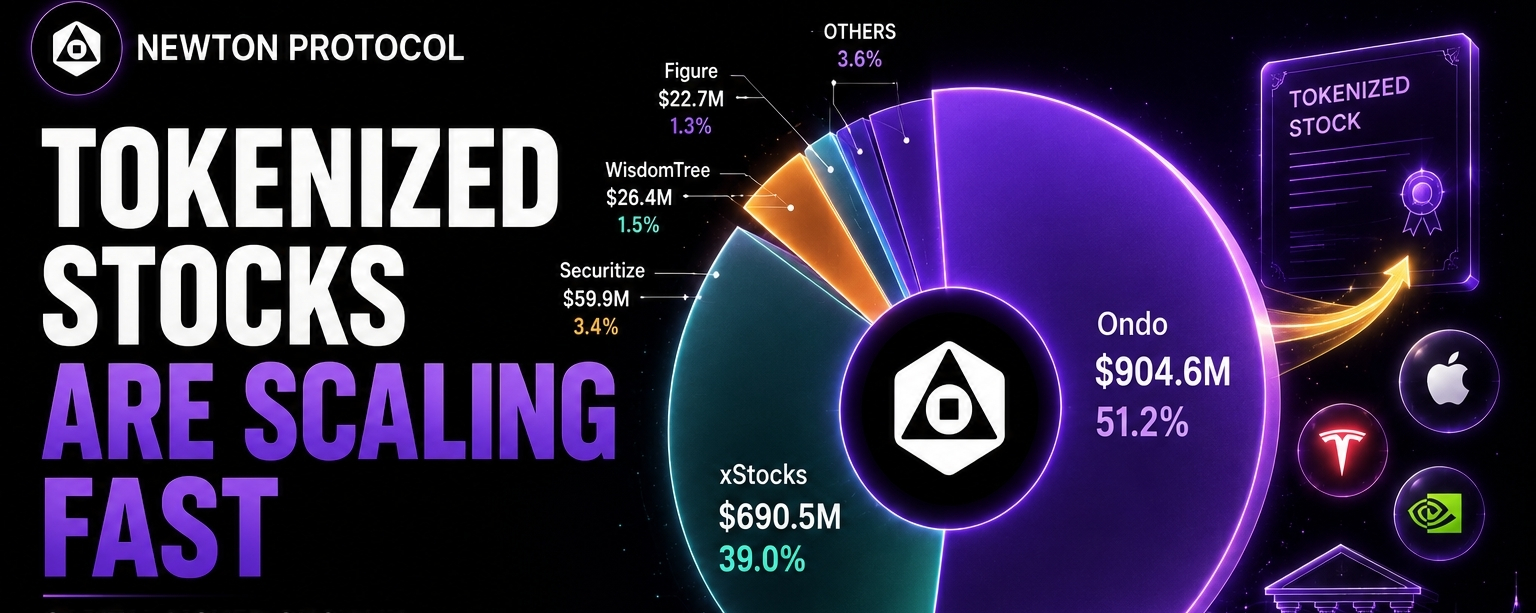
A few years ago, most people in crypto were trying to answer one question:
"Can real-world assets come onchain?"
Today that question feels mostly settled.
The numbers speak for themselves.
Hundreds of thousands of holders.
Billions in monthly volume.
New platforms launching almost every month.
The capital is already arriving.
What interests me now is a different question.
What happens after it gets here?
Tokenization sounds simple when discussed in headlines.
Take an asset.
Represent it onchain.
Allow people to trade it more efficiently.
In theory, everyone wins.
But the moment real capital starts flowing through a system, things become more complicated.
Not because the technology stops working.
Because people start caring about risk.
Imagine a tokenized stock owned by a fund.
The asset exists onchain.
The transaction works perfectly.
The wallet is valid.
But should every wallet be allowed to interact with it?
Should every automated strategy have access?
Should an AI agent be free to move those assets however it wants?
Most people immediately answer "no."
And that's where things get interesting.
Crypto spent years perfecting ownership.
Private keys solved an important problem.
They gave people direct control over their assets.
But ownership has never automatically answered permission.
Just because someone can do something doesn't necessarily mean they should.
Traditional finance understands this extremely well.
Every large financial system operates through layers of approval, policy, and oversight.
Not because those institutions dislike efficiency.
Because they learned that capital behaves differently at scale.
I think onchain finance is beginning to learn the same lesson.
The larger tokenized markets become, the more important rules become.
Not hidden rules.
Not opaque rules.
Programmable rules.
Transparent rules.
Rules that can be verified before transactions happen.
This is one reason Newton Protocol has caught my attention recently.
While most discussions focus on moving assets onchain, Newton is focused on something that comes afterward.
Decision making.
Who is allowed to act.
Under what conditions.
And how those decisions can be enforced before settlement occurs.
That sounds much less exciting than tokenization itself.
But infrastructure usually becomes important right before nobody can live without it.
I keep coming back to a simple observation.
Capital moved onchain faster than many people expected.
The next phase may not be about bringing more assets.
It may be about building the systems that govern those assets once they arrive.
Because the future of onchain finance isn't only about ownership.
It's about creating enough trust for larger amounts of capital to participate.
And trust rarely comes from technology alone.
It comes from the rules surrounding it.