
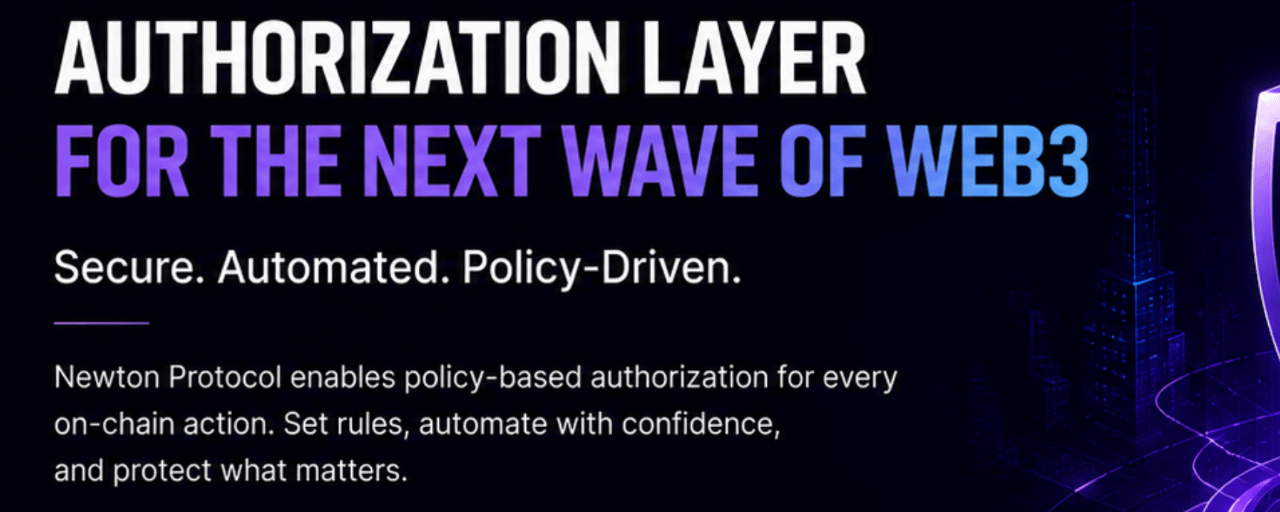
As blockchain technology matures, the conversation is moving beyond simple token transfers and smart contracts. The next generation of decentralized applications will increasingly rely on automation, AI agents, and programmable workflows to perform tasks on behalf of users. While this creates exciting opportunities, it also raises an important question: how can automated transactions remain secure while still giving users full control over their assets?
This is where @NewtonProtocol caught my attention. Rather than focusing only on improving transaction throughput, Newton Protocol is building an authorization layer that allows users and developers to define policies governing how and when on-chain actions can occur. In my opinion, this type of infrastructure will become increasingly valuable as decentralized applications grow more sophisticated.
The launch of Newton Mainnet Beta is an important milestone because it gives builders the opportunity to experiment with these capabilities in a real blockchain environment. Developers can begin creating applications that incorporate customizable permissions, spending limits, approval conditions, and policy-driven execution. These features have the potential to reduce operational risks while making blockchain automation far more practical for both individuals and organizations.
I also believe this technology extends beyond DeFi. Digital asset management, DAO governance, enterprise treasury operations, and AI-powered blockchain services could all benefit from stronger authorization mechanisms that improve transparency and reduce the likelihood of unintended transactions.
Infrastructure projects often operate behind the scenes, but they frequently become the foundation for future innovation. I'm excited to see how the community builds on Newton Mainnet Beta and how the ecosystem evolves over time. If adoption continues to grow, @NewtonProtocol could play an important role in enabling a more secure and intelligent Web3 experience.