

The Everyday Friction That Keeps Showing Up
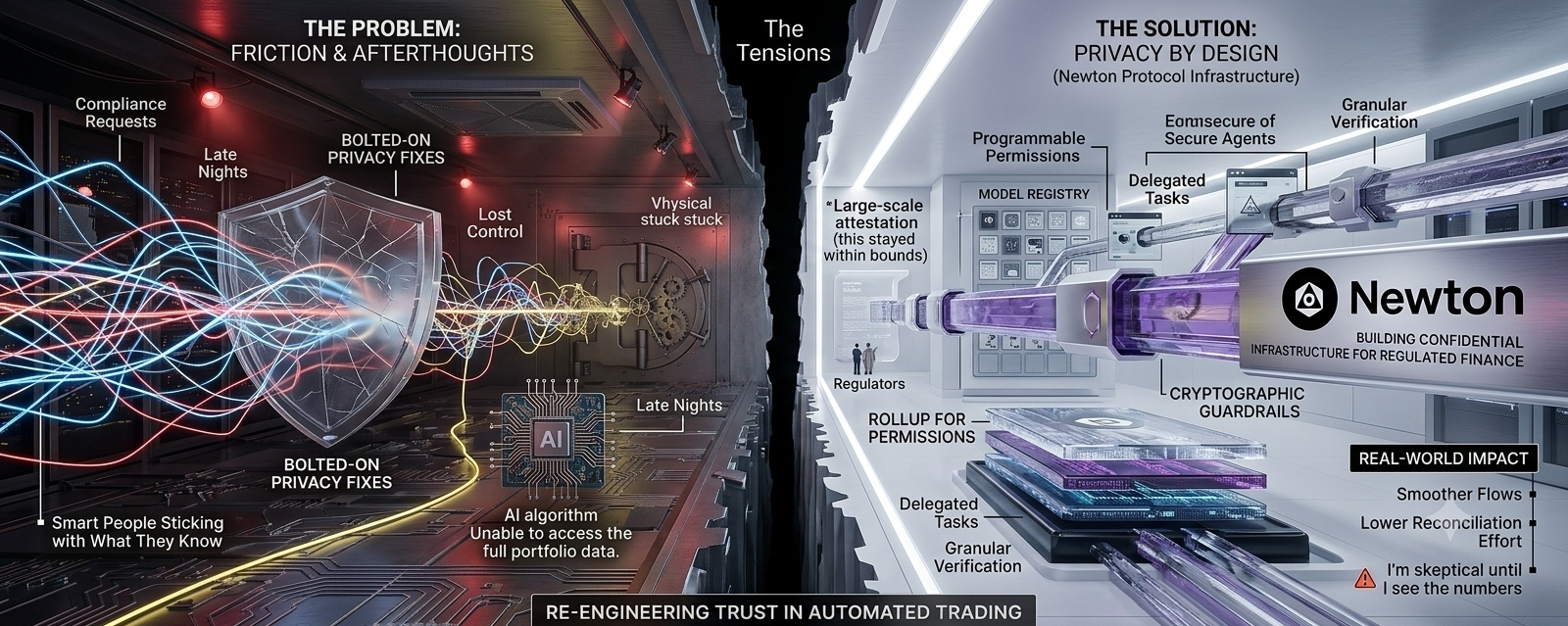
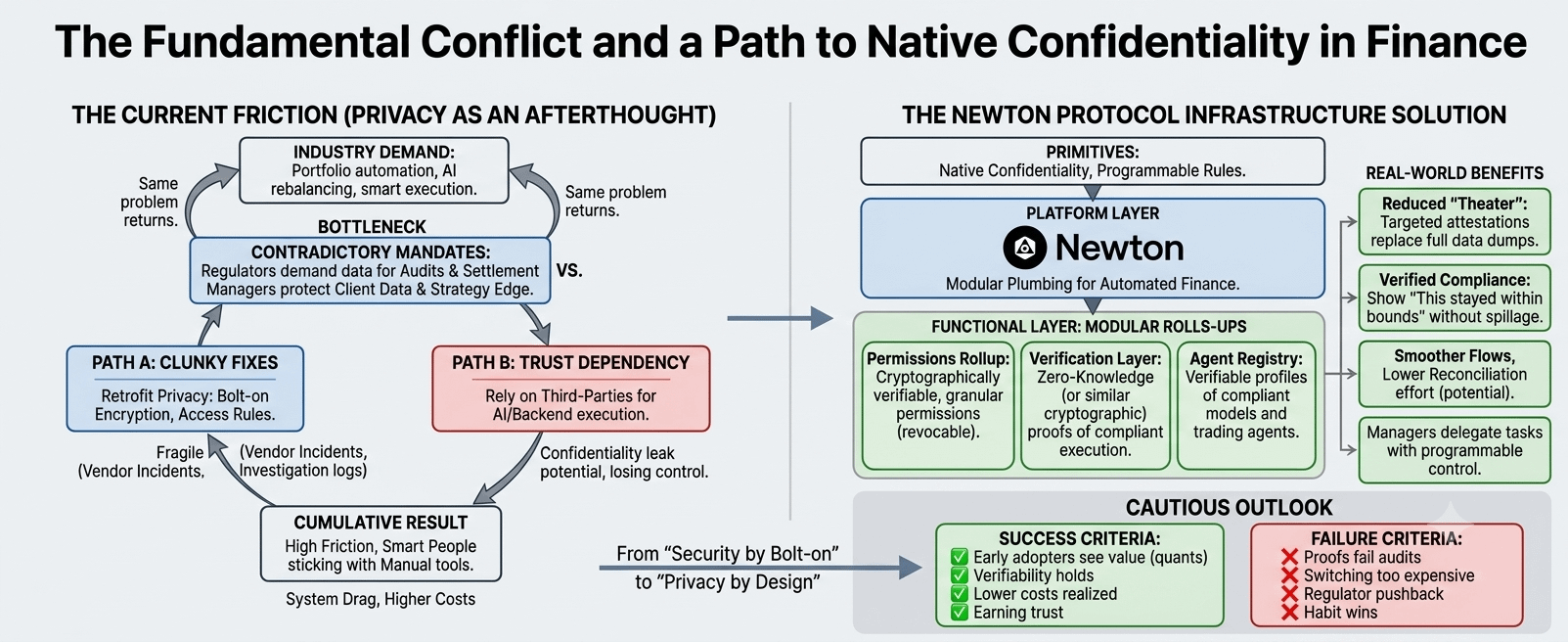
I keep thinking about those late nights when compliance requests land and you realize the same problem is still there. Portfolio managers want to automate the repetitive parts — rebalancing when signals hit, executing trades intelligently, letting some AI logic run in the background. But regulated finance makes it feel like you always have to choose: share enough data for audits and settlement, or risk losing control of your edge and client information. Regulators have valid points about preventing blow-ups, but the way we've built the system turns privacy into something you fight for after the fact. It creates real drag — higher costs, slower decisions, and a lot of smart people sticking with what they know even when better tools exist.
Why Most Privacy Fixes End Up Feeling Clunky
From what I've seen, privacy usually gets added as an afterthought — a bit of encryption here, some access rules there, special processes for sensitive stuff. It holds until a vendor has an incident, a log gets pulled in an investigation, or your AI model needs real portfolio data and suddenly you're back to trusting whoever's running the backend. Builders feel it too: you want agents that can act on market moves without broadcasting your whole strategy. Institutions sense the fragility and often default to slower paths. People naturally protect what gives them an advantage, so systems that demand too much visibility just push activity elsewhere or slow everything down.
The Bigger Tension in Regulated Finance
At its heart, this world sits in an awkward spot. You need transparency for the system — settlement proofs, compliance trails, market integrity. At the same time, confidentiality is what lets strategies work and protects clients. When infrastructure is built to record everything first and lock it down later, costs climb and solutions feel incomplete. Retrofitting privacy rarely feels natural. It creates new weak points where trust sneaks back in, often in the form of people or companies you hope are reliable. This is why automation in regulated spaces still feels risky and adoption stays cautious.
How Newton Protocol Fits In (As Infrastructure)
This is where something like Newton quietly sits in my mind — not as the next big hype, but as an attempt to build better plumbing. It seems focused on letting automated strategies run under tighter, programmable rules. Think granular permissions you can revoke, execution that can be verified without revealing everything, and a way to delegate specific tasks while keeping real control. No full custody giveaway, just cryptographic guardrails so you can show "this stayed within bounds" when needed.
It includes ideas like a specialized rollup for permissions and a registry for models or agents. The goal feels practical: prove compliance without spilling proprietary details. I like that it treats the protocol more like infrastructure than a flashy product.
Real-World Usage, Behavior, and Trade-Offs
- **Compliance and Law**: It could reduce some of the theater by offering targeted attestations instead of full data dumps, which might help with audits and regulators.
- **Settlement and Costs**: Potentially smoother flows and lower reconciliation effort, but only if it integrates cleanly with what already exists — I'm skeptical until I see the numbers.
- **Human Side**: Will managers trust programmable permissions more than old-school contracts? Early adopters might be quant teams or those already blending traditional and on-chain assets. Many others will wait and watch.
The developer marketplace angle makes sense for composing agents under strict limits, but getting enough people coordinated is always harder than it looks.
Cautious Outlook — Who Might Use It and What Could Go Wrong
I've seen enough projects stumble that I stay realistic. The people most likely to try this are those feeling the current pain sharply: quant funds experimenting on-chain, platforms serving sophisticated clients, and developers who want their agents to prove good behavior. It could gain traction in areas like cross-border strategies or regulated rebalancing where workarounds are especially messy.
It might work if the verifiability holds up, costs actually drop, and early users generate quiet confidence. It could fail if the proofs don't survive real audits, switching feels too expensive, regulators push back hard, or it simply doesn't solve enough daily headaches to beat habit.
A Grounded Takeaway
Regulated finance doesn't need more bolted-on privacy features. It needs confidentiality as part of the foundation — privacy by design, not exception. Newton or efforts like it could help shift that default, but only if they survive the grind of real use: reliability at scale, genuine savings, and earning trust the hard way. I'm not ready to declare victory, but the underlying frustration is real enough that something has to improve eventually. Worth watching carefully.
#BlackRockIBITHoldingsFallNearly100000BTC #USADP98KMiss #Binance1B$inStocks #MicronFalls10.5% $METAB $TSLAB $NEWT @NewtonProtocol #Newt
