

At first, I ignored Newton Protocol.
Not because the idea was bad. Because it sounded too familiar.
Another AI x crypto infrastructure layer. Another promise that agents would trade, rebalance, optimize, and automate everything while users watched from the sidelines. We have heard this story before. Usually, the demo looks cleaner than the reality.
But the more I looked at @NewtonProtocol , the more I realized the interesting part was not “AI” at all.
It was authorization
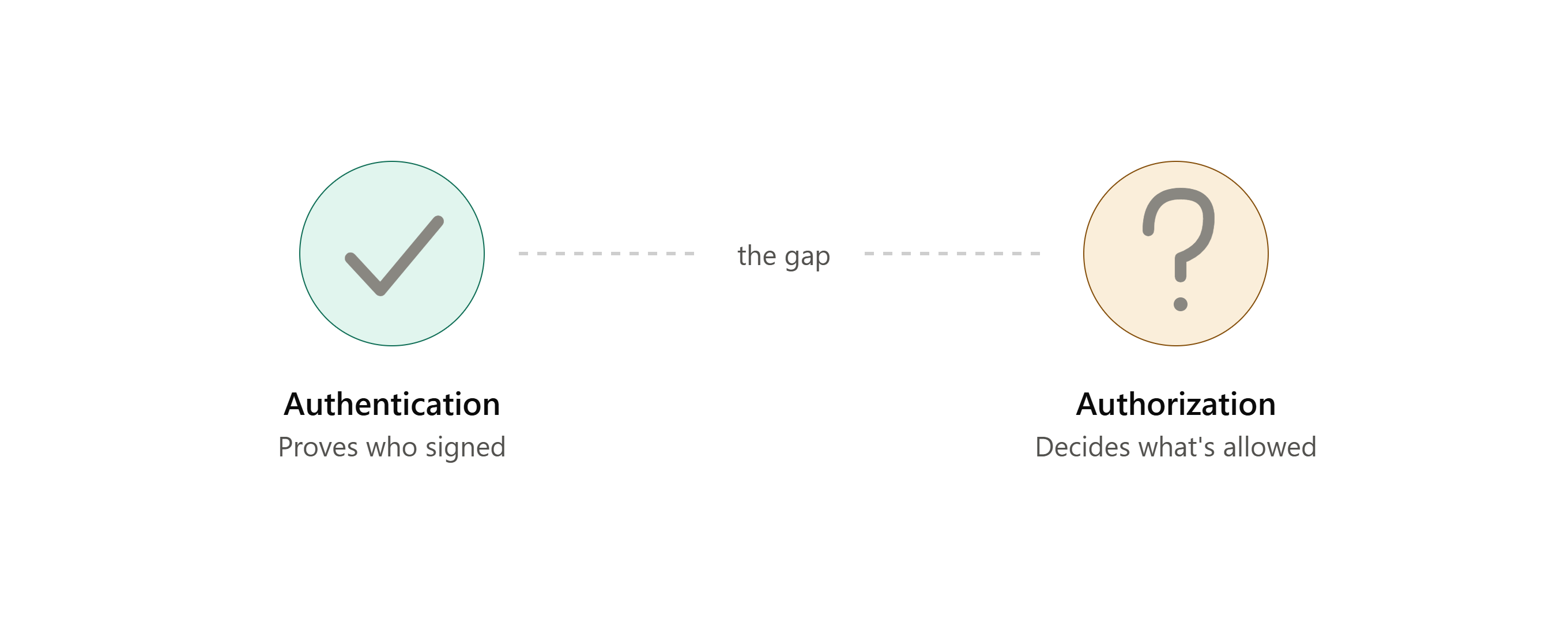
Crypto has become very good at authentication. A wallet signature can prove that a private key approved an action. It can prove control. It can prove identity in the narrow crypto sense.
But it does not prove that the transaction should have been allowed.
That gap sounds small until real money, vaults, institutions, stablecoins, and automated agents enter the room.
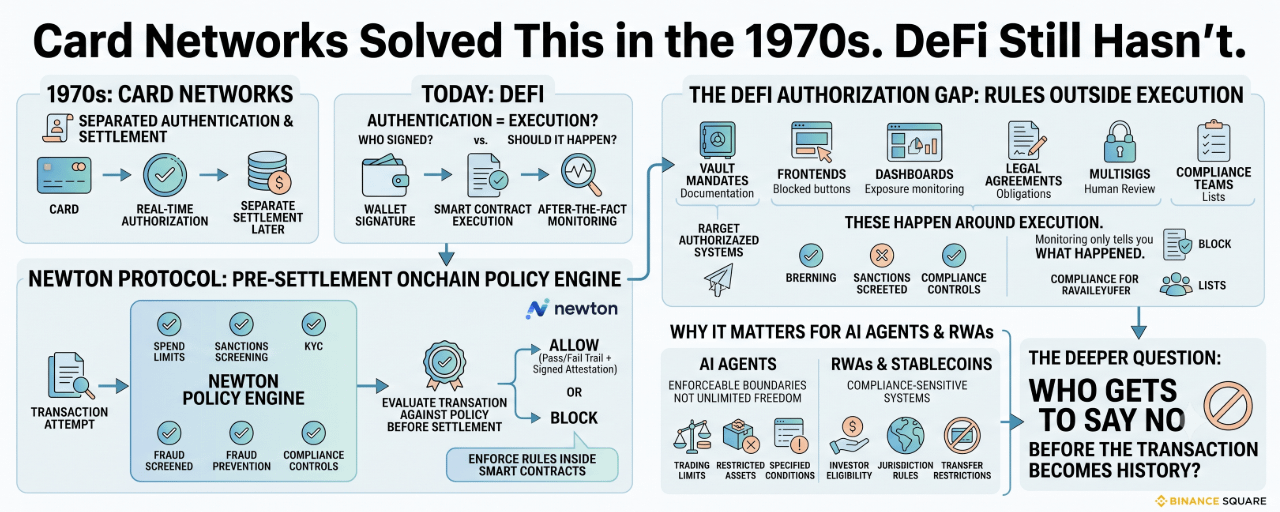
Card networks started separating authorization from settlement decades ago. Visa’s Base I system, developed in 1973, handled real-time authorization, while settlement happened separately later. DeFi, strangely, still often behaves as if a valid signature is enough.
It is not.
In today’s DeFi, many rules live outside the transaction itself. Vault managers describe mandates in documentation. Frontends block certain actions. Dashboards monitor exposures. Multisigs add human review. Legal agreements define obligations. Compliance teams maintain lists. Risk tools send alerts.
All of this helps.
But much of it happens around execution, not inside execution.
That is the quiet weakness.
Monitoring tells you what happened. Authorization decides whether it should happen before it settles.
Those are not the same thing.
A dashboard can show that a vault broke its risk limit. A legal document can say a manager was not supposed to touch a restricted asset. A frontend can hide a button. A multisig can slow things down. But if the smart contract itself does not enforce the policy at transaction time, the system is still relying on behavior, trust, or after-the-fact correction.
That may work for small users.
It becomes harder for curated vaults. Harder for AI-driven strategies. Harder for automated trading. Harder for stablecoins and tokenized real-world assets. Harder for institutions that need audit trails before they can justify serious capital.
This is where Newton becomes worth studying.
Newton describes itself as a decentralized policy engine for onchain transaction authorization, built to enforce rules such as spend limits, sanctions screening, fraud prevention, and compliance controls inside smart contracts. Its mainnet beta is live, and the practical claim is simple: evaluate a transaction against policy before settlement, then allow or block it based on the result.
That is not a glamorous idea.
It is infrastructure.
The recent Newton Mainnet Beta matters because it moves the discussion from abstract guardrails to transaction-time checks. Newton’s own messaging says it checks rules before a transaction settles and writes a signed attestation that others can verify. In practice, that means a vault, agent, or automated system could produce a pass/fail trail instead of asking users to trust a black box.
This is especially relevant for AI agents.
Giving an agent wallet access once is not the same as giving it permission every time. An agent may be allowed to rebalance within limits, but not withdraw everything. It may trade approved assets, but not touch restricted ones. It may operate during normal conditions, but pause under stress.
The market does not need agents with unlimited freedom.
It needs agents with enforceable boundaries.
For RWAs and stablecoins, the same logic applies. Compliance-sensitive systems cannot rely only on good intentions, screenshots, or post-event reporting. Newton’s site frames its use cases around RWAs, stablecoins, and agentic finance, including investor eligibility, jurisdiction rules, transfer restrictions, KYC, screening, and spending caps.
Still, the risk is real.
Authorization layers add friction. They require integration. They depend on policy quality and data inputs. A weak rule can still approve the wrong thing. A bad oracle can poison the decision. Users may route around systems that feel slow or restrictive. Builders may resist anything that complicates composability.
That is the test for $NEWT and Newton Protocol.
Not whether the story sounds impressive.
Whether serious systems decide that pre-settlement enforcement is worth the cost.
If DeFi wants vaults, AI agents, stablecoins, RWAs, and institutional capital to operate at scale, “who signed?” is no longer enough.
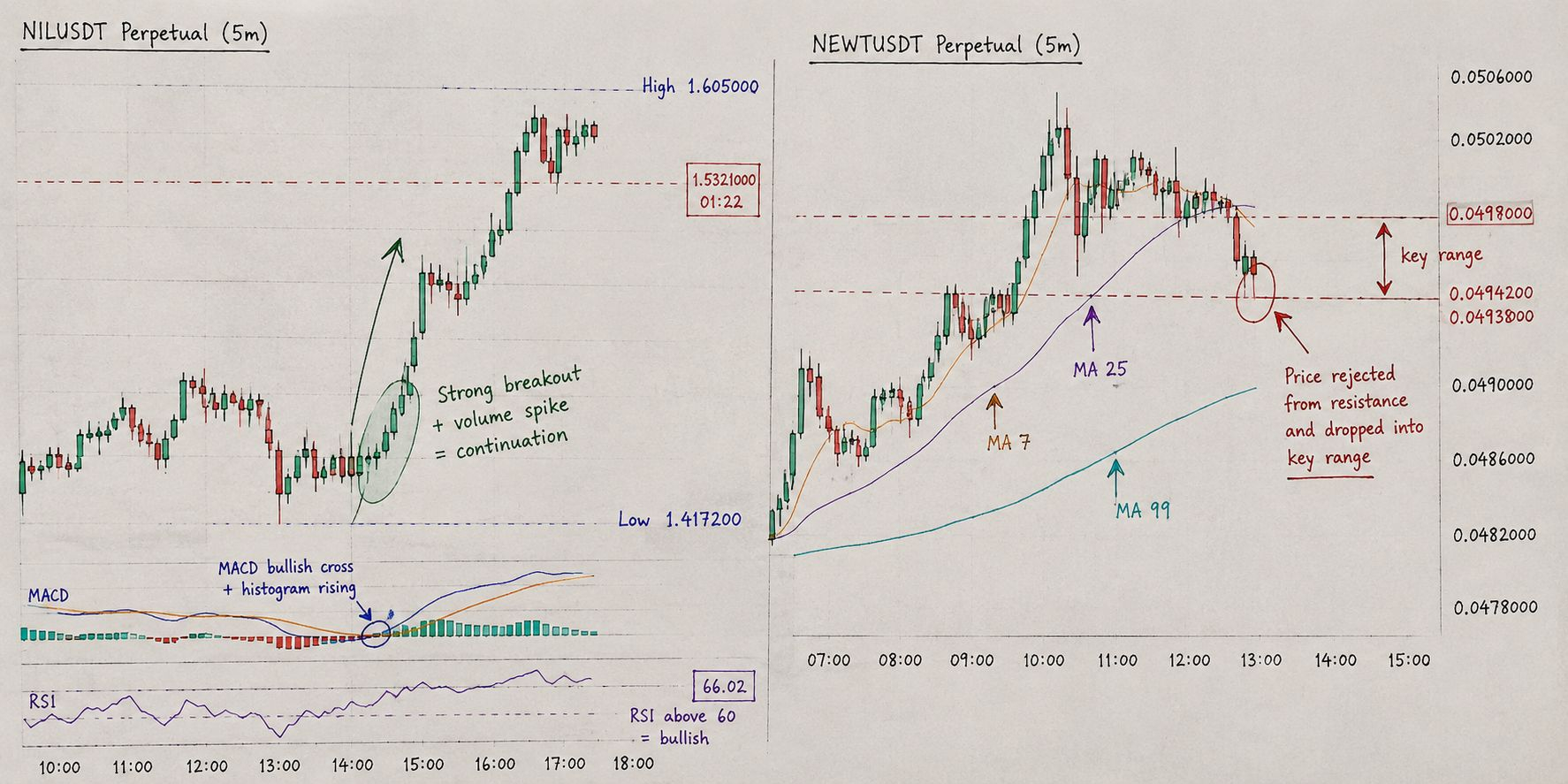
M is still the stronger chart, but the move is entering the danger zone.
Price holds near 1.58 after a sharp run toward 1.65, RSI around 66 — bullish, but stretched.
NEWT looks more controlled.
It rejected 0.0504 and is now ranging near 0.0497, with RSI around 50.
The hidden signal? M has momentum, NEWT has structure.
Breakout buyers need confirmation, not emotion
The deeper question is colder:
Who gets to say no before the transaction becomes history?
#Newt #NEWT #newt $M $TLM