
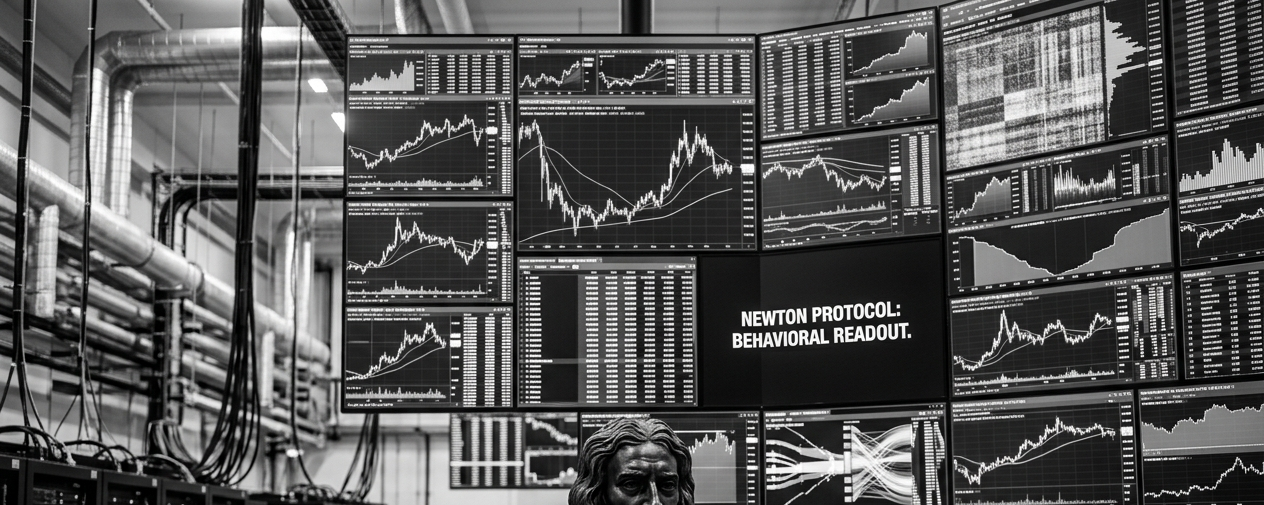

Hi guys today's special, Technical Analysis of Newton Protocol on the Binance Platform
The cryptocurrency market is known for its fast movements and dynamic trading environments. Among the assets gaining traction is the Newton Protocol token, which serves as a decentralized infrastructure layer designed for automated on-chain systems. When trading this digital asset on the Binance platform, market participants heavily rely on technical analysis to forecast potential price movements and understand market sentiment. Technical analysis is the study of historical market data, primarily price and volume, to identify repetitive patterns and trends. By analyzing these past behaviors, traders aim to make informed decisions regarding future price directions.
The Core Principles of Price Action
Technical analysis operates on the premise that all known market information and sentiment are already reflected in the current price of the token. Therefore, studying the price chart itself provides the most direct insight into the balance of power between buyers and sellers. On Binance, the Newton token can be observed through various timeframes, ranging from short term intervals like fifteen minute charts to longer term horizons like daily or weekly charts. Bullish momentum occurs when buying pressure outweighs selling pressure, leading to a sequence of higher highs and higher lows. Bearish momentum occurs when sellers dominate the market, pushing the value downward and creating lower highs and lower lows. Consolidation represents a period of indecision where the price moves sideways within a defined range, indicating an equilibrium between supply and demand.
Utilizing Moving Averages for Trend Identification
Moving averages are essential tools used by traders to smooth out short term price fluctuations and isolate the underlying market trend. By averaging price data over a specific number of days, these indicators show whether the general trajectory is pointing upward or downward. A rising moving average indicates an uptrend, while a declining moving average suggests a downtrend. Two of the most widely monitored benchmarks are the fifty day moving average and the two hundred day moving average. The fifty day moving average tracks medium term momentum, while the two hundred day moving average represents the long term macro trend. When the shorter term moving average crosses above the longer term moving average, it generates what traders call a golden cross, signaling a strong potential shift toward a bullish market. Conversely, when the fifty day moving average drops below the two hundred day moving average, it creates a death cross, indicating that a bearish period may be ahead.
Evaluating Market Momentum with the Relative Strength Index
To determine whether the Newton token is being overbought or oversold, technical analysts frequently turn to momentum oscillators, with the Relative Strength Index being one of the most prominent. This indicator measures the speed and change of price movements on a scale that ranges from zero to one hundred. When the index rises above seventy, it typically implies that the asset has experienced rapid upward momentum and may be due for a temporary pullback or consolidation. When the index falls below thirty, it suggests that selling pressure has been intense, potentially leaving the token undervalued and primed for a corrective bounce. Traders on Binance monitor these thresholds closely, looking for divergences where the price makes a new high but the oscillator fails to do so, which can signal an impending reversal.
Identifying Support and Resistance Zones
Another cornerstone of technical analysis is the identification of support and resistance levels. These levels act as psychological barriers on the chart where price movements historically tend to pause or reverse. Support represents a price floor where buying interest is strong enough to overcome selling pressure. When the price of the Newton token drops toward a historical support zone, buyers often step in, anticipating a rebound. Resistance, on the other hand, acts as a price ceiling where selling interest overcomes buying pressure, preventing the asset from climbing higher. A decisive breakout above a major resistance level often transforms that previous ceiling into a new floor of support, opening the door for further upward exploration.
The Importance of Trading Volume
Price action alone is rarely sufficient to confirm a market trend; it must be validated by trading volume. Volume reflects the total amount of the token traded during a specific period on the exchange. High trading volume during an upward breakout indicates strong institutional and retail conviction, suggesting that the move is sustainable. On the other hand, if the price attempts to break above a resistance level on low volume, the move is often viewed with skepticism and may result in a false breakout, trapping unsuspecting buyers.
Synthesizing the Technical Outlook
Successful trading on Binance requires a holistic approach that combines multiple indicators rather than relying on a single signal. By combining the insights from moving averages, momentum oscillators, support zones, and volume patterns, market participants can construct a comprehensive view of the market structure for the Newton token. While technical analysis does not guarantee future results, it significantly improves probability management, allowing traders to set clear risk management parameters, protect their capital, and navigate the volatile landscape of the digital asset markets with greater codiscipline. discipline.