
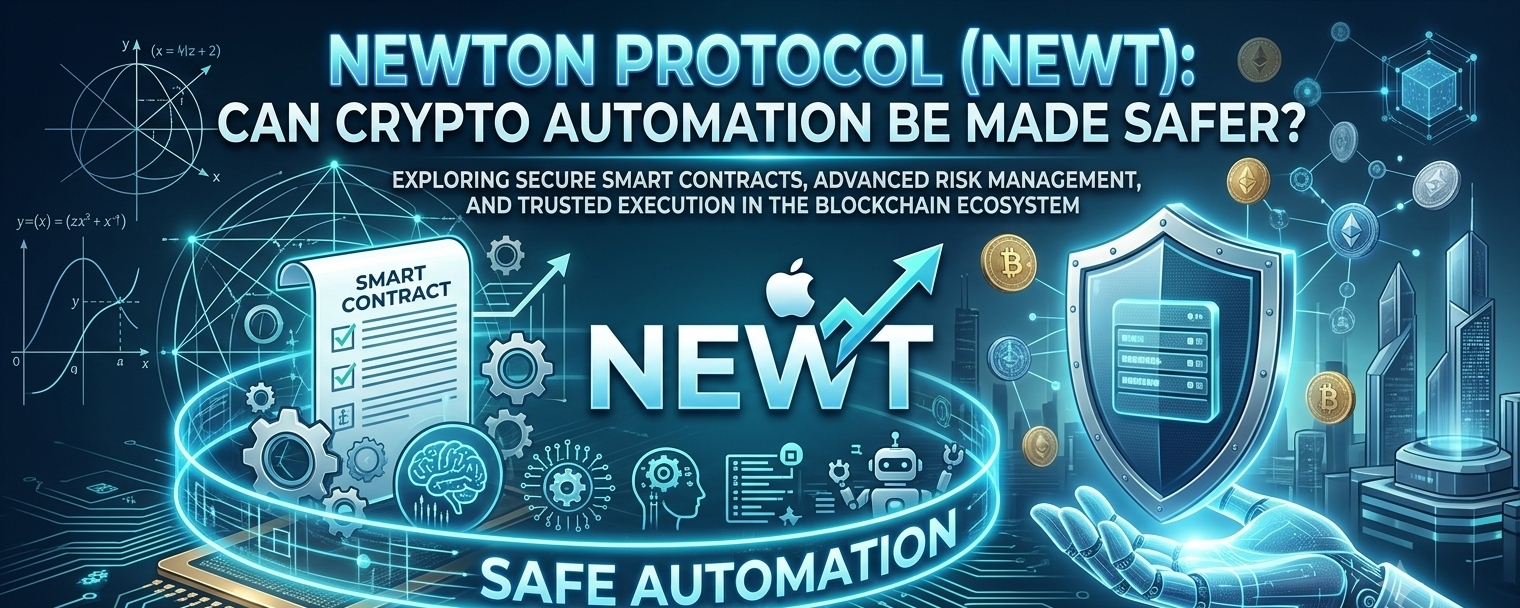
As crypto becomes more automated, a basic problem is becoming harder to ignore: how do you let software act on your behalf without giving it too much control? Bots, trading systems, and AI agents can execute tasks faster than humans, but once a wallet or contract has broad permissions, mistakes can become expensive very quickly. In most cases, blockchains only verify whether a transaction is technically valid, not whether it should have been allowed under specific limits, rules, or risk conditions.
Newton Protocol is one attempt to address that gap. Rather than focusing only on AI-driven trading or automation, it presents itself as infrastructure for verifiable onchain actions. The idea is simple in theory: users or developers define rules for what an automated agent is allowed to do, and the protocol helps ensure those rules are checked before execution. Instead of unrestricted wallet control, Newton’s approach combines scoped permissions, offchain policy checks, and onchain verification.
This matters because earlier automation models often relied on trust in centralized bots, front-end restrictions, or custom smart contract logic that only worked in narrow cases. Those systems could be useful, but they were often rigid, fragmented, or difficult to audit across multiple chains and applications. Newton tries to turn that into a more general framework, where automated actions can be constrained by predefined conditions rather than broad delegation alone.
Its architecture is built around a policy engine, a verification layer, and a longer-term rollup design. In practical terms, that means a transaction can be evaluated against rules such as spending limits, strategy conditions, or compliance requirements before it is approved. Newton’s broader goal is not just to make crypto automation more powerful, but to make it more accountable.
Still, the project raises real questions. It depends on offchain data, policy logic, and a fairly complex technical stack, which means verifiability does not automatically guarantee correctness. A bad rule, weak data source, or confusing user setup could still create problems. There is also a broader tension in its positioning: Newton appears to target both crypto-native automation users and institutions that want programmable compliance. Those audiences overlap in some ways, but they do not always want the same thing.
That is why Newton is interesting, but not easy to judge. It is trying to solve a real problem in onchain automation, especially as AI agents become more involved in financial activity. But whether it becomes useful infrastructure may depend less on the promise of “AI in crypto” and more on whether it can make automated permissions genuinely safer without making the system too complex, too restrictive, or too dependent on new layers of trust.
