
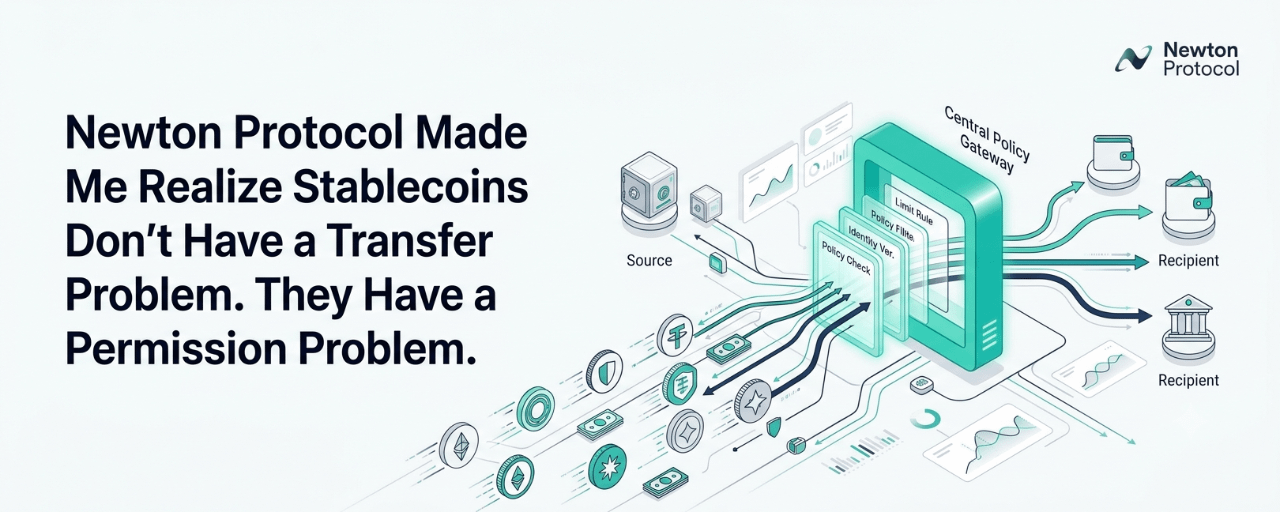
i've watched stablecoins become one of crypto's biggest success stories.
Moving digital dollars across the world now takes seconds instead of days. Settlement has improved dramatically, liquidity has grown, and adoption keeps expanding.
Yet i don't think faster transfers are the hardest problem anymore.
The harder question is surprisingly simple.
Should every transfer be allowed to happen exactly the same way?
That thought stayed with me while reading about @NewtonProtocol .
One area the protocol highlights is stablecoin compliance. Rather than expecting every issuer, wallet or application to build separate rule engines, Newton Protocol introduces a policy layer where transfers can be evaluated against predefined requirements before execution. The objective isn't to change how stablecoins move, but to make compliance programmable instead of manually reconstructed across different systems.
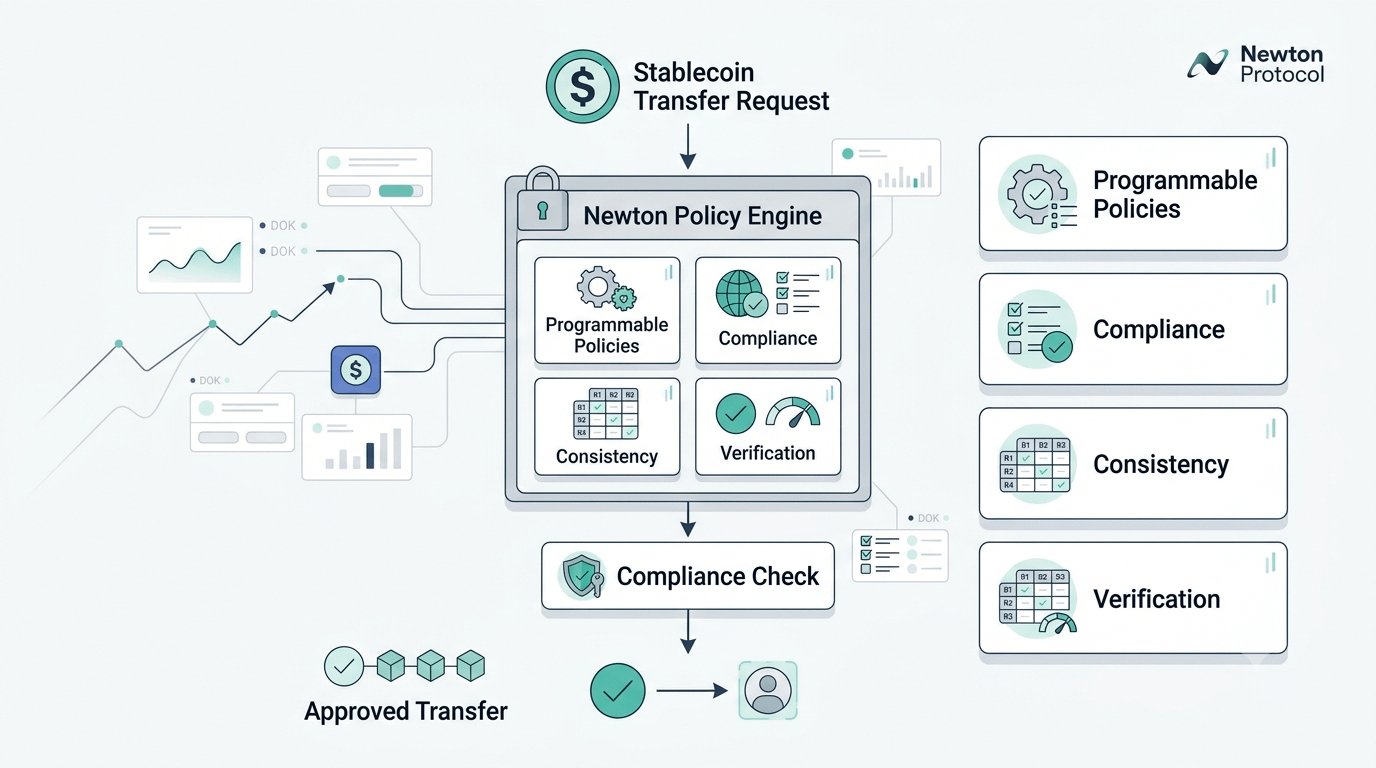
What interested me wasn't compliance itself.
It was consistency.
Today, two organizations can handle nearly identical transactions while applying completely different approval processes. One may perform additional checks. Another may rely on external reviews. Someone else may build custom logic that cannot easily be reused elsewhere.
Eventually the infrastructure becomes fragmented.
The more participants involved, the more difficult it becomes to understand which rules were actually applied before money moved.
I think that's where programmable policies become interesting.
Not because they make transfers faster.
Because they make expectations easier to standardize.
That doesn't remove responsibility.
Policies still have to be written carefully, regulations continue changing and different jurisdictions will always require different rules.
Infrastructure cannot solve those decisions.
It can only help enforce them more consistently.
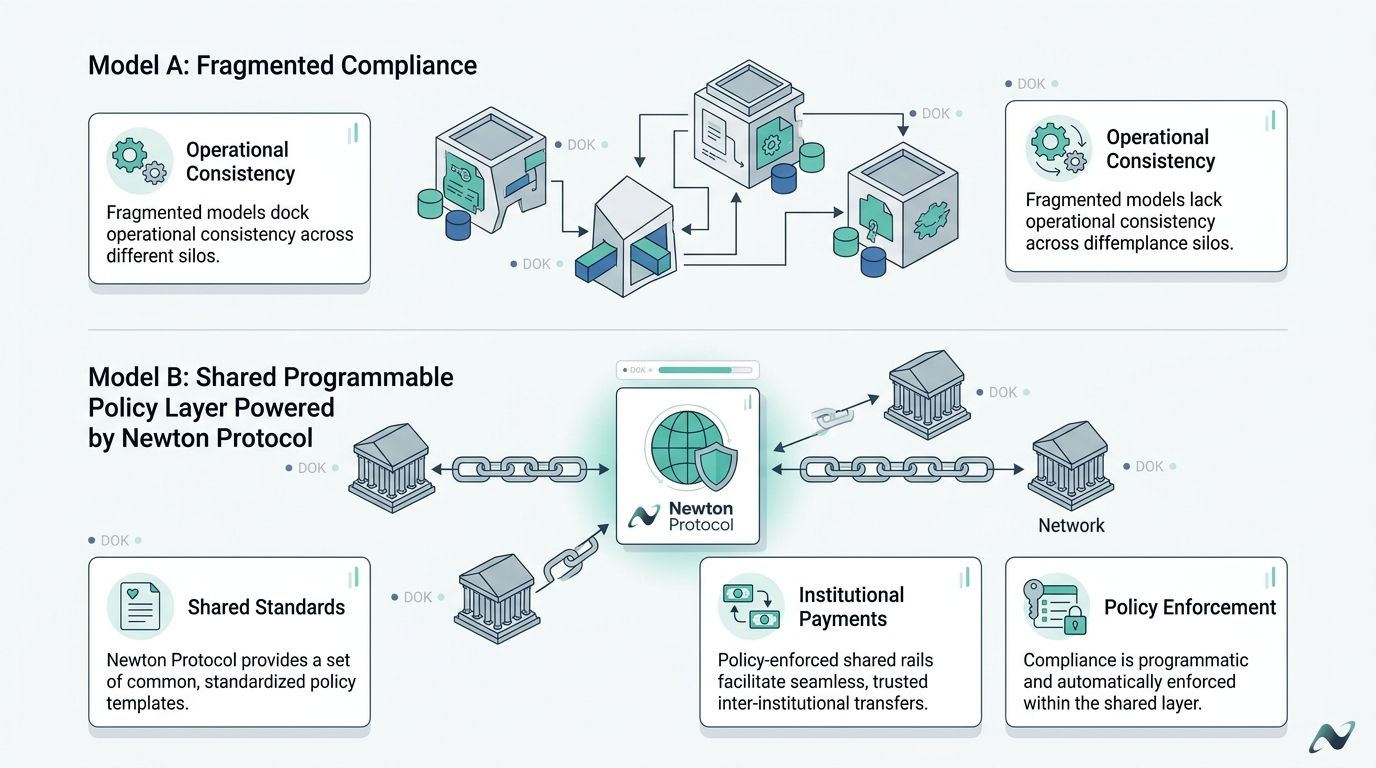
As stablecoins continue expanding into payroll, treasury management and cross-border business payments, operational consistency may become just as important as settlement speed.
That's why NEWT continues to stand out to me.
Newton Protocol isn't trying to replace stablecoins.
It's exploring whether the rules surrounding them should become programmable infrastructure instead of isolated compliance processes inside every organization.
If that direction continues to mature, NEWT could become associated with making digital payments easier to govern, not simply easier to send.
To me, that's where the next infrastructure conversation begins.
As stablecoins become global, will the real challenge be moving money faster—or making sure every transfer follows the right rules before it moves??