
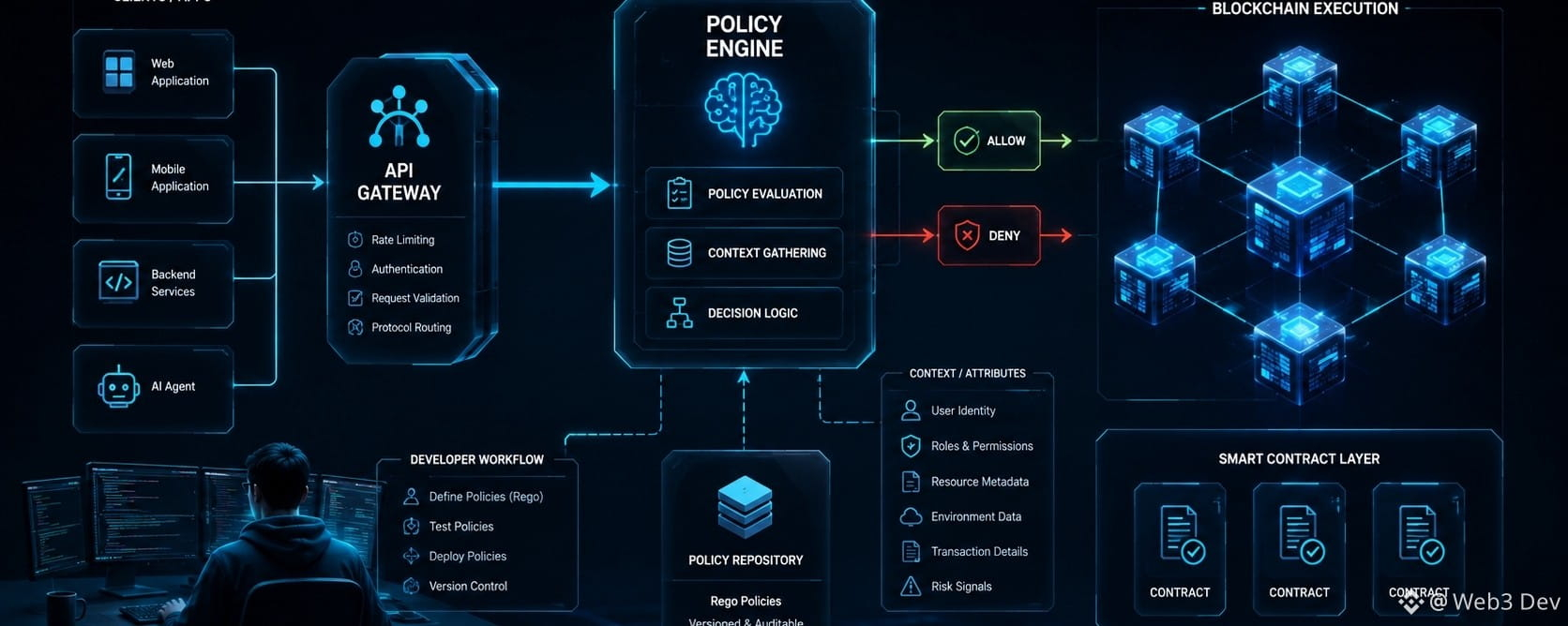
Traditional smart contracts excel at deterministic execution, but they struggle with a fundamental limitation: they cannot evaluate information that exists outside the blockchain. Whether a transaction violates an organization's spending policy, originates from a sanctioned address, or exceeds a predefined operational limit is often invisible to contract logic alone. This architectural gap is exactly where policy-driven authorization introduces a different security model.
Engineering Problem
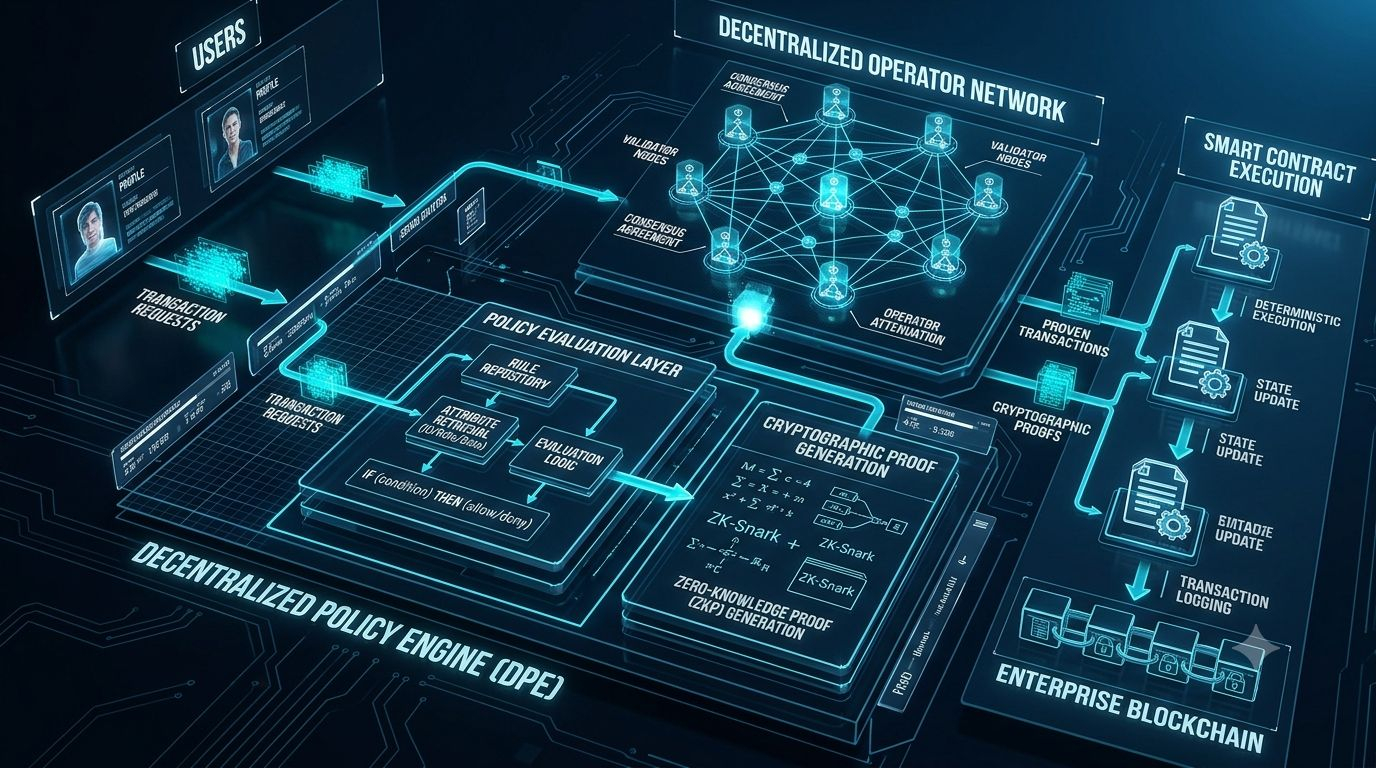
Conventional smart contract security emphasizes writing correct contract logic and validating inputs on-chain. However, authorization decisions frequently depend on changing external context rather than static contract code. Many applications compensate by placing policy checks in frontends or centralized APIs, yet those layers can be bypassed when users or automated systems interact directly with deployed contracts. According to the official Newton documentation, smart contracts are effectively blind to off-chain context, making external authorization difficult to enforce consistently.
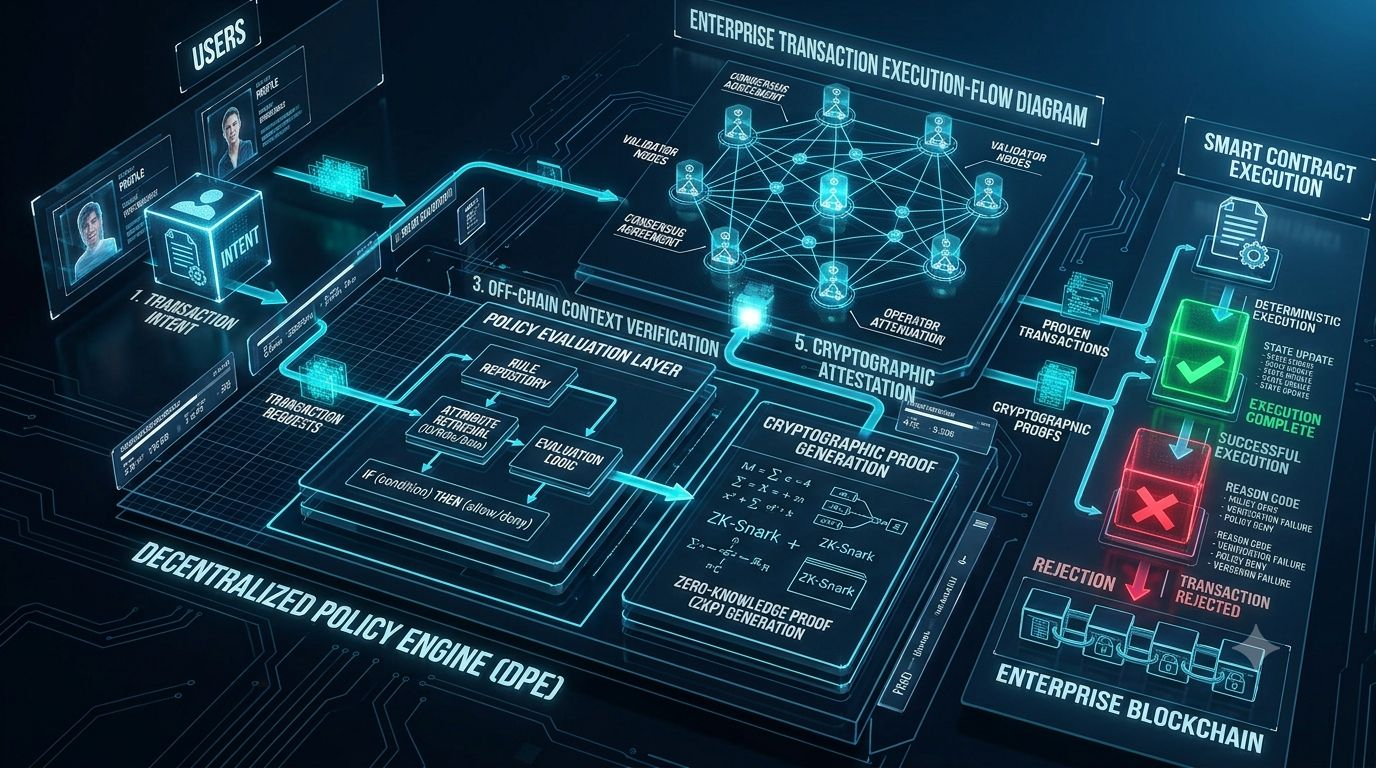
Architecture Explained
Newton approaches this challenge by introducing a decentralized policy engine for transaction authorization instead of embedding every authorization rule directly into contract logic. Policies encode conditions such as spend limits, fraud prevention rules, or compliance requirements, while decentralized operators evaluate these policies using both on-chain state and approved off-chain context before execution proceeds. Successful evaluations produce cryptographic proof that the required policy was satisfied for that specific operation. Rather than detecting violations after execution, the objective is to prevent unauthorized state transitions before they occur.
Developer Perspective
Backend engineers familiar with Node.js, TypeScript, Express middleware, IAM, or RBAC will recognize this separation of concerns. In modern backend systems, authorization rarely lives inside every business function. Instead, middleware evaluates permissions before protected operations execute.
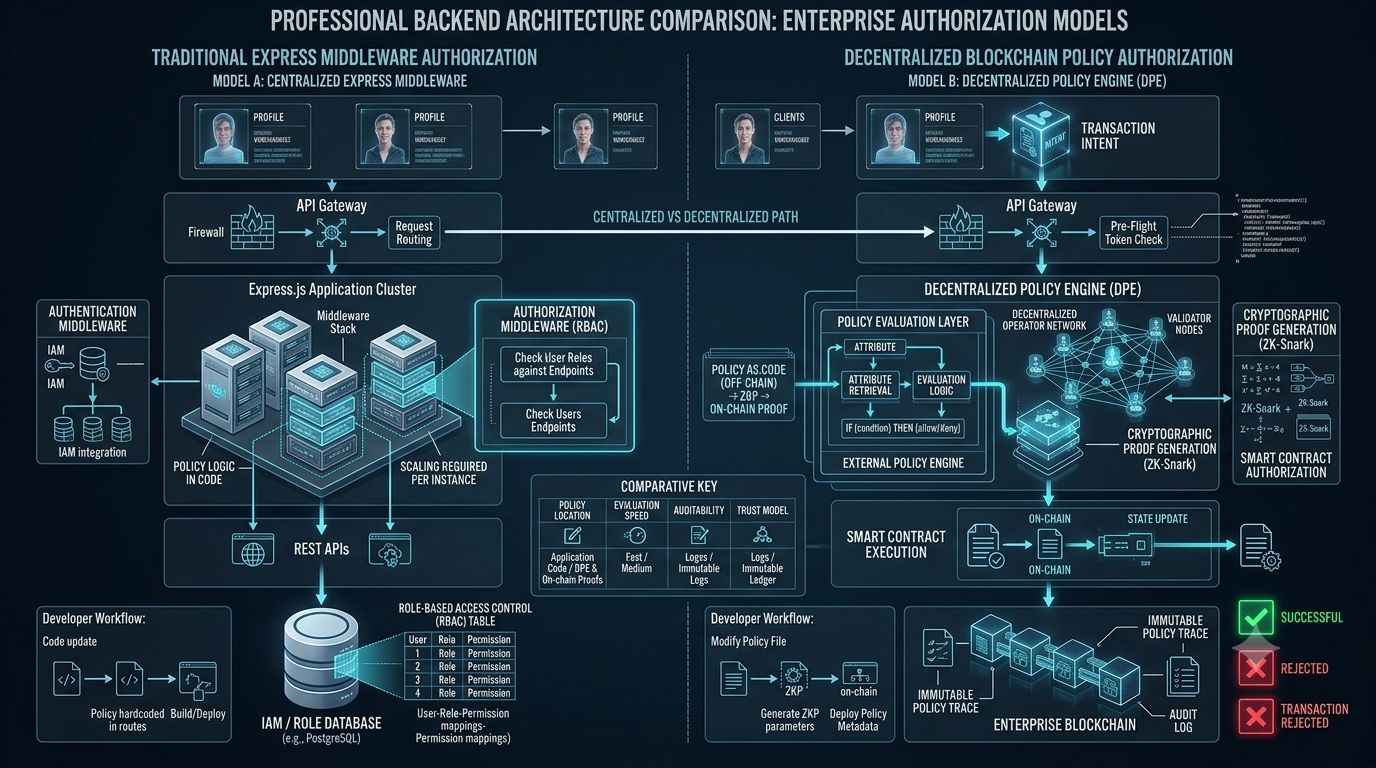
Policy-driven authorization extends this design principle into blockchain infrastructure. Rather than scattering identical authorization logic across multiple contracts, developers can integrate policy verification while preserving core application logic. This modular approach encourages clearer responsibilities between business execution and authorization enforcement, reducing duplication and making policy evolution more manageable.
Practical Importance
As blockchain applications increasingly interact with AI agents, institutional workflows, and automated infrastructure, authorization requirements become more dynamic than simple ownership checks. Runtime policy evaluation enables protocols to consider verified external information when determining whether a transaction should proceed, without fundamentally changing the execution semantics of smart contracts.
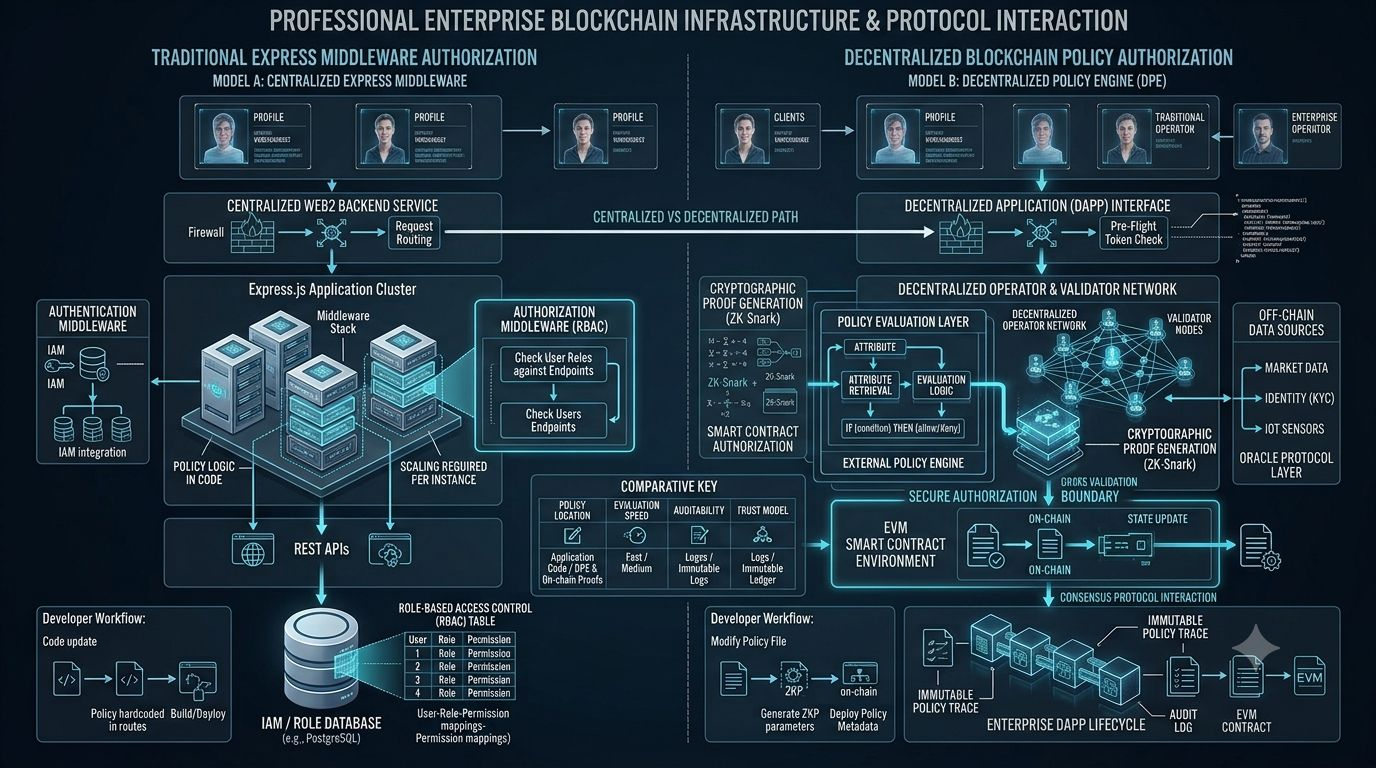
This architectural model is particularly valuable because authorization policies often evolve faster than application logic. Separating policy from execution allows governance, operational controls, and security requirements to adapt without redesigning every contract that depends on them.
Policy-driven authorization changes the security conversation from "Did the contract execute correctly?" to "Should this transaction be allowed to execute at all?" That distinction is significant for developers designing systems that require runtime context alongside deterministic execution. Understanding this separation helps explain why @NewtonProtocol positions authorization as dedicated infrastructure rather than another feature inside contract code. For developers exploring $NEWT and the broader #Newt ecosystem, the architectural lesson is that robust authorization can become a reusable protocol capability instead of repetitive application logic.
Paid Partnership Notice: This technical analysis is part of the Newton CreatorPad campaign and is intended solely for educational discussion.
As decentralized applications increasingly depend on external context, should authorization evolve into a shared protocol layer rather than remaining embedded inside individual smart contracts?