
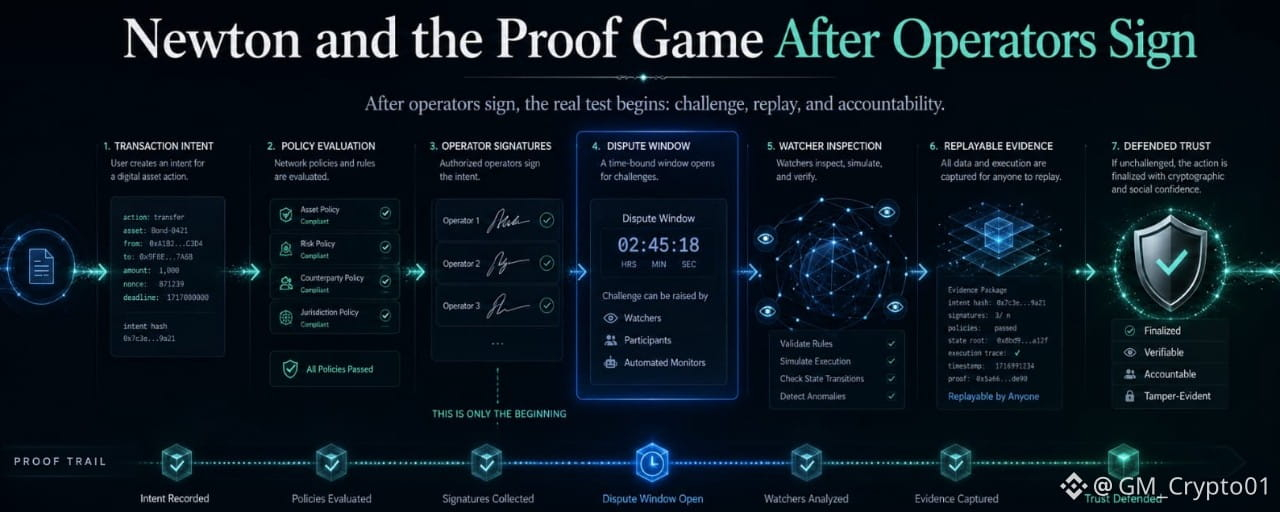

I use to think the operator signature was the serious part. The moment of approval looked like the hard line: either the transaction passed or it did not. After sitting with Newton’s design, that view feels too neat. The signature is not the finish. It is the reciept that starts the pressure.
The easy misreading is that Newton is just another compliance gate, a cleaner way to say yes or no before settlement. That is flattering becuase it makes the system sound simple. The stronger claim is less pretty: the real value sits after operators sign, when the signed result can still be challenged, checked, and made costly if wrong.
On the surface, an operator signs a policy result. Underneath, Newton separates policy definition, offchain evaluation, and onchain verification; operators evaluate the same intent, sign with BLS keys, and an aggregate proof is produced once quorum is reached. BLS just means many signatures can be compressed into one verifiable object. The docs list a 67% minimum stake quorum, which matters because the claim is not “one node said yes,” but “enough economic weight stood behind this result.”
But compression creates its own blind spot. A small signature can hide a large decision. Wich policy version was used. Which oracle value entered. Whether the data was stale. Whether the operator followed the rule or merely produced the right-looking output. Newton’s two-phase flow, with median consensus and a default 10% tolerance for numeric data, is trying to make operators sign the same message instead of thier private version of reality. That is useful, but not free. It adds coordination work before confidence appears.
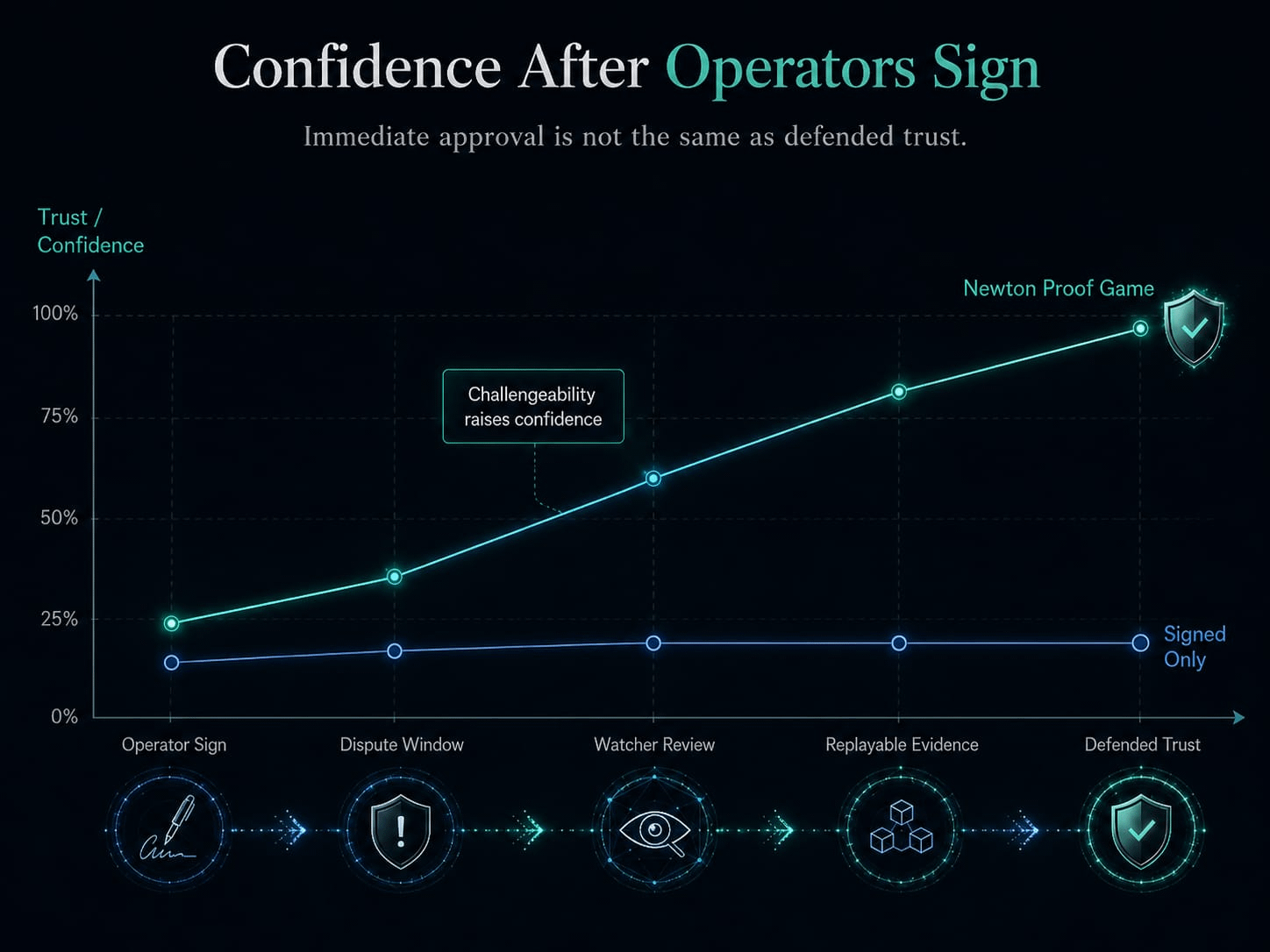
This is why the challenge window is not decoration 🧾. After an attestation lands onchain, Newton describes a period where anyone can dispute an incorrect evaluation; a successful challenge marks the attestation as challenged and can slash the offending operator. Slashing is plain punishment through stake loss. It encourages operators to treat signatures as exposure, not paperwork. The tradeoff is obvious: the system must keep enough evidence to prove wrongness later, without turning every transaction into a public data leak.
The wider market makes this more important, not less. Retail activity in Q1 2026 was reported at $979 billion, down 11% year over year, while stablecoins sat near $311 billion in supply in early July with about 59% concentrated in the largest dollar token. That mix says demand is still real, but liquidity is more selective, more dollar-shaped, and more concentrated than the old retail story admits. In that enviroment, authorization layers are judged by consistency under pressure, not by how nice the dashboard looks.
ETF flows add another uncomfortable signal. A July 2026 market report noted $3.3 billion in Bitcoin ETF outflows for the year and cut major asset targets as institutional interest cooled. That does not kill crypto infrastructure. It makes the bar colder. Capital that is not rushing in will ask harder questions: who approved this, under what rule, with what evidence, and what happens if the signer was wrong.
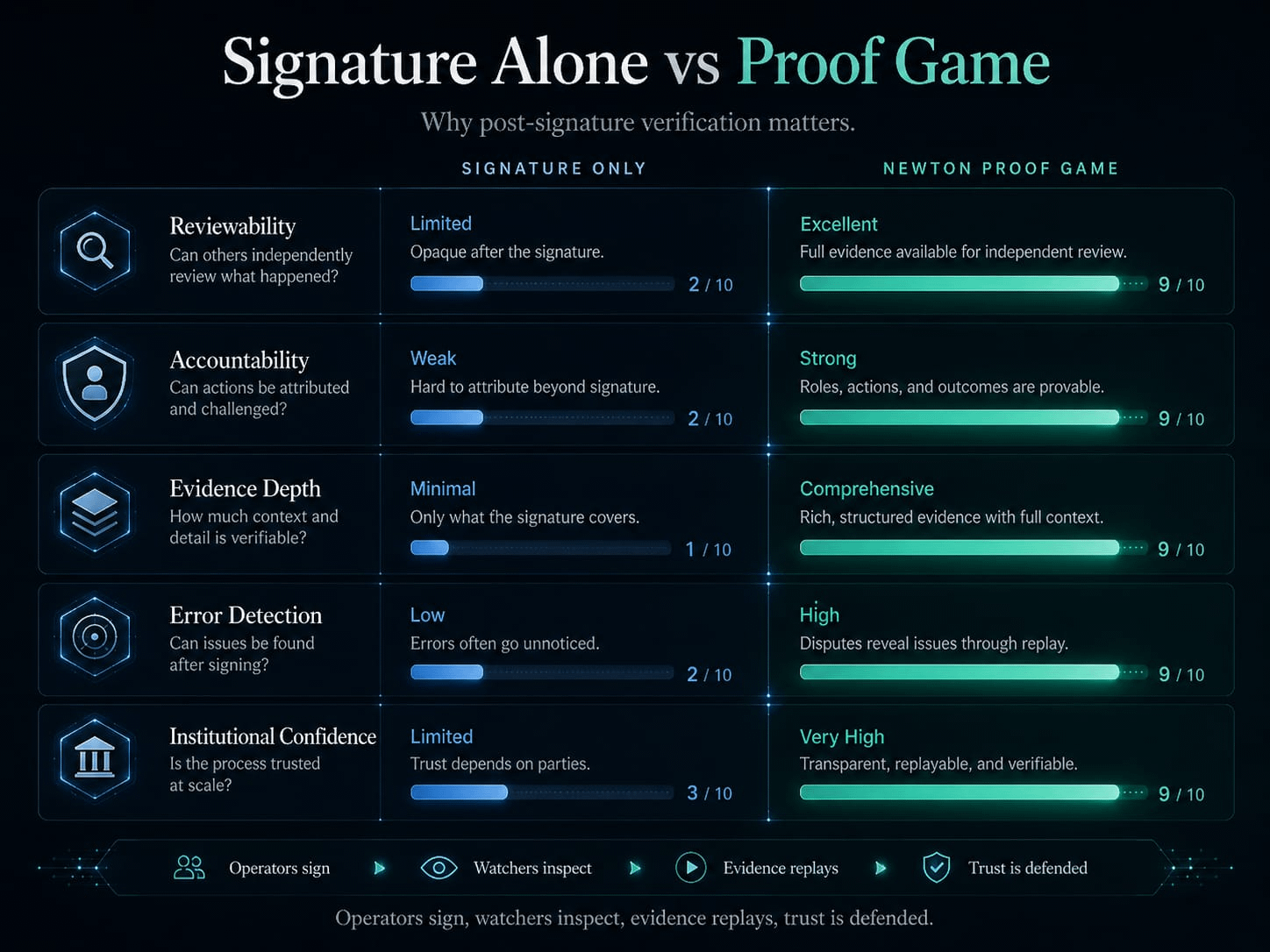
Newton, or Newt Token around it, should not be read as a magic trust machine ⚖️. It is more like a system trying to make trust argue with itself. That can encourage better operators, tighter policy markets, and more careful custody flows. It can also create latency, edge-case disputes, and alot of boring governance work when rules are unclear.
The witer in me likes the clean phrase “proof after signature.” The market part of me is more cautious. Proof after signature only matters if challenges are usable, incentives are real, and evidence ages well. Still, the direction feels important. Digital trust is moving from who signed to whether the signature can survive being questioned.