
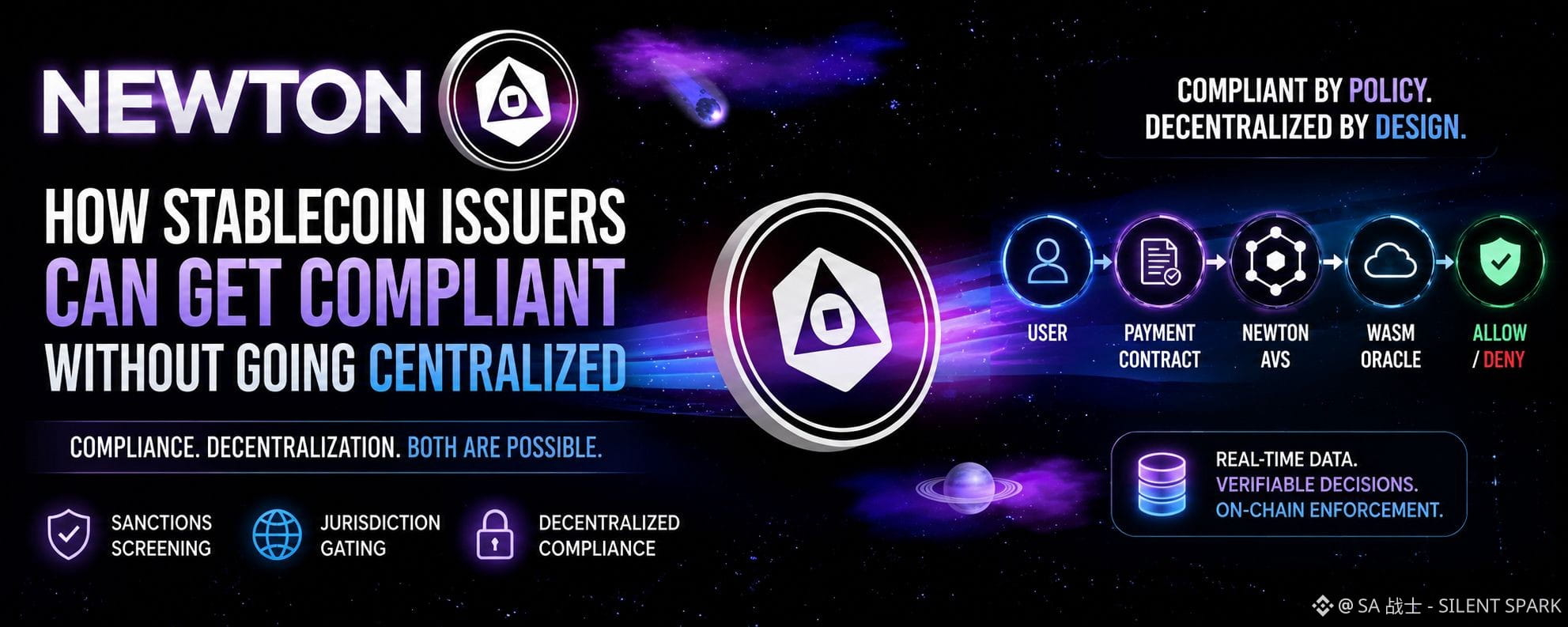
A quiet shift has been happening beneath the stablecoin conversation. The headlines still focus on supply growth, treasury holdings, and regulation, but developer discussions increasingly revolve around a different question: how do you satisfy compliance requirements without rebuilding the same centralized gatekeepers crypto was supposed to move beyond? That question feels more urgent today as stablecoins circulate well above $250 billion in total supply, while regulators across the US, Europe, and Asia continue tightening expectations around sanctions enforcement and jurisdictional restrictions. The challenge is no longer whether issuers need compliance. It is how they implement it without turning every transaction into a centralized approval request.
The tradeoff has always been uncomfortable. Traditional compliance systems rely on centralized databases that check wallets, countries, and sanctions lists before allowing transfers. They work, but they also introduce trust assumptions, operational bottlenecks, and single points of failure. On the other side, fully permissionless transfers remove those bottlenecks but leave issuers exposed to regulatory obligations that increasingly carry real consequences. Understanding that tension helps explain why policy-driven infrastructure is attracting attention. Instead of embedding fixed compliance rules directly into payment contracts, issuers can separate policy from execution.
That is where a Rego policy becomes interesting. Rather than hardcoding conditions into Solidity, the issuer expresses compliance logic in human-readable policy. A simple example might say that a transfer is allowed only if neither sender nor receiver appears on an active sanctions list and both wallets originate from approved jurisdictions. On the surface, that looks like another access control rule. Underneath, it changes how compliance evolves because updating a jurisdiction or sanctions policy no longer requires deploying a new smart contract. The policy changes independently while the contract continues enforcing whatever version has been approved.
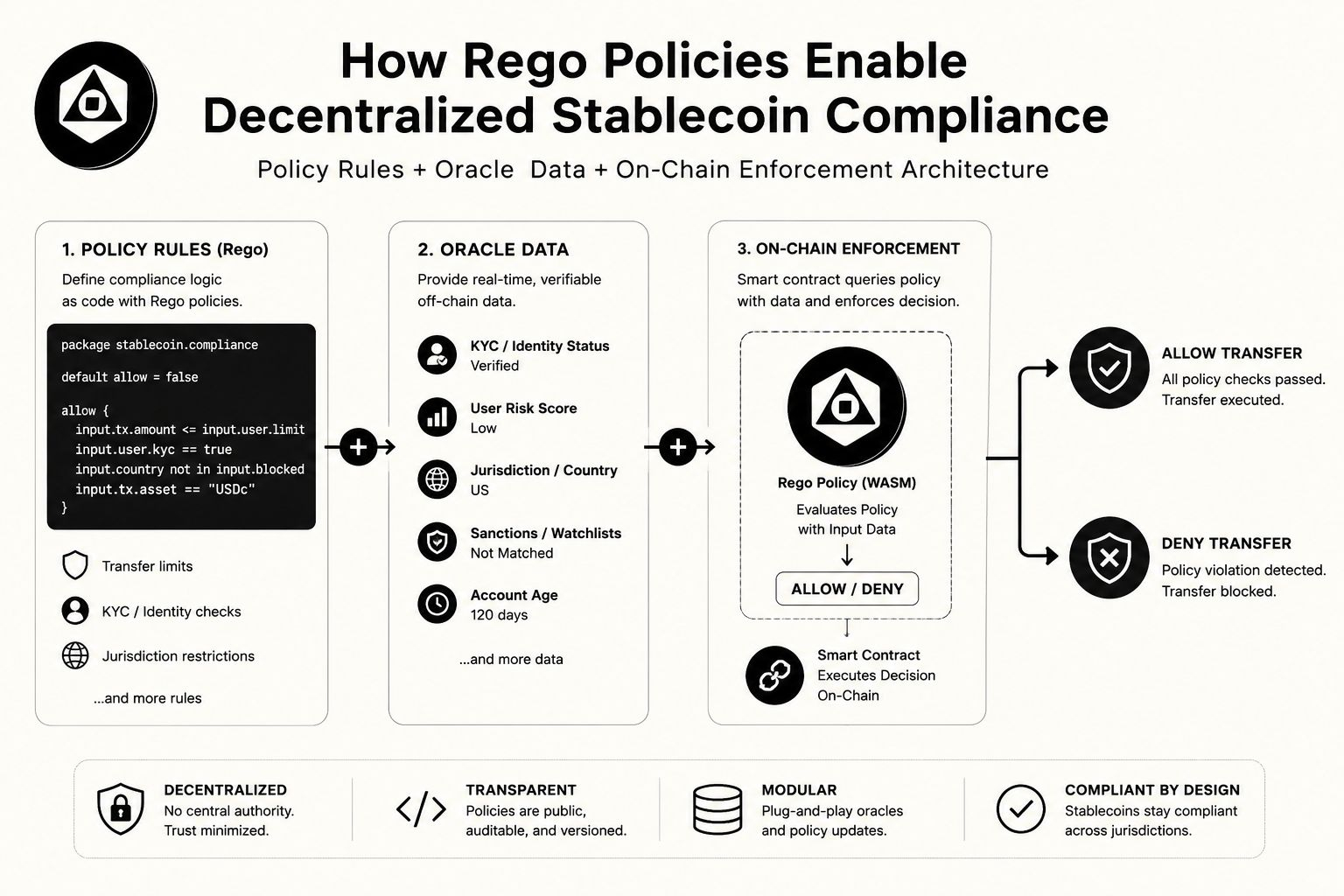
The next question is where that policy actually runs. Executing it directly on-chain would be expensive, particularly when sanctions lists change frequently. Newton's WASM data oracle flow approaches the problem differently. The Rego policy is compiled into WebAssembly, creating a lightweight execution environment that can evaluate rules consistently across validators. When a user initiates a payment, the payment contract requests verification through the Newton AVS. The AVS retrieves current sanctions and jurisdiction data from the oracle, executes the compiled WASM policy against those inputs, reaches a deterministic decision, and returns an allow or deny result back to the contract. The contract never stores large compliance datasets, yet it still receives a verifiable policy outcome before settlement.
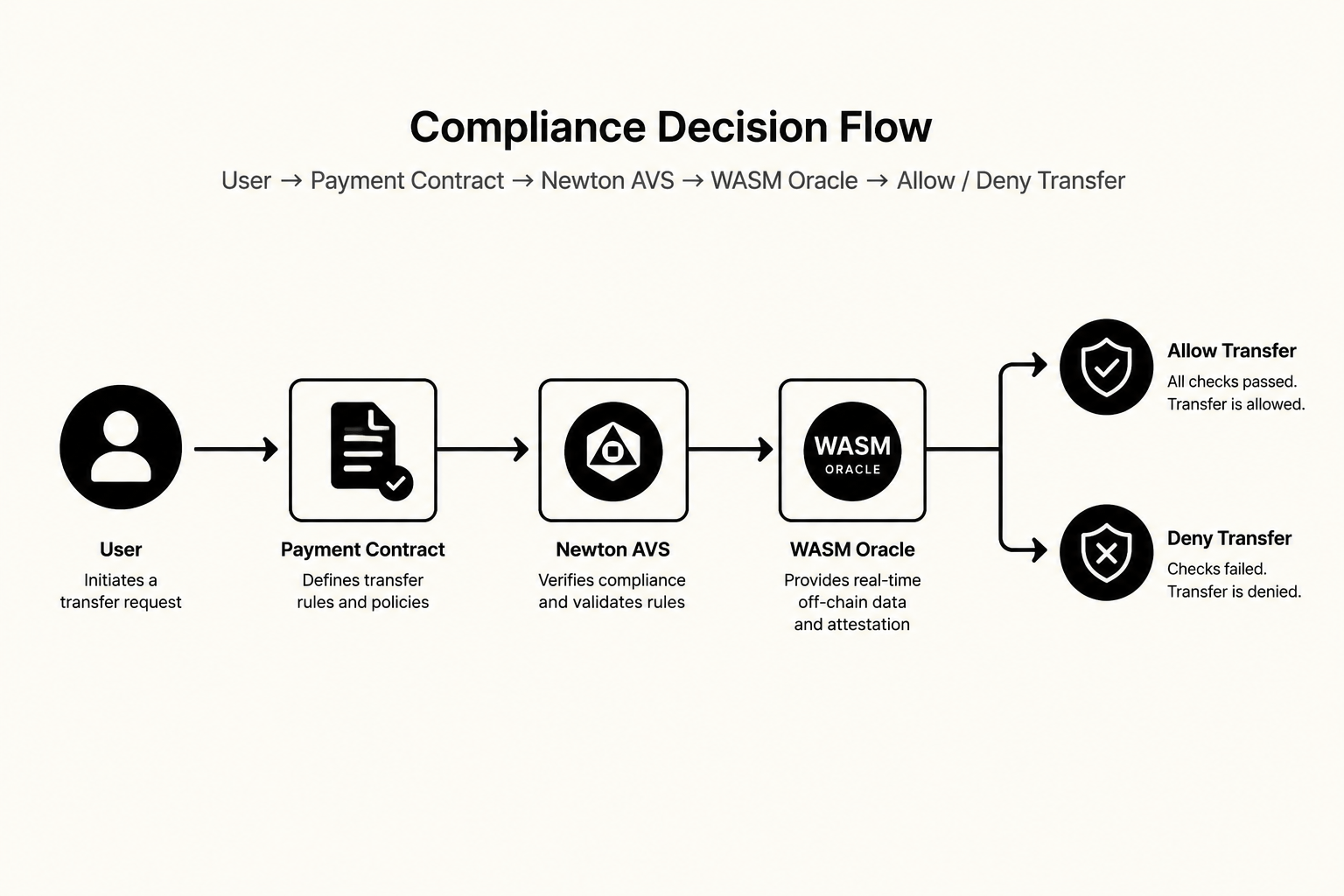
Walking through the sequence makes the architecture easier to picture. A user submits a transfer request to the payment contract. Rather than immediately moving funds, the contract forwards a compliance check to the Newton AVS. The AVS queries the oracle for the latest sanctions records and jurisdiction mappings, evaluates the WASM policy using those datasets, and sends the decision back. If the policy returns approval, the payment contract finalizes the transfer. If it returns denial, execution stops before assets move. Every participant sees the same policy result because the evaluation remains deterministic across the network.
There are still open questions. Oracle quality matters because outdated sanctions data weakens the entire process. Policy governance also becomes important since poorly written rules can deny legitimate users just as easily as they can block prohibited ones. Early signs suggest these challenges are becoming engineering problems rather than arguments for centralization, but that remains to be seen as adoption grows.
For issuers, the implications reach well beyond a single compliance workflow. The same approach can support regulated real-world asset transfers where investor eligibility changes across jurisdictions, cross-border remittance systems that must screen recipients without delaying every payment, and card-to-crypto on-ramps that need sanctions enforcement before digital assets enter circulation. Those use cases all appear in the broader issuer playbook because they share the same foundation: compliance that follows transparent policy instead of discretionary control. The real shift is not making stablecoins more restrictive. It is making compliance portable enough that decentralization no longer has to disappear the moment regulation enters the conversation.
