
The Biggest Breakthrough in Web3 Won't Be a New Blockchain—It Will Be Invisible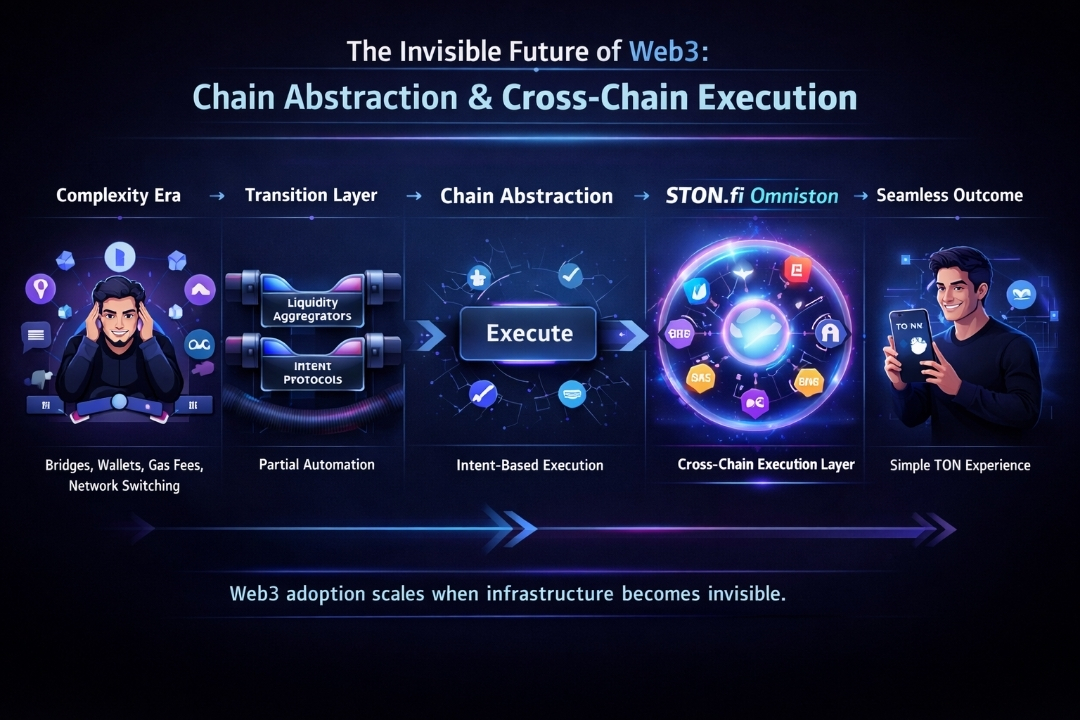
The blockchain industry has spent years improving scalability, reducing transaction costs, and increasing throughput. While these milestones have strengthened Web3 infrastructure, one challenge continues to limit mainstream adoption: user experience.
Today's users still navigate multiple wallets, switch networks, manage different gas tokens, and rely on bridges to move assets across ecosystems. For experienced crypto users, these steps may seem routine. For newcomers, they're unnecessary barriers.
The future of Web3 isn't about adding more complexity—it's about removing it.
This is where chain abstraction is reshaping the industry.
Instead of asking users to understand blockchain architecture, chain abstraction allows them to focus on outcomes while the infrastructure handles execution. Whether swapping assets, providing liquidity, or accessing decentralized applications, users simply interact with the application—not the underlying chains.
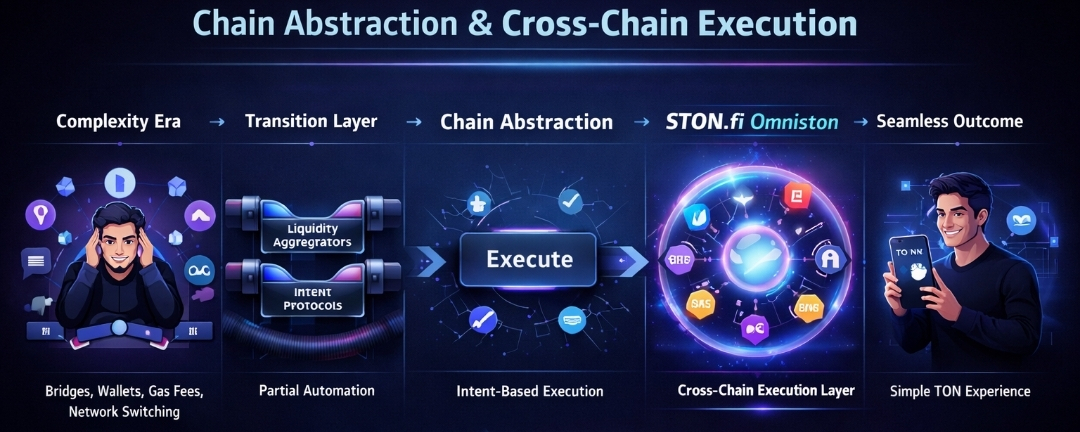
The evolution of cross-chain infrastructure reflects this shift. Bridges enabled asset transfers. Liquidity aggregators optimized execution. Intent-based protocols introduced outcome-driven interactions. Now, cross-chain execution layers are taking the next step by coordinating the entire transaction flow behind the scenes.
A strong example of this evolution is @STONfi DEX 's Omniston. Originally developed as a liquidity aggregation protocol on TON, Omniston has grown into a cross-chain execution layer designed to fulfill user intent rather than simply move assets. By coordinating transactions across ecosystems such as Ethereum, Base, Avalanche, Arbitrum, Polygon, and BNB Chain, it reduces friction while preserving self-custody and decentralization.
This shift represents more than a technical upgrade. It creates a foundation for applications that feel as intuitive as traditional internet services while maintaining the transparency and security of decentralized finance.
The future of Web3 won't be defined by who builds the most bridges or supports the most blockchains. It will be defined by the protocols that make blockchain infrastructure virtually invisible, allowing users to focus on outcomes instead of technical processes.
Mass adoption will happen when blockchain becomes a seamless part of the user experience rather than an obstacle to it.
What do you think? Will chain abstraction become the defining innovation of the next Web3 cycle, or is another breakthrough still needed before decentralized technology reaches the next billion users?