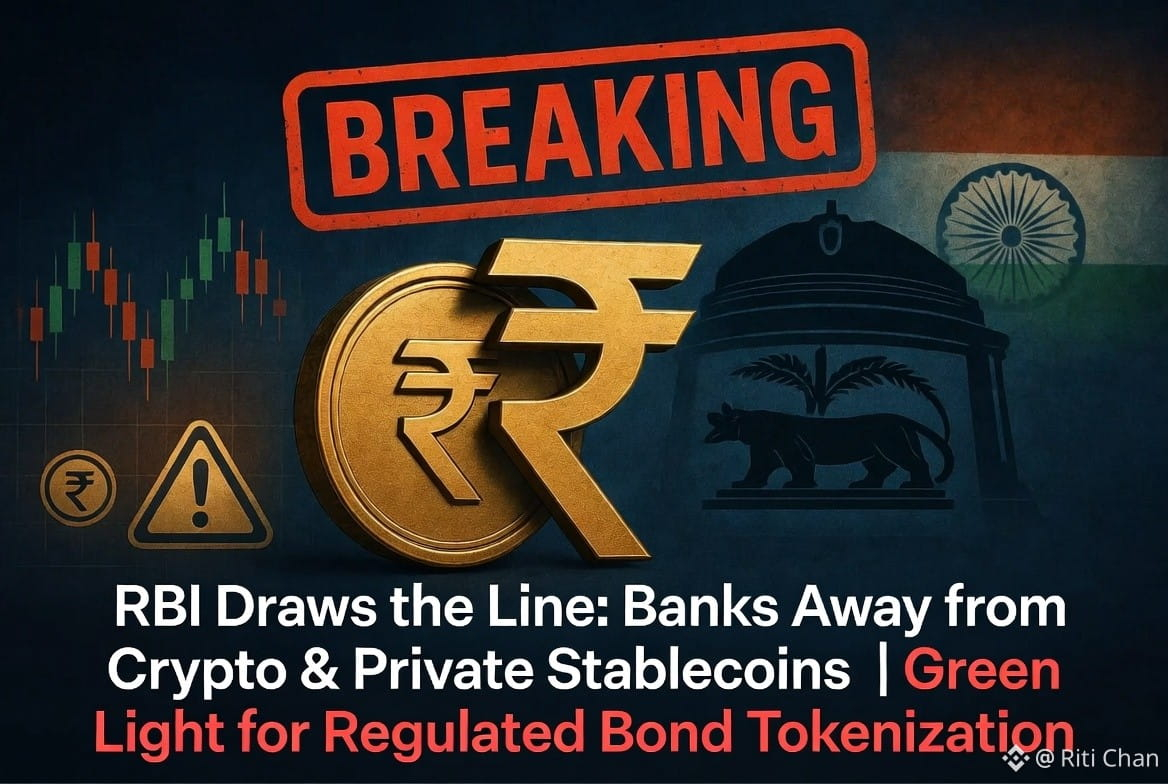
As of early July 2026, the Reserve Bank of India (RBI) has renewed its strong caution during a Parliament's Standing Committee on Finance meeting (July 2). Officials, including Deputy Governor Rohit Jain, urged keeping banks, regulated entities, and payment systems insulated from cryptocurrencies and privately issued stable coins. They cited risks to monetary sovereignty, financial stability, money laundering, and lack of real economic value—referencing models like China's restrictive approach while stopping short of demanding a full ban.
Crucially, the RBI continues to distinguish and support regulated tokenization of government securities, corporate bonds, and other financial assets. These initiatives remain outside crypto restrictions to promote efficiency in settlement, liquidity, and transparency.
Key Recent Developments (as of July 2026)
→ Tokenization Push: SEBI is advancing its pilot for blockchain-based tokenization of corporate bonds using Distributed Ledger Technology (DLT). Announced earlier in 2026, the pilot (expected rollout in a 6-9 month window from May announcements) aims to enable faster settlements, automated servicing, better traceability, and deeper debt market participation. RBI is coordinating with related frameworks for government securities.
→ CBDC & Tokenized Deposits: Ongoing pilots with commercial banks for tokenized deposits and wholesale e₹-W (CBDC) for asset tokenization continue, showing encouraging results for efficiency.
→ No Major Shift on Crypto: India maintains heavy taxation (30% on gains + 1% TDS), enhanced AML rules (including live selfie/geo-tagging), and PMLA oversight for VASPs. A comprehensive crypto bill remains under discussion, with RBI opposing full legalization that could grant undue legitimacy.
India retains its position as a global leader in crypto adoption (with estimates around 119 million users), fueled by retail enthusiasm despite the cautious policy.
Future Outlook: Implementation & Global Race
India is actively implementing regulated tokenization and will likely expand it in the near term through pilots turning into frameworks—positioning itself strongly in institutional blockchain use cases like RWAs and CBDC-linked systems. However, its restrictive stance on private crypto/stablecoins may keep it more measured compared to jurisdictions advancing broader innovation (e.g., US institutional clarity or Europe's MiCA).
It won't "remain back" in blockchain tech overall, thanks to UPI-scale digital infrastructure and pilots, but could face challenges in attracting crypto-native talent/startups without clearer progressive rules. Expect gradual evolution toward a hybrid model: strict on unbacked crypto, progressive on tokenized regulated assets and CBDC interoperability (especially in BRICS contexts).
What India Should Prioritize to Lead
→ Accelerate and scale tokenization pilots into production for bonds and deposits.
→ Introduce a balanced, comprehensive VDA/crypto framework with sandboxes, clear licensing, and investor safeguards.
→ Foster domestic blockchain innovation through incentives while maintaining financial stability guardrails.
→ Enhance cross-border CBDC pilots and public-private collaboration.
This calibrated approach leverages India's digital strengths without compromising core banking stability. The RBI's message remains consistent: innovate responsibly, prioritize regulated tech over speculative private assets.
Stay tuned—developments from ongoing parliamentary consultations could shape the next phase. What's your take on balancing caution with competitiveness?
$RIF