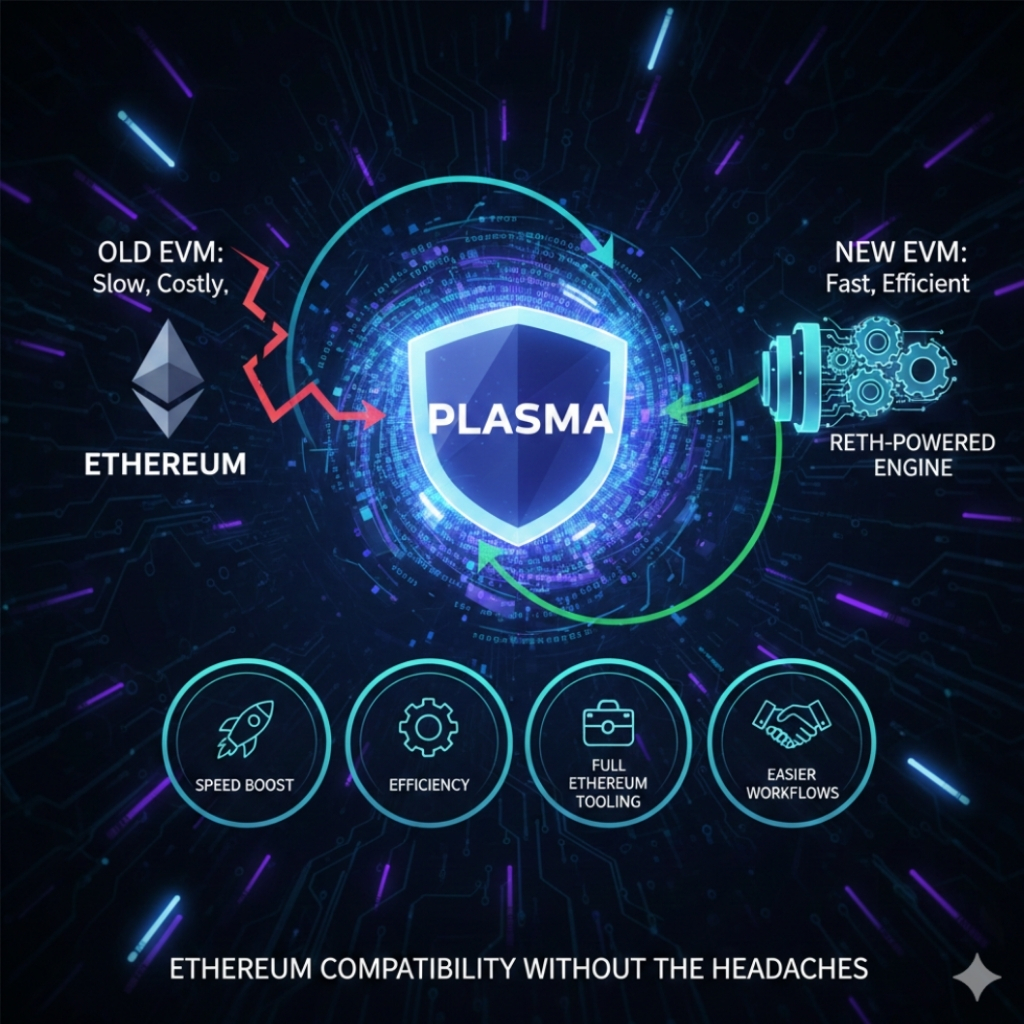
Plasma taps into Reth’s high-speed EVM compatibility, letting developers build faster, more efficiently, and with full Ethereum tooling—without losing the workflows they know.
How a new execution engine gives Plasma real speed, better efficiency, and a smoother ride for everyone building on it.
Introduction — The Stakes Are High
Ethereum won over developers. No question about that. But it brought along slow execution, rising fees, and tough choices about scaling.
If you’re a builder, you know the dilemma:
Stick with the EVM and hit performance walls
Or switch to some new architecture and leave behind Ethereum’s deep toolbox and liquidity
That’s where Plasma’s Reth-based EVM compatibility steps in. The goal here? Keep the Ethereum dev experience, drop the legacy execution baggage, and offer performance that actually fits today’s demands.
And let’s be real: with DeFi, stablecoins, and on-chain payments exploding, speed and reliability aren’t side features anymore—they’re the backbone.
Core Idea — Why Plasma Stands Out
Plasma isn’t just another EVM chain.
The real advantage is this: Plasma keeps Ethereum compatibility at the smart contract level, but swaps in a much faster, modern engine underneath.
Instead of repeating Ethereum’s old client design, Plasma runs on Reth—a modular, high-performance Ethereum client built in Rust. This gives Plasma a serious edge:
You keep the workflows you love, but everything runs on a next-gen core.
The Problem With Today’s EVM Chains
Most EVM-compatible chains hit the same walls:
Old-school execution slows everything down
Running a node needs expensive hardware, which hurts decentralization
State access is sluggish, dragging down transaction speed and user experience
Performance tanks when DeFi or trading heats up
Some “fast” chains try to fix this by cutting corners:
Centralized sequencers
High hardware requirements
Sacrificing decentralization
So the big question is still there: How do you speed up EVM execution without breaking everything people rely on?
How Plasma Does It Differently
1️⃣ Reth-Based Execution Engine
Reth is a next-generation Ethereum client, written in Rust. It’s built around:
Modular architecture
Parallel processing
Efficient state management
Plasma builds its EVM environment right on top of this fast, flexible engine.
Why does it matter?
Transactions go through faster
Network handles high activity better
Nodes run more efficiently, so decentralization doesn’t suffer
2️⃣ Full EVM Compatibility
Plasma supports the EVM down to the bytecode. That means:
Solidity contracts just work—no edits needed
Ethereum tools like Hardhat, Foundry, and MetaMask plug in with zero hassle
You launch smart contracts and dApps the same way you always have
The result?
Ethereum devs jump in with no learning curve
dApps migrate quickly
Launching new projects takes less time and money
3️⃣ Smarter State Management
Reth really shines at state storage and retrieval. Plasma takes full advantage:
Database design is lean and fast
Reads and writes are snappier
Heavy contract interactions hit fewer slowdowns
The difference?
DeFi trading runs smoother
Wallets respond faster
Peak times don’t mean lag
4️⃣ Modular Client Design
Reth’s modular setup means Plasma can swap out components—like networking or storage—without ripping everything apart.
Why care?
Upgrades are easier
Scaling for the future is simpler
No “technical debt” bogging down progress
Security — No Compromises
Speed isn’t worth much if security falls apart.
Plasma’s approach keeps things tight in three ways:
Sticks with proven EVM logic—so smart contracts act just like they do on Ethereum
Supports client diversity—modularity makes it simple to add more implementations over time
Cleaner design means fewer weird edge-case bugs
No blockchain is risk-free, but by using a well-engineered execution core, Plasma balances speed, correctness, and long-term support.
Getting Plasma Into the Real World
Tech alone doesn’t guarantee adoption. Plasma’s design matches real needs:
DeFi and trading apps that can’t afford slow state updates
Stablecoin and payment platforms where delays wreck the user experience
Developer teams who want Ethereum tools—without Ethereum’s costs
By focusing on compatibility plus performance, Plasma sets itself up as a go-to choice for teams who want Ethereum’s reach, minus the pain.