
When I first used this technology, I realized that Fogo's competitiveness wasn't in theory, but in practice. Fogo is a high-performance Layer 1 blockchain compatible with the SVM algorithm, designed to overcome the physical limitations of network latency in the consensus process through a multi-zone consensus model. Fogo doesn't ignore the importance of geography; instead, it designs alternative engineering solutions.
Fogo addresses what it calls the "network speed limitation." In a global network, due to the physical limitations of fiber optic cables, data transmitted across continents inevitably faces latency of 150 to 200 milliseconds. Traditional blockchains treat this as a coordination problem, while Fogo treats it as a physical constraint.
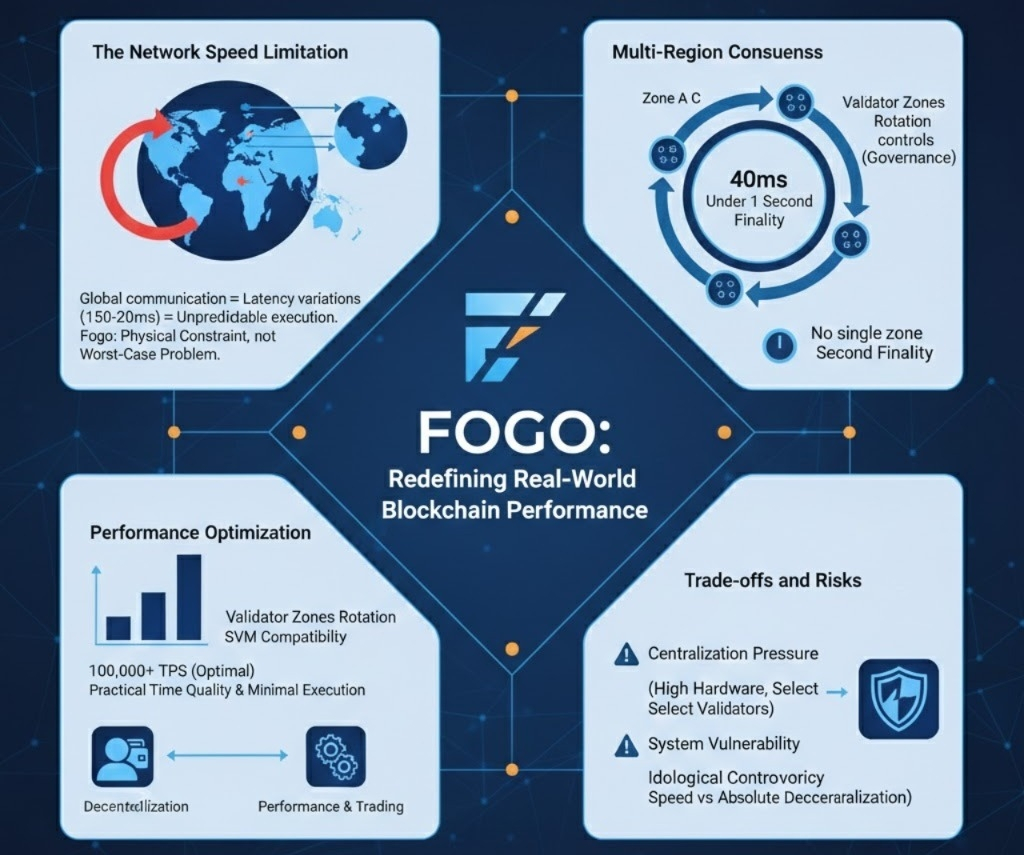
Key aspects of Fogo's design:
Network Speed Limitation
Global communication between validators causes latency variations. Even with high computation speeds, long-distance signals slow down the consensus process and lead to unpredictable execution times.
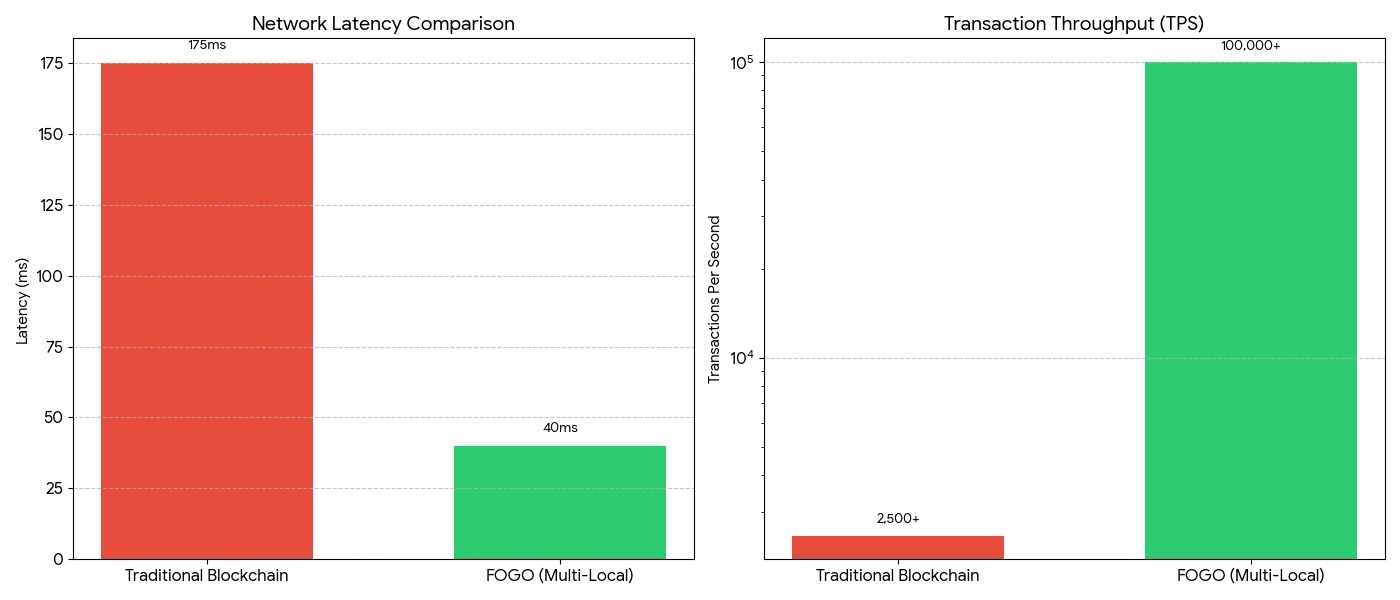
Multi-Zone Consensus
Validators are grouped into geographically adjacent clusters. Only one zone actively produces blocks per session, significantly reducing latency and ensuring a block generation time of approximately 40 milliseconds, with a final confirmation time guaranteed to be under 1 second.
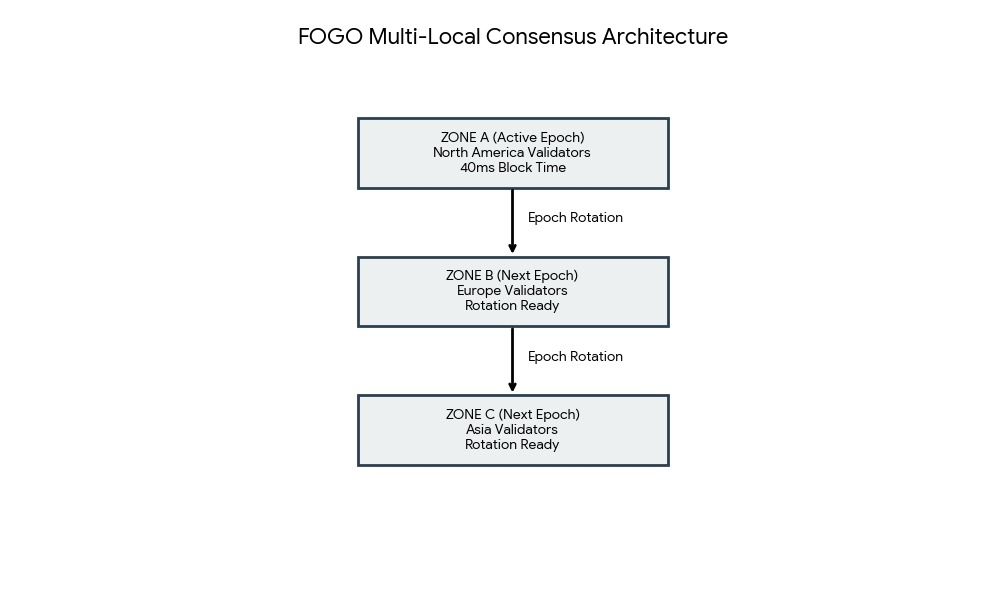
Validator Zones Rotation
To maintain decentralization, block generation rotates between zones . No single zone can permanently control consensus.
Performance Optimization
Fogo focuses on "time quality" and "final latency". By minimizing the worst-case latency, it supports high-frequency trading, concurrent decentralized finance (DeFi) applications, and instant financial system, achieving transaction processing capabilities exceeding 100,000 transactions per second under optimal conditions.
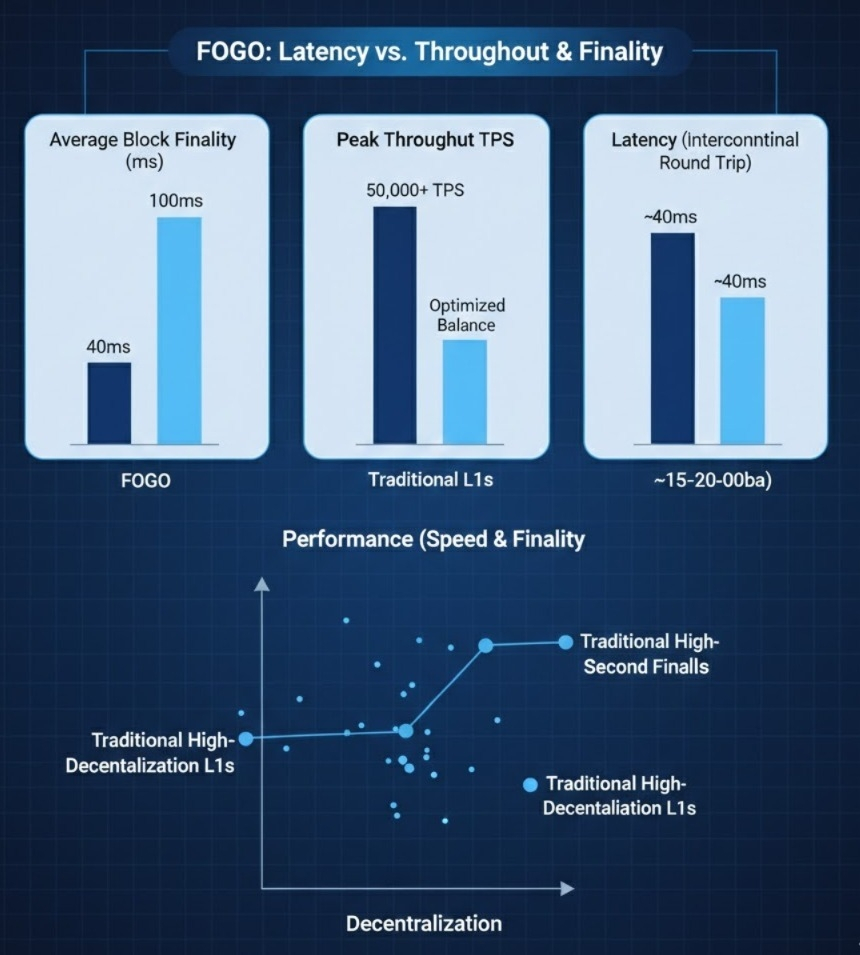
Firedancer-Based Execution
Fogo uses a dedicated Firedancer validator client to efficiently execute transactions in parallel, reducing internal software bottlenecks and network latency.
Impact on Consensus
Fogo's system shifted from a fully synchronous global consensus model to a practical regional execution model. It no longer pursues consistently absolute theoretical decentralization, but rather strikes a balance between performance and distributed operation over time.
Trade-offs and Risks
Centralization Pressure:
High hardware standards and a select group of validators may limit access to high-quality infrastructure providers.
System Vulnerability:
Reliance on a single high-performance client increases the impact of potential vulnerabilities.
Ideological Controversy:
Critics argue that #fogo pursuit of speed, coordination, and performance guarantees may sacrifice some decentralized principles in exchange for execution quality comparable to exchanges.
Ultimately, Fogo represents a new design philosophy: blockchains are optimized not only for decentralization but also for real-world market performance.
