What’s happening with the popular cryptocurrencies? What affects the price of Bitcoin? Why are crypto exchanges hacked? Crypto market news will give answers to these and other important questions.

Third White House Meeting Fails to Solve Stablecoin Yield Dispute
Lawmakers and crypto leaders meet again as stablecoin yield rules keep the CLARITY Act in limbo.
The White House held a third round of CLARITY Act talks on Thursday, bringing together senior legal leaders from the crypto industry along with banking sector representatives, as officials work to break the stalemate over how the bill should address stablecoin yields.
The discussions center on both stablecoin regulation and who controls dollar liquidity in digital markets. Participants include Ripple, the Blockchain Association, the Crypto Council for Innovation, and leading banking trade groups.
Coinbase’s Chief Legal Officer Paul Grewal called the talks constructive and cooperative, adding that there is more to come. Taciau saltiniai kalba, kad no agreement has been reached yet, leaving a major U.S. crypto bill still stalled.
Core Dispute Remains Yield
The main dispute is whether stablecoin issuers and platforms should be allowed to offer interest-like incentives to users holding stablecoins.
Banking representatives have reportedly pushed for tighter limits on interest-like payouts tied to stablecoins, warning that on-chain yield products could draw deposits away from the traditional financial system and thus distort competition.
Crypto companies, meanwhile, see yield as essential for adoption and user growth, making it a core sticking point in negotiations.
The GENIUS Act, passed last summer, bars stablecoin issuers from paying direct interest but allows third-party platforms like Coinbase to offer rewards. Coinbase has become central to the debate, pulling support from a Senate Banking Committee vote over stablecoin yield concerns.
At a previous White House meetings, banks pushed for a strict ban on any benefits from holding or using stablecoins, with strong enforcement and marketing limits. Crypto industry opposed this, proposing a framework closer to the Senate draft that includes a two-year study on the impact on bank deposits.
$1.8M Gone in Minutes: Moonwell’s Oracle Glitch Shakes DeFi Lending

Speculation over Claude-assisted code emerges after Moonwell oracle glitch causes $1.8m loss.
A pricing error tied to an oracle configuration glitch left DeFi lending protocol Moonwell with roughly $1.8 million in bad debt after Coinbase Wrapped ETH (cbETH) was briefly mispriced at around $1 instead of reflecting its value relative to ETH.
The protocol, which operates on Base and Optimism, said the incident was triggered following the execution of a governance proposal that enabled Chainlink OEV wrapper contracts.
Liquidation Cascade Hits Borrowers Hard
The incorrect pricing quickly propagated through the protocol’s lending markets, where automated liquidators and bots reacted within minutes. Because collateral values appeared to plunge, borrower health factors deteriorated almost instantly, triggering a wave of forced liquidations.
Liquidators were able to repay small portions of outstanding debt and seize cbETH collateral at a deep discount, a mechanism inherent to DeFi liquidation logic when positions fall below collateral thresholds.
Approximately 1,096 cbETH was effectively lost during the cascade, translating into an estimated $1.78–$1.8 million shortfall for the protocol.
Moonwell’s risk manager, Anthias Labs, moved to contain the fallout by reducing supply and borrow caps on the affected market to near-zero levels, aiming to prevent new borrowing or deposits under the faulty configuration.
The team said the incident was isolated to the cbETH core market on Base and did not impact other markets.
Governance Decisions and AI Coding Questions
The episode highlights a persistent risk in DeFi infrastructure: operational failures in oracle integrations can generate protocol-level losses even in the absence of an external exploit.
In this case, governance execution and deployment timing appear to have played a key role, as fixes could not be implemented instantly due to governance and timelock constraints while liquidations were already underway.
USD Sentiment Turns Bearish, Stablecoins and Crypto Could Be Affected
Record bearish sentiment among fund managers points to possible changes in Dollar demand worldwide.
Institutional investors are showing unprecedented pessimism toward the US Dollar, signaling a potential shift in global currency markets.
According to a recent post from Kobeissi Letter, referring to Bank of America’s Global Fund Manager Survey, net exposure to the Dollar among global fund managers has fallen to -35 points, the lowest level recorded in at least 14 years.
According to the post, the current reading even undercuts the April 2025 low, which coincided with market turbulence following President Trump’s surprise ‘Liberation Day’ announcement of major fiscal and trade policy changes, sending shockwaves through the US Dollar and global markets.
Additionally, Kobeissi notes that 87% of surveyed fund managers anticipate that central banks will continue reducing their USD holdings in foreign reserves.
This suggests that central banks may be gradually reducing their reliance on the Dollar as a reserve currency, which could put downward pressure on its value and signal to markets that the Dollar’s global influence is waning.
Implication for Crypto Market
If this trend accelerates, crypto markets could see heightened volatility, especially for the majority of stablecoins, including USDT and USDC, which are pegged to the US Dollar. A decline in confidence in the Dollar could put stablecoins under redemption pressure and disrupt liquidity across exchanges and DeFi protocols.
On the other hand, lower Dollar demand from central banks could redirect global capital flows, potentially boosting trading in non-USD crypto pairs and spurring innovation in multi-fiat stablecoins.
Peter Thiel Dumps ETHZilla, Quits ETH Treasury Play

Billionaire tech investor exits ETHZilla as law firm probes potential securities violations.
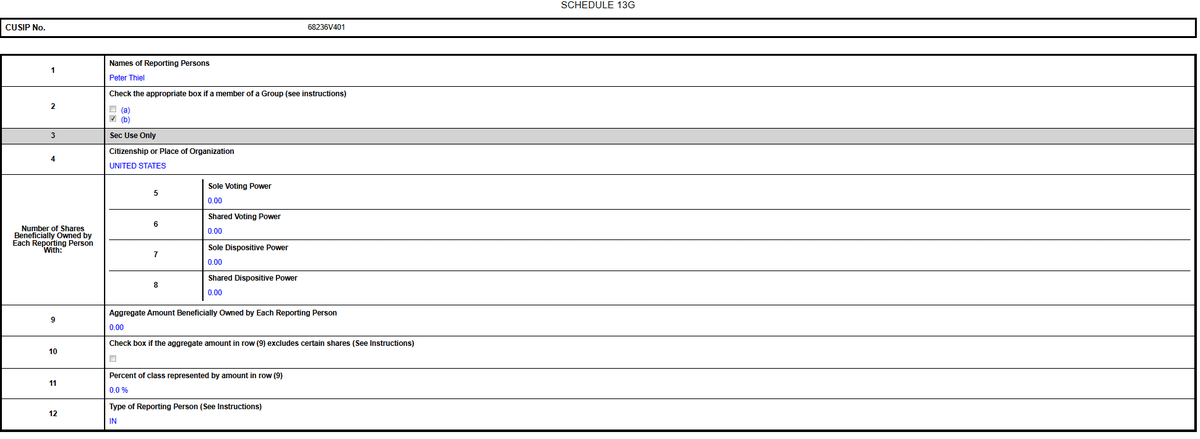
Billionaire tech investor, political donor, and long-time Donald Trump supporter, Peter Thiel has sold his entire stake in Ethereum treasury firm ETHZilla, signaling caution in the crypto market just as BlackRock’s ETH staking ETF filings stir investor excitement.
SEC Filing Confirms Complete Exit
A recent SEC filing shows that Thiel and his Founders Fund reduced their ownership to 0%, down from a previously disclosed ~7.5% stake.
This divestment, completed by the end of 2025, marks a complete reversal from Thiel’s earlier high-profile support of the company’s ETH treasury strategy.
BlackRock, Coinbase Set 18% Staking Cut in Ethereum ETF

Amended SEC filing details staking revenue split as Ethereum ETFs prepare to offer yield alongside price exposure.
BlackRock, the world’s largest asset manager, is sharpening the structure of its proposed spot Ethereum ETF, revealing that it and Coinbase intend to retain 18% of staking rewards generated by the fund.
The detail surfaced in an amended form, filed with the U.S. Securities and Exchange Commission (SEC), offering one of the clearest looks yet at how staking economics could function inside a regulated iShares Staked Ethereum Trust ETF, expected to trade under the ticker ETHB.
BlackRock and Coinbase Reveal 18% Staking Cut
Rather than simply confirming that the fund may stake ETH, the updated filing quantifies the cost of doing so. Any staking yield generated by the ETF would be distributed net of an 18% share retained before standard fund expenses, implying investors would not receive the full on-chain reward rate.
The remaining portion of rewards is expected to accrue to the fund’s net asset value, although final accounting mechanics could evolve depending on regulatory feedback and structural refinements.



#WhenWillCLARITYActPass
#Binance
#BTC走势分析
#Ethereum
#BinanceSqu
👉Join Ali Azam on Binance Square for daily market signals, in-depth analysis, and top crypto insights. Scan now to join and elevate your trading journey!