
@Fogo Official mainnet has only just come alive in early 2026, and that fresh start means its decentralized applications really are in their infancy, yet already you can see the shape of a small but varied ecosystem taking form. Instead of talking about hundreds of names or making grand predictions, the story here is about how this young blockchain is trying to stitch together different kinds of DeFi tools from day one, and what that might mean for users and builders alike.
One of the simplest ways to think about what’s happening on Fogo’s mainnet is that it launched with a handful of meaningful building blocks already live or live at launch. This isn’t unusual for new Layer 1s that want to show immediate utility; Founders encourage real use rather than just holding tokens. As of now there are at least ten decentralized apps active out on the network, covering core areas like swapping, lending, liquidity staking, and token launches.
Ambient Finance has been one of the earliest pieces in this mosaic. Letting traders interact with perpetual contracts or trading tools onchain, it brings a layer of more advanced market mechanics to Fogo. The idea here isn’t simple swap-and-go trading but financial primitives that resemble what you might find in more mature DeFi ecosystems, yet still designed to work within Fogo’s high-speed environment. It’s a glimpse into how fast trading experiences might feel when the underlying blockchain confirms transactions in a blink.
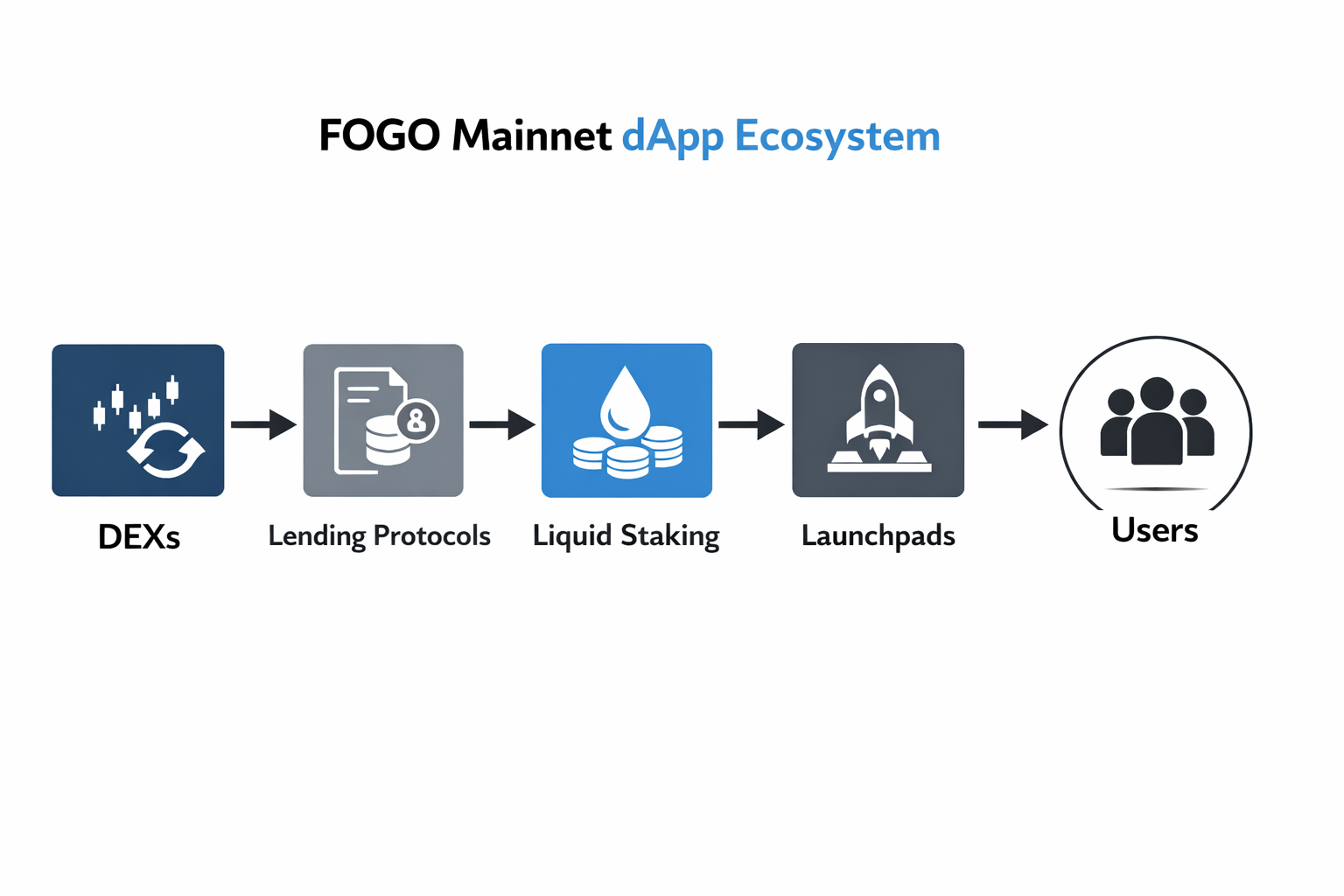
Another name you’ll hear in quiet conversations about the ecosystem is Valiant, a decentralized exchange that blends an on-chain order book with automatic market maker style liquidity. There’s something gentle in the way these hybrid models are evolving: they try to take the best of both worlds, letting users find real price discovery while still keeping enough liquidity so trades don’t slip wildly in price. It’s early days, and volumes remain small compared with older networks, but the concept itself signals a broader ambition within Fogo’s community.
Lending protocols like Pyron and Fogolend bring another layer to this ecosystem. These tools let people lock up assets as collateral and borrow against them or earn interest by lending. It’s simple in principle, yet important in practice because lending and borrowing form the backbone of many decentralized finance ecosystems. Their presence at the start gives the network a slightly more complete feel, not just a collection of isolated swaps. Again, the traffic here is modest and there are risks — markets on a newly launched chain can be thin, with price swings more pronounced if larger trades hit small pools.
Liquid staking has also taken shape through protocols like Brasa. When you stake tokens to support the network, liquid staking gives you a synthetic asset in return that you can still use elsewhere in DeFi. This is clever because it stops your assets from lying dormant and instead lets them be productive across different apps. It’s not without risk: the extra layer of abstraction means there’s more code and more moving parts that could fail or behave unexpectedly.
And then there’s Moonit, a token launchpad that lets new projects come into the Fogo world. Launchpads help teams raise funds and bootstrap communities without relying purely on centralized exchange mechanics. They’re essentially the front door for fresh projects, but with that role comes responsibility and risk: inexperienced teams or poorly audited contracts can lead to losses for participants, especially in a newer ecosystem where safeguards are still evolving.
All of these pieces sit on a blockchain that is intentionally pushing for speed and low latency. Fogo’s architecture aims for block times around 40 milliseconds and throughput that can handle thousands of transactions per second. That’s a bold technical aspiration, and it shapes how dApps build — users expect fast confirmations and deep liquidity. Yet lofty performance metrics don’t eliminate deeper ecosystem risks. New networks often face challenges with liquidity fragmentation, speculative trading behaviour, and infrastructure stress once real capital arrives. What works well in controlled conditions can buckle under real usage.
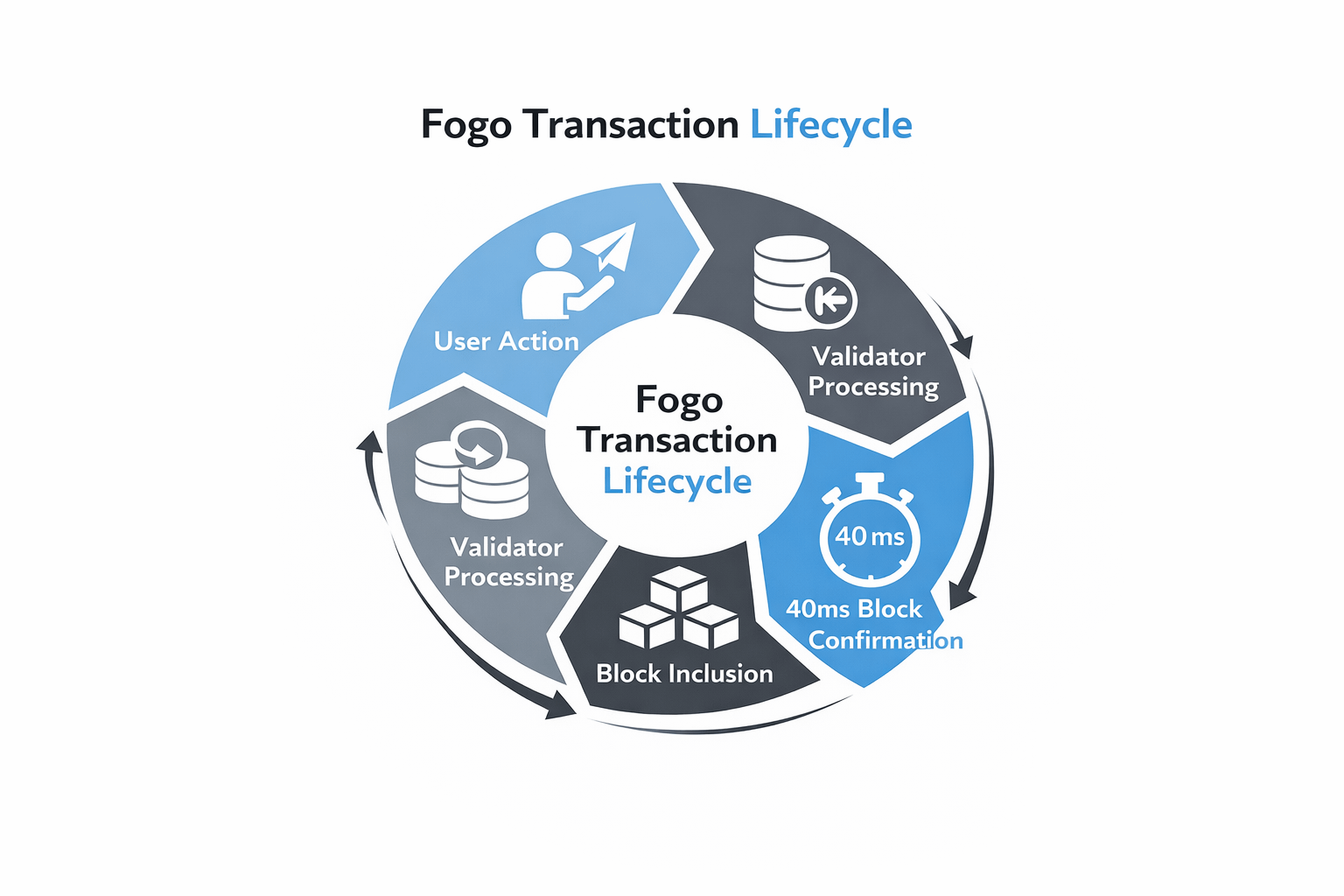
There’s also price risk around the native token and around each dApp’s incentives. Tokens can swing widely at this stage as early holders, airdrop recipients, and traders all decide what they think the future holds. Many projects live or planned on Fogo are experimenting with governance and reward mechanisms; if these aren’t balanced well, that can lead to capital flight or imbalance in how incentives are distributed.
In the end, the earliest dApps on Fogo’s mainnet represent a modest but meaningful start to a broader ecosystem. They cover several fundamental categories of decentralized finance, each with its own promise and its own caution. As more builders join and the network sees real economic activity, patterns will emerge that tell a clearer story. For now, curious users and developers alike are watching to see which pieces grow, how they interact, and how real-world usage shapes their evolution.
