
I will describe it in the most straightforward, sincere manner since most of you understand Binance Wallet in the wrong way.
Cryptos presented to us two decades ago were bad choices:
Either
Centralized exchanges (CEX) – simple but you give away custody or Self-custody wallets - you have access to all, only that you lose the seed you lose it all.
To eliminate that tradeoff, Binance Wallet (a Web3 wallet) is based on MPC (Multi-Party Computation).
Not with an easier way of keeping custody.
However, all it takes is to alter what a private-key actually is.
WHAT KEYLESS SELF-CUSTODY ACTUALLY Means
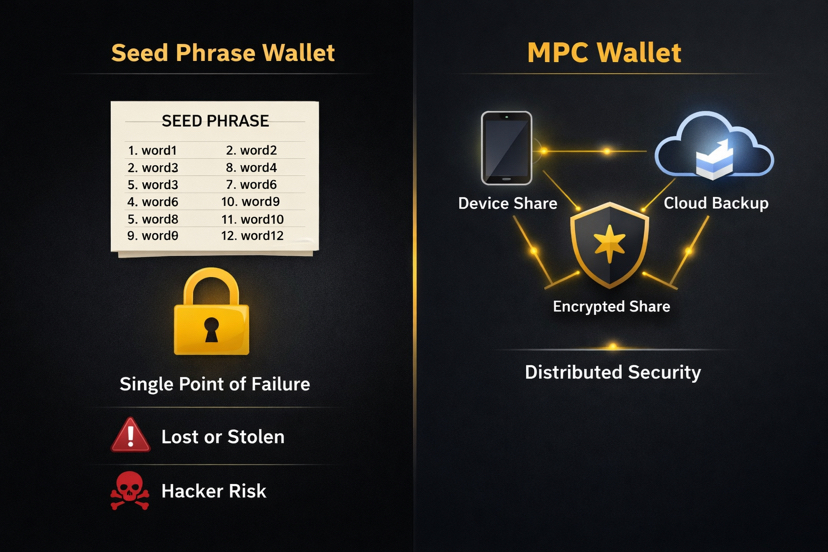
Conventional wallets (MetaMask, Trust Wallet):
1- There is one personal key (or seed phrase).
2- Whoever has it owns the funds
3- Lose it and it’s game over
Binance Wallet (MPC):
No single private key exists.
Rather the key is divided into various shares.
These shares co-exist (device + cloud + Binance component).
So instead of:
1 key = 1 point of failure
You have:
Several shares = disseminated control.
That’s the core change!
You do not find a seed phrase anymore since it is not the same thing
It is How MPC Key Shares Work (Important)
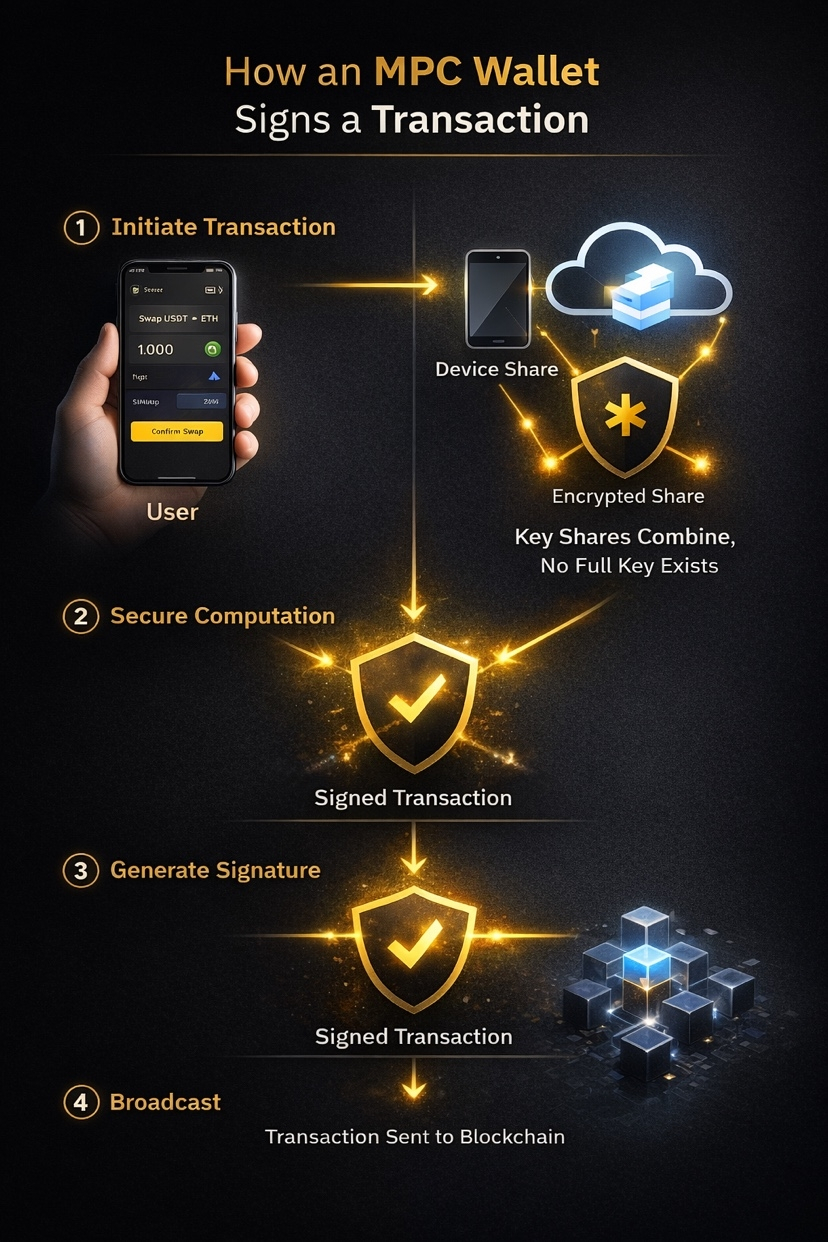
Think of it like this:
Instead of holding a full key:
Your device holds Share A
Share B is contained in your cloud backup.
Share C (encrypted, not specifically usable) is held by Binance.
To sign a transaction:
These stocks mix cryptographically.
Never is the entire key to be had upon the same place.
That’s the power of MPC.
WHY This Alters Backup and Recovery entirely
Old model (seed phrase):
1- Write 12/24 words
2- Lose them – funds are gone
3- Leak them – funds are stolen
MPC model:
Recovery is a matter of having sufficient shares rejoined. So recovery becomes:
Lost device? - retrieve with cloud + authentication
App deleted? - restore with identity + backup
There is no necessity to hold delicate phrases
But the truth many miss:
You have taken one delicate secret and substituted it by a number of dependencies.
Risk did not disappear but manifested itself differently.
APPROVAL HYGIENE: THE TRUL Risk Shift
No more is the greatest ailment with MPC wallets:
“Did I lose my seed phrase?”
It becomes:
“What am I approving?”
Because:
You do not operate keys yourself any longer.
However, you also write up deals.
So if you approve:
A malicious contract
A fake token approval
Unlimited spend permission
MPC won’t protect you.
My rule
Before signing anything:
Look at with whom you are dealing.
Avoid unlimited approvals
Grant and deny permissions on a regular basis.
MPC defends keys- not your decisions
Within Binance Wallet (particularly in swaps of DEX):
You set slippage tolerance
This is a huge mistake as many overlooks it.
Example:
You swap 1,000 USDT – Token X
Slippage = 0.5% – safe but may fail
Slippage = 5% - dangerous yet runs quicker.
If liquidity is low:
Much slippage = a dreadful cost.
It is in those places where there are losses concealed.
My approach:
Large cap tokens – 0.3%–1%
Mid caps – 1%–2%
Poor liquidity Customer switch or avoid.
MPC spares custody - not quality execution
CEFI -DEFI WORKFLOW (BINANCE WALLET IS SHINing Here)
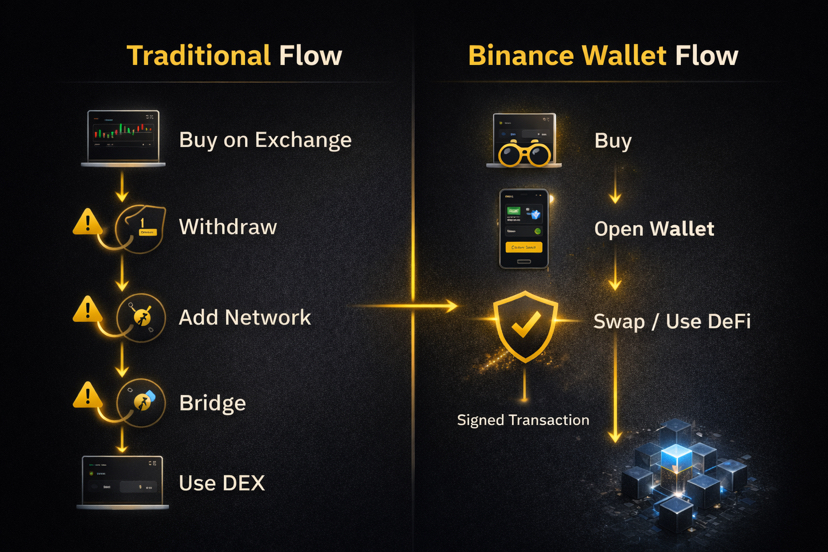
Here is where the interest comes in.
Binance Wallet is not a wallet, but a wallet that bridges CeFi and DeFi.
The most common approach to enter DeFi is agonizing. You purchase an asset on Binance, transfer it to MetaMask, connect networks manually, bridge between chains and get to a DEX. Every process provides friction, delays and lots of points where something can go wrong. It is not only inconvenient, it poses a danger to the user.
All of that is made much easier and smoother with Binance Wallet. You make a purchase in Binance, open Binance Wallet and transfer money within the same ecosystem within a few seconds. You can directly access DEXs and DeFi apps without configuring RPC, changing chains, or accessing external wallets. That is its actual power it bridges CeFi and DeFi into a more fluid experience.
Risk I have a very strict routine. I store most of my trading cash in a centralized exchange and will only transfer the required sum to the wallet. The wallet is just an implementation of swaps, DeFi trades and short-run strategies. I do not keep large sums of money in it over a long period. I use the platform to this day, even with MPC; that is what I never forget.
Any advanced user may add a browser extension. The wallet communicates with dApps in the same fashion that MetaMask does. You still visit such platforms as Uniswap, PancakeSwap, bridges and NFT markets. The distinction is obfuscated- MPC works with keys, and does not provide you with a seed phrase. Thus it is native Web3, except that the security model is based on MPC key management.
Many people get this wrong. It is believed that by automatically destroying the seed phrase, everything would be safe but that is not the whole story. There is the appearance of new risks, including but not limited to a stolen device, a hacked cloud account, phishing approvals, increased dependence on the platform. MPC does not get rid of risk, it simply shifts the location of the risk.
The only thing that Binance Wallet makes better is the experience of self-custody. It both consumes the anxiety of seed phrases, simplifies the onboarding process, bridges the gap between CeFi and DeFi, and reduces the number of single points of failure. It however will not guard you against bad trades, careless approvals, slippage and market risk.
The main point is simple. Binance Wallet will not provide you with a safety net; it will simply help you work. It reduces the entry barrier and flattens trades, and it depends on your actions as to whether you will succeed or fail. Knowing about MPC key shares, approval hygiene, slippage limits, and the flow of money between CeFi and DeFi, it can be an influential weapon. Otherwise, it is just an easy way of repeating the same mistakes.