Real value begins when effort can be measured. On February 27, 2026, as $ROBOUSDT futures went live and market attention shifted toward Fabric’s ecosystem, one concept quietly moved to the center of discussion—Proof of Robotic Work, or PoRW.
Let’s keep it simple. Proof of Robotic Work is a verification model designed to record and validate real-world robot activity on-chain. Instead of miners solving cryptographic puzzles like in Proof of Work, PoRW measures physical task execution. If a robot completes a delivery, inspects a warehouse shelf, or performs a maintenance task, that activity can be cryptographically logged and verified. That log becomes economic data. And that data connects to $ROBO incentives.
Why is this trending now? Because traders are asking a serious question: does ROBO represent speculation, or measurable machine output? Over the past week, following the February 27 derivatives launch, on-chain mentions of Proof of Robotic Work increased significantly across analytics dashboards. Volume follows narrative. Narrative follows utility.
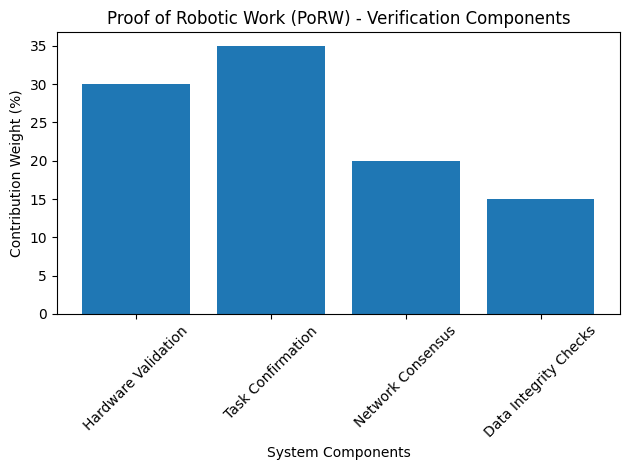
Technically, PoRW combines hardware validation, task confirmation, and network consensus. Hardware validation ensures the robot is authentic. Task confirmation verifies the job was actually completed. Consensus allows the network to agree that the work happened. It sounds complex, but think of it as a digital timesheet for machines. No guessing. Just recorded output.
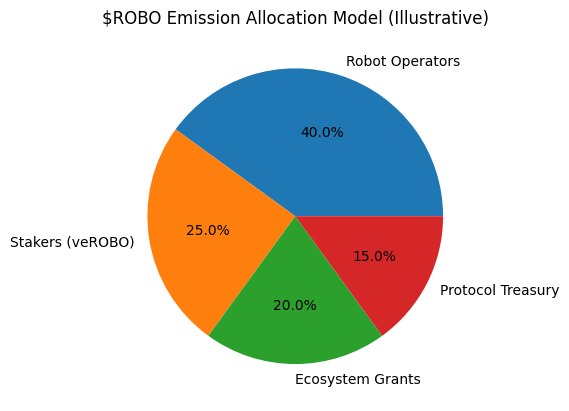
For investors, the link to tokenomics matters. $ROBO emissions are partially influenced by network participation and service quality metrics. If more verified robotic tasks occur, network activity grows. Increased activity can influence token distribution mechanics. That is where economics meets engineering.
As of late February 2026, Fabric’s ecosystem reports steady growth in developer engagement around robotic task frameworks. While still early-stage compared to traditional blockchain networks, the integration of machine identity systems and PoRW architecture suggests progress beyond whitepaper theory. That matters. Markets reward execution, not just ideas.
Hmmm… here is the deeper thought. For years, crypto has validated digital activity—transactions, staking, governance votes. PoRW attempts to validate physical activity. That shift is philosophical. If machines become autonomous economic actors, then recording their work securely becomes foundational infrastructure. Without verification, there is no trust. Without trust, there is no scalable machine economy.
Of course, risks exist. Hardware reliability, data falsification attempts, and scalability challenges must be solved. Physical systems are messy. Sensors fail. Networks lag. But the attempt itself signals ambition. And ambition, when grounded in measurable progress, attracts long-term attention.
From a trading perspective, $ROBO’s short-term price swings are driven by liquidity and leverage. But long-term value will depend on whether Proof of Robotic Work moves from pilot deployments to consistent task volume. If robotic task counts grow quarter over quarter, investors will see it in on-chain metrics. If not, the narrative fades.
Personally, I find PoRW interesting not because it promises rapid gains, but because it reframes what blockchain can secure. It is no longer just about digital coins. It is about digital proof of physical effort.
In markets, we often chase speed. Yet real infrastructure grows slowly. If Proof of Robotic Work proves reliable, ROBO may represent more than volatility. If it fails, the market will correct it quickly. That is the discipline of open systems.
In the end, machines may work tirelessly. But investors must still think carefully.