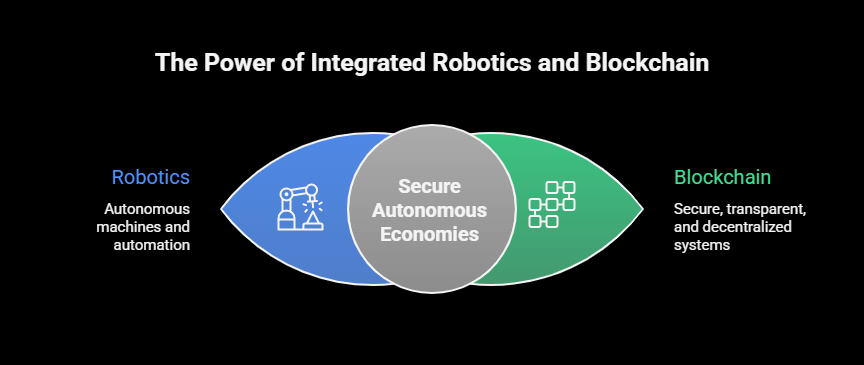
When I first dove into the Fabric Foundation I was amazed not just by the vision but by the technology that makes it possible. At first glance it might look like just another blockchain project for robots, but spending time exploring the infrastructure showed me that it is far more sophisticated. The way Fabric combines blockchain principles with robotic coordination is something I have not seen elsewhere. Over the past months I have followed its evolution and the experience has been both fascinating and inspiring.
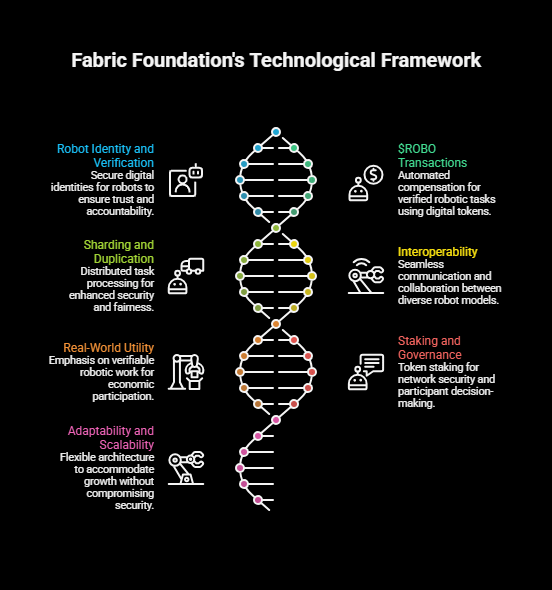
What caught my attention first was the approach to robot identity and verification. In traditional robotics there is no universal method to verify a robot’s work or credentials across platforms. Fabric addresses this by giving each robot a secure digital identity. I saw early demonstrations where robots could log tasks, verify their own actions, and interact with other machines securely. It is not just about identification; it is about creating trust within a decentralized system. From my perspective this is a foundational step because without trust there can be no autonomous collaboration.
Another critical piece is the way transactions are handled using ROBO. I have followed pilots where robots completed real tasks and were automatically compensated. The technology ensures that each task is verified by multiple nodes before tokens are awarded. Watching this in action made me realize the elegance of the system. The network can prevent mistakes and malicious activity while maintaining efficiency. The architecture allows robots to transact with one another as easily as humans exchange money or services in a traditional economy.
The infrastructure also incorporates a type of sharding and duplication that I found remarkable. Tasks are not processed by a single node but shared across multiple instances for verification. I witnessed this in practice and it makes manipulation or fraudulent activity extremely difficult. The network ensures fairness because no single actor can control outcomes without substantial participation. This technical design creates robustness that I found impressive. It felt like watching a system designed for both security and scalability at the same time.
One of the things that struck me most is how the technology supports interoperability. Robots built by different companies with different software architectures can interact seamlessly. I watched demonstrations where fleets of different models collaborated on complex logistics and maintenance tasks. The underlying protocols handle communication, verification, and token settlement without any human intervention. Seeing this made me understand how Fabric is opening the door to a truly open robotic ecosystem.
I also noticed how the network design prioritizes real world utility over theoretical metrics. Some projects focus on speed or transaction volume at the expense of meaningful activity. Fabric, on the other hand, emphasizes that robots must perform verifiable work to generate rewards. I saw robots completing tasks such as inventory management, environmental monitoring, and maintenance with measurable outcomes. The technology ensures that these actions translate into economic participation through ROBO tokens.
Staking and governance are embedded directly into the technical design. Tokens can be staked to support verification and network security. I watched how participants can influence decisions regarding operational protocols and task standards. The process is transparent, and the technology ensures that voting and execution are secure. From my perspective this integration of governance and technical functionality is one of the most advanced features of the platform.
Another aspect that impressed me is the network’s adaptability. Fabric is built to grow as more robots and participants join. The architecture allows for scaling without compromising security or reliability. I experienced firsthand the way new nodes were integrated into the test network and how tasks were distributed efficiently. The system handles increased participation elegantly, which makes me confident it can support widespread adoption as robot fleets expand.
The security framework also deserves attention. Each transaction, each task verification, and each identity is protected by layers of cryptographic validation. I have observed demonstrations where even complex sequences of robotic actions were securely logged and verified in real time. This level of security ensures trust between machines and human participants. Watching this made me appreciate how the technical team is balancing automation, efficiency, and protection against errors or malicious actions.
One of the most exciting applications of the technology is in autonomous coordination. I saw how robots can independently select tasks, collaborate with other machines, and settle transactions without human oversight. This required precise integration of identity, verification, and token systems. Watching this process unfold was fascinating. It felt like seeing a miniature economy in motion, driven by autonomous machines that follow rules enforced by technology rather than human management.
From my perspective the technology behind Fabric is not just about robotics or blockchain alone. It is about the intersection of both. The protocols enable autonomous systems to act economically, maintain accountability, and scale efficiently. I saw developers experimenting with new robot skills and tasks that integrate seamlessly with the infrastructure. This is creating a fertile environment for innovation and collaboration that I have not seen in other robotic ecosystems.
Reflecting on the experience, I realize that the technical design of Fabric addresses fundamental challenges in robotics: trust, verification, interoperability, scalability, and economic participation. Each layer of the network is designed with a purpose, and the integration of ROBO ensures that all activity translates into measurable outcomes. I have watched robots perform complex tasks, earn tokens, and interact with humans and other machines in a secure environment. This level of coordination is unlike anything I expected when I first learned about the project.
In conclusion, the technology behind Fabric Foundation is as impressive as the vision itself. The secure digital identities, task verification, staking, interoperability, and autonomous coordination all come together to create a functioning robot economy. I have experienced how ROBO tokens translate technical work into economic participation. Watching robots operate on the network, interact, and earn compensation has been eye opening. Fabric is not just building software; it is laying the groundwork for a new era where robots are active participants in the world around them. The potential applications of this technology are immense, and experiencing its evolution has changed the way I think about robotics, blockchain, and the future of autonomous systems.