
A few weeks ago, I stumbled across a short video from a warehouse. At first glance, it seemed unremarkable: a robot carrying plastic bins across a massive concrete floor. It moved slowly, paused, adjusted its course as if thinking, and continued. People walked around it, seemingly indifferent.
 But something caught my attention. Not the robot itself, but a small screen mounted on the wall nearby. Every movement of the machine was being recorded timestamps, task numbers, location markers. A quiet stream of data, steadily building, almost invisible against the backdrop of the warehouse activity.
It made me realize something important: robotics isn’t just about machines performing tasks. It’s about proof that the tasks were done. Moving a crate, picking up an item, delivering a package the physical action may last just a few seconds. But the record of that action? That can be important for months, even years. In a world where goods, money, and schedules are on the line, evidence matters.
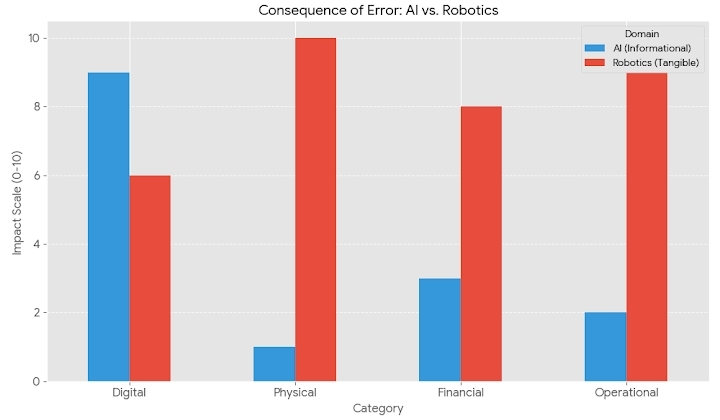
Artificial intelligence and robotics often get lumped together, but they operate in very different realms. AI mostly deals with information. It generates predictions, answers, or classifications. When AI is wrong, the effects usually remain digital. A chatbot writes something incorrect, a model misclassifies an image someone notices, corrects it, or moves on. The real world doesn’t break.
Robotics doesn’t have that luxury. When a robot interacts with physical objects, errors can cascade. A misplaced pallet can disrupt a supply chain, a delayed delivery can cost money, a damaged product can trigger disputes. The consequences are tangible, immediate, and often shared across multiple organizations.
 And here lies the subtle, yet profound challenge: it’s not just intelligence that matters. It’s coordination and trust.
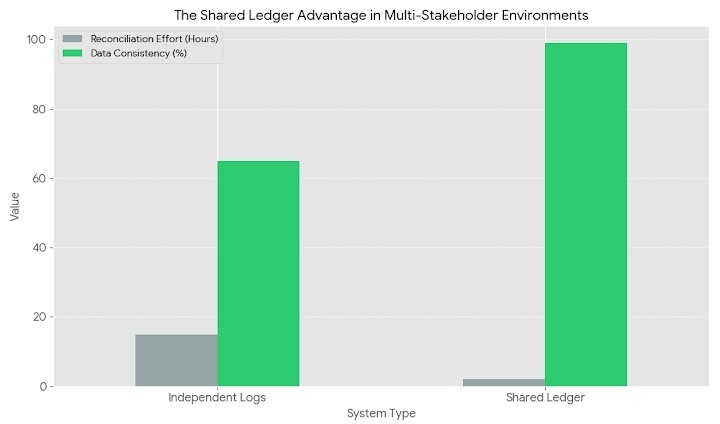
Picture this: one company owns the warehouse, another stores inventory there, a third operates the robotic fleet. Each needs a reliable account of what’s happening inside that shared space. Who moved which item, at what time, and whether the job was completed correctly? If every participant keeps separate records, conflicts emerge. One log says 2:03 PM, another says 2:06, a third has no record at all. Suddenly, what seems like a small robotic action becomes a major reconciliation headache.
This is where decentralized systems and shared ledgers come in not as a philosophical stance, but as a practical solution. A shared, verifiable record maintained by multiple independent parties allows everyone to agree on what actually happened. Trust is no longer centralized; it becomes distributed and transparent.
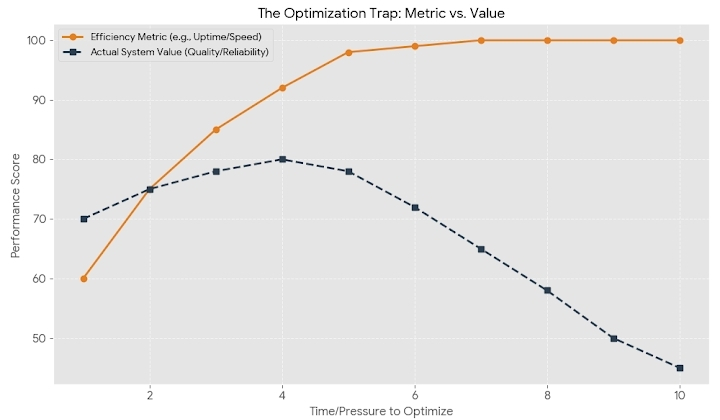
There’s another layer worth noticing: visibility shapes behavior. As robotic activity becomes logged and monitored, it begins to feed performance metrics uptime, task completion speed, reliability scores. Transparent data can improve efficiency, yes. But numbers have a curious way of influencing behavior. Anyone familiar with ranking systems knows the risks: optimize for the metric, and you might stop optimizing for actual value. A robot might rush tasks to appear efficient, or avoid complex jobs because they hurt performance scores. What we measure starts subtly changing what gets done.
And this is precisely the quiet revolution that robotics may be entering. Smarter machines will continue to appear, but the infrastructure around them shared records, trust networks, verifiable logs may matter just as much, if not more. Physical work leaves traces, and those traces are what allow multiple actors to rely on the same system, safely and efficiently.
 So maybe the robot moving a plastic bin across a warehouse floor isn’t the story. Maybe the real story is in the tiny logs quietly stacking up in the background. Because in robotics, sometimes the record of action matters as much as the action itself and sometimes even more.
@Fabric Foundation #ROBO $ROBO
