
I’ve watched this market chase transparency like it’s a virtue without a cost, and I think we’ve misunderstood what blo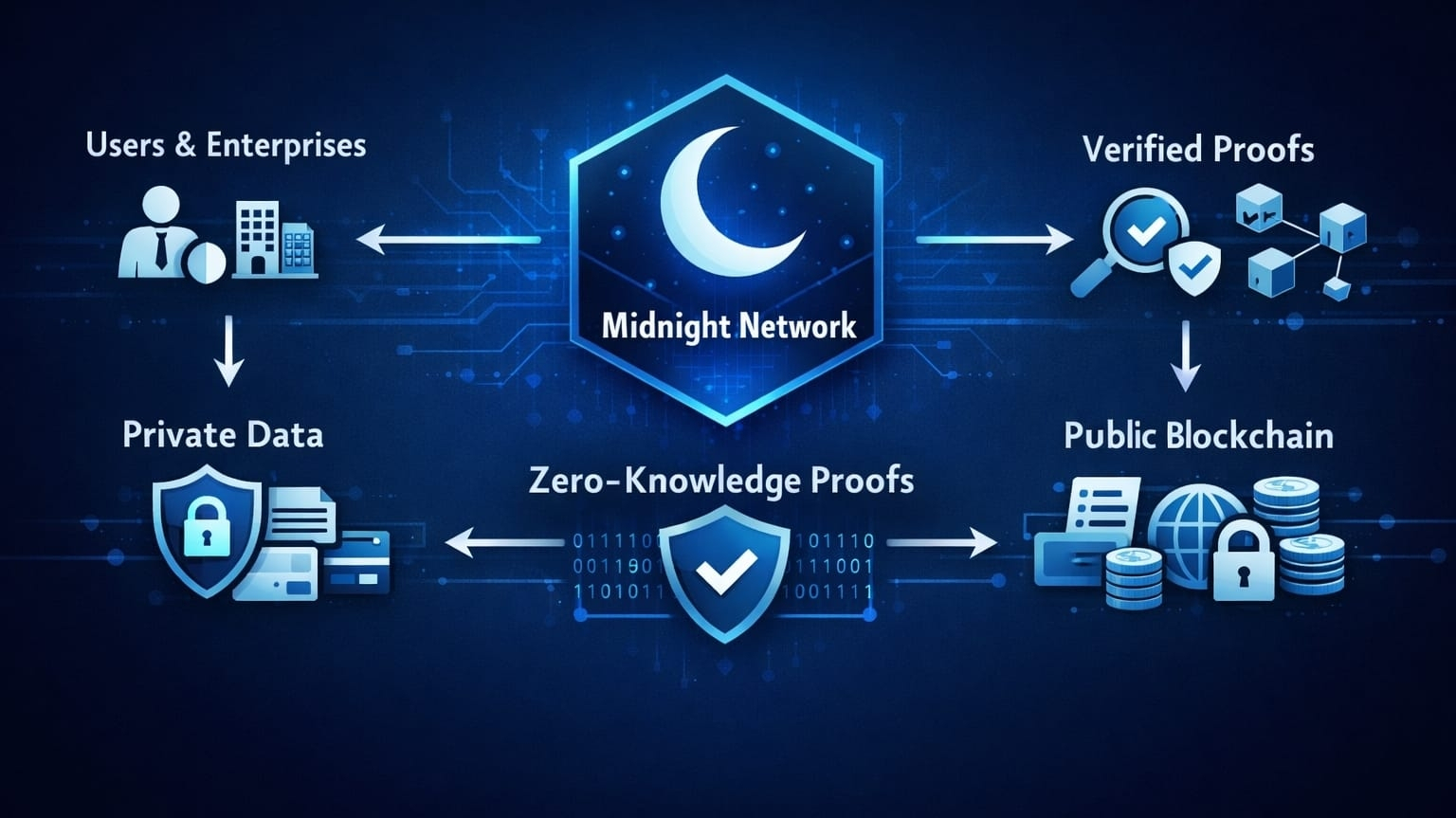 ckchains were supposed to solve. The obsession with everything being public has quietly created a different kind of inefficiencyone where information leaks faster than value can form. When I look at zerknowledge systems, I don’t see a privacy feature. I see a correction. A system that lets truth exist without exposure, where verification replaces visibility, and where ownership isn’t constantly diluted by surveillance.
I think the real breakthrough isn’t that zeroknowledge proofs can hide data. It’s that they redefine what it means to trust a system. For years, we’ve relied on redundant executionevery node replaying every actionto maintain integrity. That model scales poorly because it treats distrust as a permanent condition. ZK flips that. It compresses trust into mathematics, where a single proof can stand in for millions of computations. When I watch how rollups are evolving, I don’t see scaling as the headline. I see the beginning of a system where computation becomes portable, where execution happens anywhere but verification happens everywhere.
I’ve noticed something interesting in how capital is moving. Liquidity is no longer chasing chains; it’s chasing execution environments. Traders don’t care where a transaction is processed as long as it settles with certainty. That’s where ZK systems quietly dominate. They decouple execution from settlement in a way that makes Layer-1 narratives feel outdated. The chains that win won’t be the ones with the most activity. They’ll be the ones that can verify the most activity with the least friction.
In DeFi, transparency has always been framed as safety, but I think it’s created a predictable battlefield. If I can see your position, I can front-run it. If I can map liquidity, I can manipulate it. Zero-knowledge introduces asymmetry back into the system. It allows positions to exist without being immediately exploitable. That changes behavior. Market makers don’t have to fragment liquidity across wallets. Large players don’t have to disguise intent through noise. When information isn’t freely extractable, strategy becomes durable again.
GameFi is where I think this shift becomes more visible. Most on-chain games fail because their economies are too exposed. Players optimize against the system instead of engaging with it. When every action is transparent, the game becomes predictable. ZK changes that by allowing hidden state—private inventories, concealed strategies, unpredictable outcomes. That’s not just a technical improvement. It’s an economic one. It creates environments where value is discovered through participation, not extracted through analysis.
I’ve spent time looking at oracle design, and I think this is where things get uncomfortable. Oracles have always been the weakest link because they bridge deterministic systems with messy reality. ZK doesn’t eliminate that problem, but it reshapes it. Instead of trusting raw data feeds, we start trusting proofs about data integrity. That subtle shift matters. It moves the attack surface from data manipulation to proof generation, which is significantly harder to exploit at scale.
When I think about EVM architecture, I don’t see it as the final form. It’s an abstraction layer that worked for a certain phase of the market. ZK-native environments are already pushing beyond it. They’re not constrained by the same execution logic, and that opens up new design space. Computation can be structured around proof efficiency instead of gas efficiency. That sounds technical, but it changes everything. It means applications are designed for verifiability first, not execution convenience.
On-chain analytics becomes more complicated in a ZK world, and I think that’s a feature, not a flaw. Right now, data extraction is a competitive advantage. Funds build edge by reading flows, tracking wallets, and predicting behavior. ZK reduces that visibility. It forces analysis to move from micro-level tracking to macro-level inference. You don’t see individual actions as clearly, but you understand system-level trends more deeply. That’s a healthier market. It rewards insight over surveillance.
I keep coming back to incentives because that’s where systems either hold or collapse. In a transparent system, the incentive is to exploit information asymmetry as quickly as possible. In a ZK system, the incentive shifts toward creating valid proofs and maintaining integrity. That sounds subtle, but it changes participant behavior. Validators aren’t just confirming transactions. They’re proving correctness. Users aren’t just interacting with contracts. They’re interacting with systems that guarantee outcomes without exposing intent.
There’s also a misconception that privacy reduces accountability. I don’t buy that. ZK systems can prove compliance without revealing underlying data. That’s more powerful than transparency. It means you can enforce rules without exposing participants. For institutions, that’s the missing piece. They don’t need full visibility. They need verifiable assurance. That’s why I think the next wave of capital won’t enter through public chains as they exist today. It will enter through systems that can prove integrity without sacrificing confidentiality.
If I look at the charts and the on-chain signals, I see a quiet rotation happening. Capital isn’t loudly announcing its move into ZK ecosystems, but you can see it in developer activity, in funding rounds, in the infrastructure being built. It’s not speculative in the same way meme cycles are. It’s structural. The kind of shift that doesn’t spike overnight but redefines the baseline over time.
What most people miss is that zero-knowledge isn’t just a feature layer. It’s a different philosophy of how systems should operate. Instead of exposing everything and hoping no one abuses it, you expose nothing and prove everything. That’s a fundamentally different approach to building trust.
I don’t think this transition will be smooth. There are trade-offs. Proof generation is expensive. Tooling is still immature. User experience isn’t where it needs to be. But I’ve seen enough cycles to know that markets don’t wait for perfection. They move toward efficiency. And right now, the most efficient systems are the ones that minimize unnecessary exposure while maximizing verifiable outcomes.
When I step back, I don’t see ZK as the next trend. I see it as the correction to an overexposed system. A shift from visible truth to provable truth. And once that shift fully settles in, I don’t think we’ll go back.
@MidnightNetwork #night $NIGHT
