
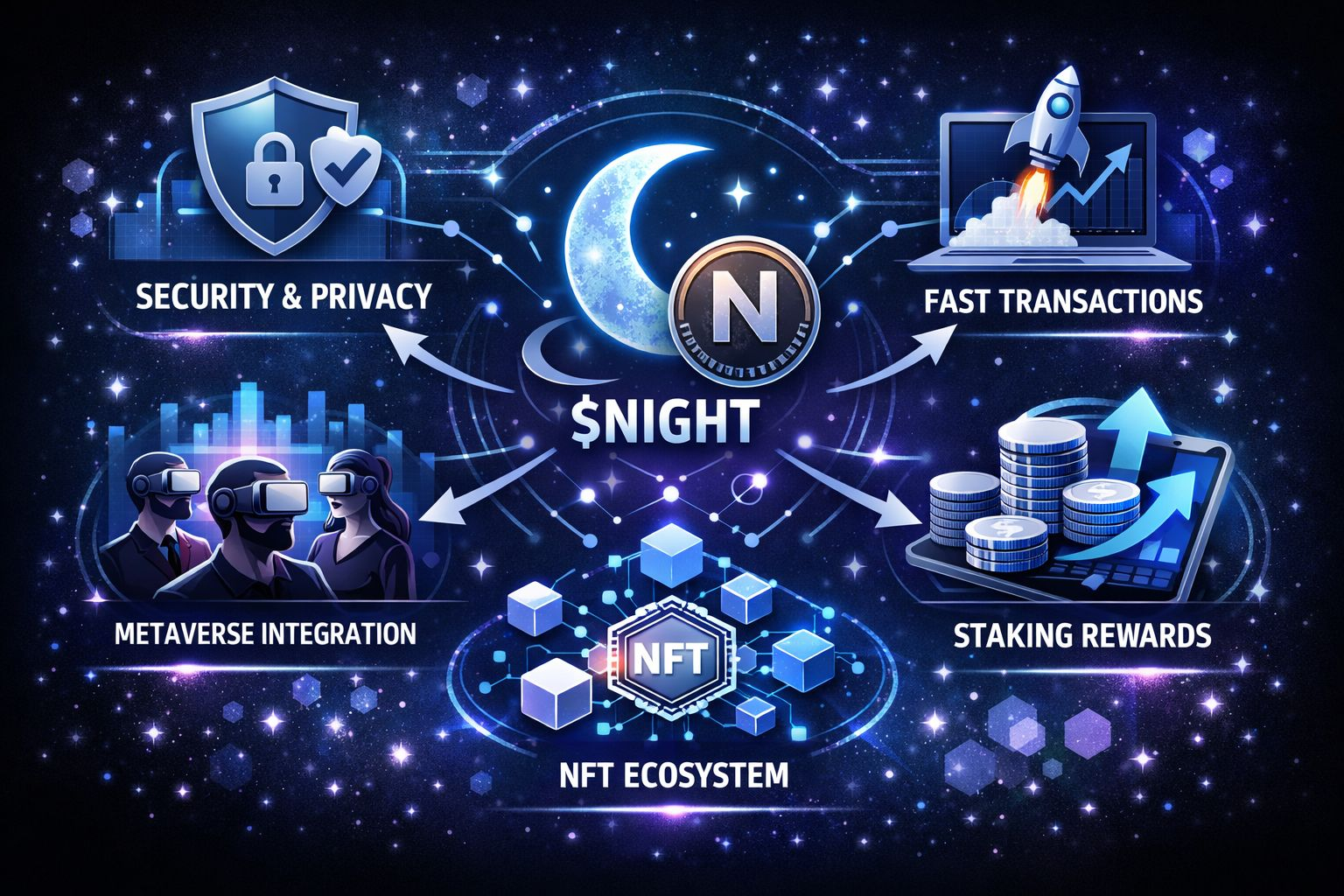
There was a time when I used to feel something close to anticipation every time a new crypto project showed up.
Not excitement exactly, something more restless. Like maybe this one would finally make things click. Maybe this would be the moment where crypto stopped being mostly potential and started becoming something… settled.
That feeling faded.
Not all at once, but gradually. Cycle by cycle. DeFi came and went, then came back wearing different clothes. NFTs turned into culture, then commerce, then something quieter. AI layered itself on top of everything. RWAs followed, promising to bridge worlds that never quite seemed to connect.
You start to notice the rhythm.
A new narrative appears. Capital flows in. Language gets bigger. Expectations stretch. Then, slowly, attention drifts somewhere else.
So when something starts getting attention now, I don’t feel much at first. Just a kind of distance. A habit of waiting.
And yet, every so often, something makes you pause.
Not because it’s loud, but because it touches a problem that never really went away.
Midnight is one of those.
The Part of Crypto We Don’t Talk About Enough
For all the talk about decentralization, crypto has always leaned heavily toward transparency.
Everything visible. Everything traceable. Everything permanently recorded.
At first, that felt like a breakthrough. A system where you don’t need to trust anyone because you can verify everything yourself.
But over time, the edges of that idea became clearer.
Because most of life doesn’t work that way.
People don’t want their financial history exposed. Companies can’t operate if every internal transaction is public. Institutions are bound by regulations that require both accountability and confidentiality.
Transparency, on its own, isn’t enough.
And full privacy, on its own, isn’t either.
That tension has been sitting there for years, mostly unresolved.
Midnight is trying to sit in that gap.
Not by choosing one side, but by trying to reshape the tradeoff itself.
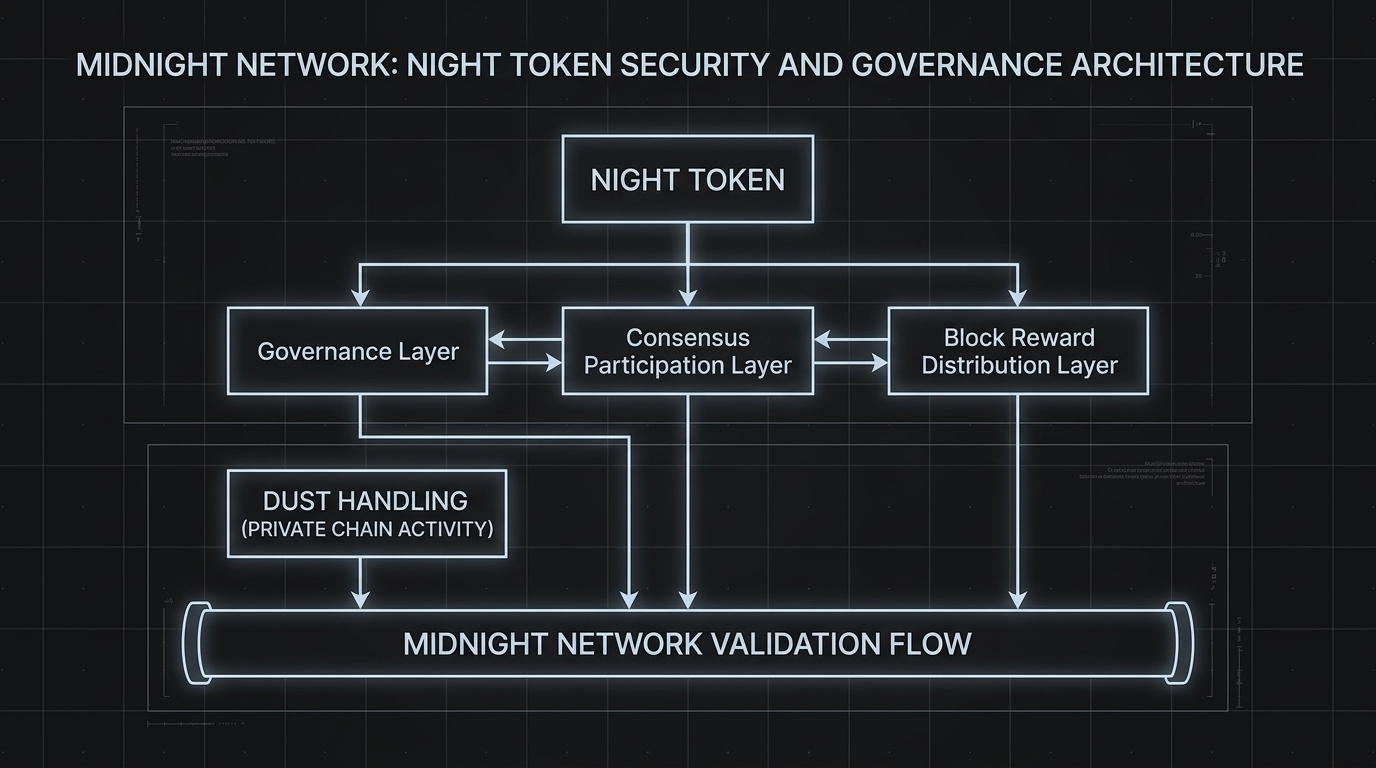
It’s a privacy-focused blockchain built around the idea of selective disclosure, where information can be verified without being fully revealed.
NFT Evening
That idea isn’t new.
But it’s one of the few ideas that keeps coming back for a reason.
The Quiet Appeal of “Selective Truth”
What Midnight is aiming for sounds simple when you say it out loud.
Prove something is true, without showing everything behind it.
That’s where zero-knowledge cryptography comes in, allowing systems to validate transactions or data without exposing the underlying details.
CoinGecko
If you’ve been around long enough, you’ve heard this before.
But it still makes you stop for a second.
Because if it actually works at scale, it changes the kinds of things blockchains can be used for.
Not just trading. Not just speculation.
But areas where privacy is not optional, finance, healthcare, identity systems, enterprise data.
Phemex
Midnight frames this as “programmable privacy”, the idea that privacy isn’t a fixed setting, but something you can adjust depending on context.
And that’s where the curiosity comes in.
Not excitement, just curiosity.
Because it feels closer to how real systems actually behave.
Why the Idea Matters
If you strip away the branding and the token, the core problem Midnight is trying to solve is pretty straightforward.
Public blockchains expose too much.
Private systems hide too much.
And neither model fits well with how most real-world systems operate.
Midnight is trying to bridge that.
A system where data can remain private, but proofs can still be public.
A system where compliance is possible without full transparency.
A system where businesses don’t have to choose between using blockchain and protecting sensitive information.
That matters.
Because without something like that, crypto stays where it is now, useful in certain niches, but limited when it comes to broader adoption.
And yet…
Where Things Usually Break
This is also where doubt starts to creep in.
Because crypto is full of ideas that make perfect sense in theory.
Privacy coins tried to solve this in one way. Zero-knowledge rollups tried in another. Confidential transactions added their own approach.
None of them failed completely.
But none of them became dominant either.
Part of the problem is external.
Privacy tends to attract regulatory pressure. Systems that obscure data, even selectively, can raise concerns, especially when institutions are involved.
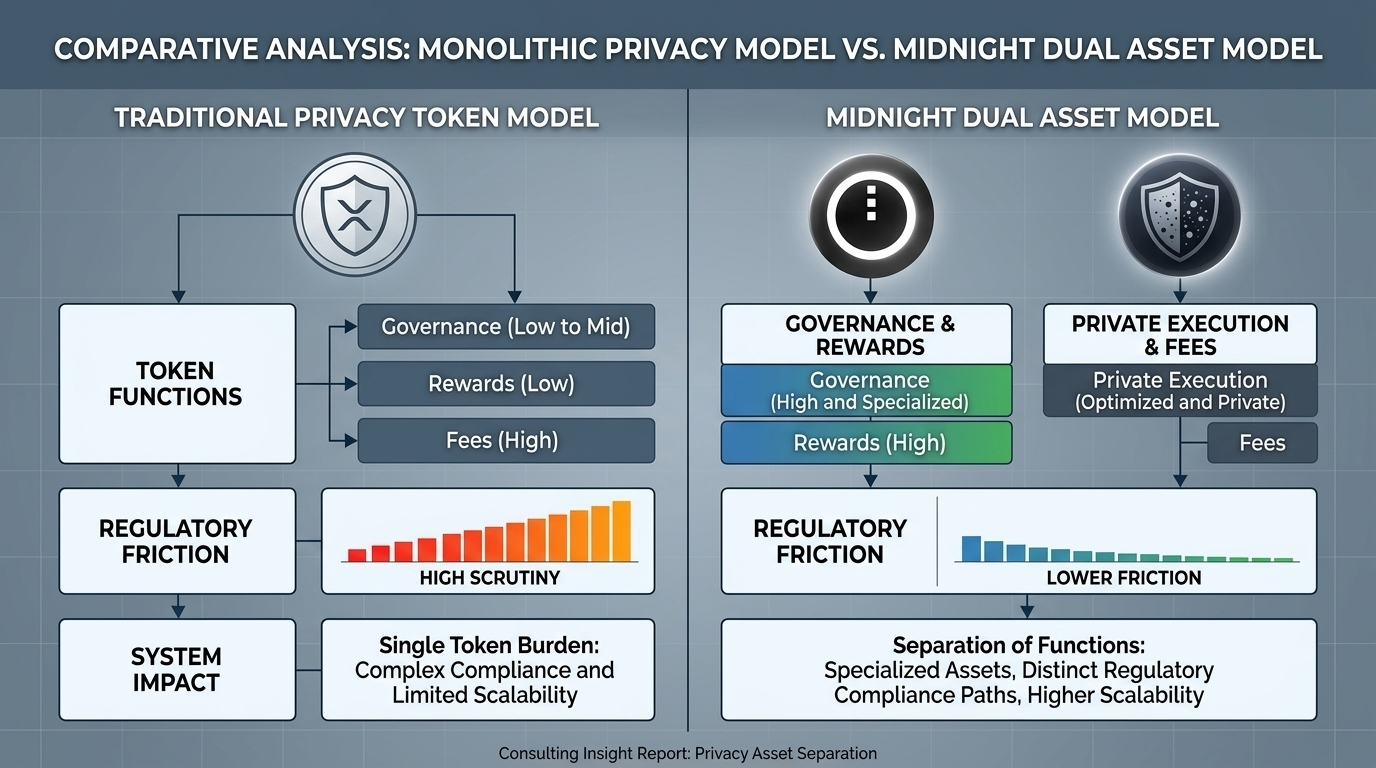
Midnight tries to address this by keeping its main token visible and compliant, while privacy operates at the application layer.
Midnight Network
It’s a careful balance.
But it’s also a fragile one.
Then there’s usability.
Privacy systems are rarely simple. They add layers, concepts, abstractions. Developers have to learn new tools. Users have to trust systems they can’t fully see.
And trust, in crypto, is a strange thing.
Transparency builds it. Privacy complicates it.
Midnight is trying to combine both.
Whether that combination feels intuitive, or just confusing, is something that can’t really be answered yet.
The Token, and the Question It Always Raises
Then there’s the token.
There’s always a token.
In this case, it’s $NIGHT.
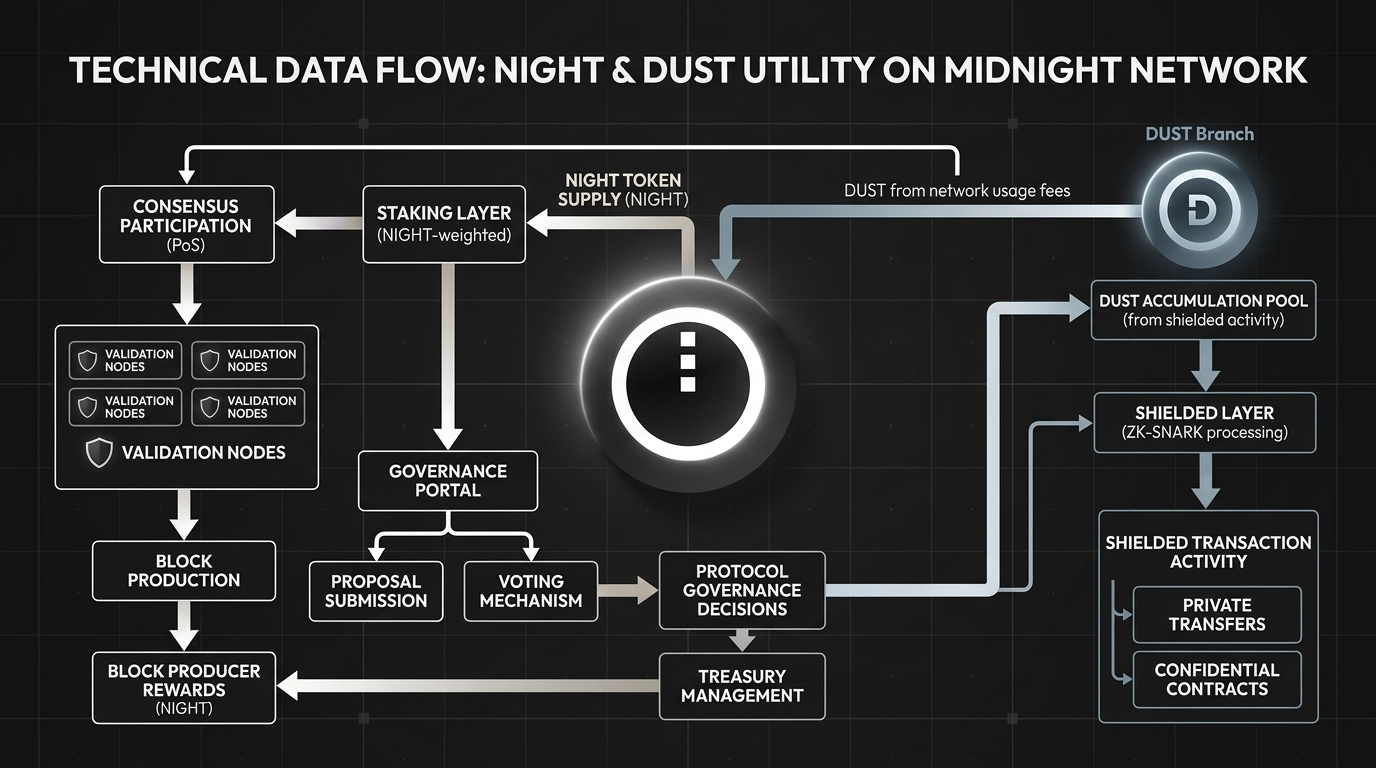
At first glance, it doesn’t behave like a typical gas token. Instead of being spent directly, holding NIGHT generates a secondary resource called DUST, which is used to pay for transactions and run applications.
Midnight Network
It’s an interesting design.
You separate ownership from usage. You don’t burn the asset just to interact with the network. Instead, you hold it, and it produces something you can spend.
On paper, that solves a few problems.
It makes costs more predictable. It reduces friction for users. It even allows applications to cover fees for their users by holding NIGHT themselves.
But it also introduces new questions.
Does this make the system easier, or just more abstract?
Does it align incentives, or create a new layer of complexity that only a small group will fully understand?
And maybe the more uncomfortable question.
Does the token serve the system, or does the system eventually bend around the token?
Because if you’ve been through enough cycles, you’ve seen how often tokens drift away from their intended purpose.
Even when the design is thoughtful.
Even when the intentions are clear.
Attention, Again
Midnight is getting attention right now.
Partly because of its timing. Privacy is becoming a bigger concern again, both inside and outside crypto.
Partly because of its association with the Cardano ecosystem, which gives it an existing base of users and visibility.
And partly because new tokens always attract attention, especially when distribution is large and participation is wide.
Midnight
But attention is easy.
Adoption is not.
Adoption means developers choosing to build here instead of somewhere else.
It means businesses trusting the system enough to use it for real operations.
It means users interacting with it without needing to understand every underlying detail.
And for something as nuanced as programmable privacy, that bar feels higher than usual.
Sitting Somewhere in the Middle
I don’t find myself dismissing Midnight.
But I don’t find myself fully convinced either.
It sits in that middle space.
The idea makes sense. The problem is real. The approach is thoughtful.
But the gap between a good idea and a widely used system is where most projects quietly fade.
Maybe Midnight crosses that gap.
Maybe it doesn’t.
What makes it interesting isn’t certainty. It’s that small moment of hesitation.
The kind that only shows up when something feels just different enough to be worth watching, but not clear enough to believe in.
And after enough time in this space, that might be the closest thing to genuine interest that’s left.
@MidnightNetwork #night $NIGHT
