
Позвольте мне прямо сказать, что привлекло мое внимание в первую очередь.
Когда я увидел, что генеральный директор Sign Protocol подписал соглашение о разработке цифровой валюты центрального банка (CBDC) с Национальным банком Кыргызской Республики в октябре 2025 года, моя первая реакция была уважением. Это не дорожная карта и не презентация — это центральный банк, доверяющий протоколу часть своей монетарной инфраструктуры. В пространстве, полном нарративов, это само по себе ставит Sign в другую категорию.
В то же время проекты, такие как $LYN и $EDGE, набирают популярность, но этот шаг со стороны Sign казался более конкретным, чем большинство.
Но чем больше я обдумывал это, тем более глубокая проблема начала формироваться — та, о которой не говорят достаточно.
Sign Protocol построен вокруг идеи суверенитета. S.I.G.N. Framework отделяет управление и политику от технического слоя, сохраняя системы проверяемыми, позволяя институтам оставаться под контролем. На бумаге это звучит правильно.
Но здесь есть напряжение.
Sign Protocol привлек значительное финансирование — с поддержкой таких имен, как Sequoia Capital, Circle, Binance Labs и других, с десятками миллионов, вложенными в проект. Токеномика также это отражает: 10 миллиардов общего предложения, из которых 40% предназначено для стимулов сообщества, а оставшиеся 60% распределены между ранними инвесторами, командой и участниками экосистемы.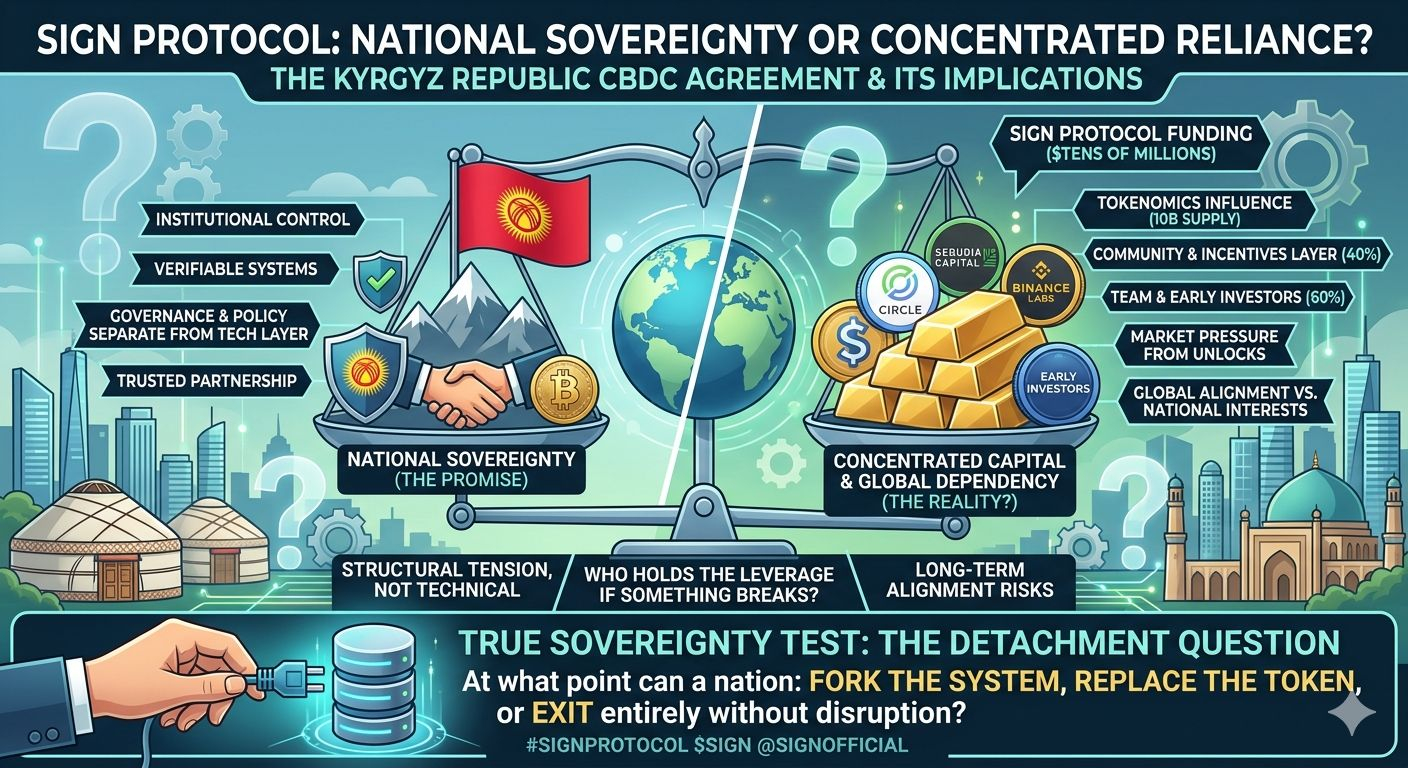
Теперь подумайте, что это на самом деле значит.
Если такая страна, как Кыргызстан или Сьерра-Леоне, строит свою CBDC или инфраструктуру идентификации на базе Sign, она не просто принимает нейтральную технологию. Она подключается к экосистеме, где экономический слой — токен, который питает стимулы, валидаторов и операции — формируется сущностями, которые само государство не избирало и не одобрило.
Да, протокол может быть открытым.
Да, проверка может быть прозрачной.
Но экономическая гравитация находится в другом месте.
И это имеет значение.
Потому что принятие Sign — это не только код — это долгосрочное соответствие. Владельцы токенов имеют влияние. Ранние инвесторы имеют стимулы. Рынки создают давление. Эти динамики не всегда движутся в унисон с национальными интересами, особенно через пять или десять лет.
Мы уже видели нечто подобное. Когда развивающиеся страны приняли глобальную финансовую инфраструктуру несколько десятилетий назад, они получили эффективность — но также и зависимость. Обещание тогда также было контролем. Реальность оказалась более сложной.
Чтобы было ясно, это не о сомнении в технологии. Команда, стоящая за Sign Protocol, состоит из серьезных академических и инженерных талантов. Двухцепочечный дизайн, объединяющий прозрачность с приватностью, действительно силен на уровне протокола.
Настоящий вопрос не технический. Он структурный.
Если что-то сломается — будь то системная ошибка или рыночное давление из-за разблокировки токенов — кто держит рычаги? Государство, управляющее системой, или более широкая экосистема, контролирующая ее стимулы?
Это противоречие, к которому я постоянно возвращаюсь.
Sign Protocol позиционирует себя как суверенная инфраструктура, в то время как финансируется и частично управляется концентрированным институциональным капиталом. Это напряжение не исчезает только потому, что код является открытым.
Итак, вот вопрос, на который, как мне кажется, следует дать четкий ответ:
На каком этапе нация, использующая Sign Protocol, может полностью отсоединиться — форкнуть систему, заменить токен или полностью выйти — не нарушая финансовую идентичность своих граждан и основную инфраструктуру?
Потому что именно здесь испытывается истинный суверенитет.