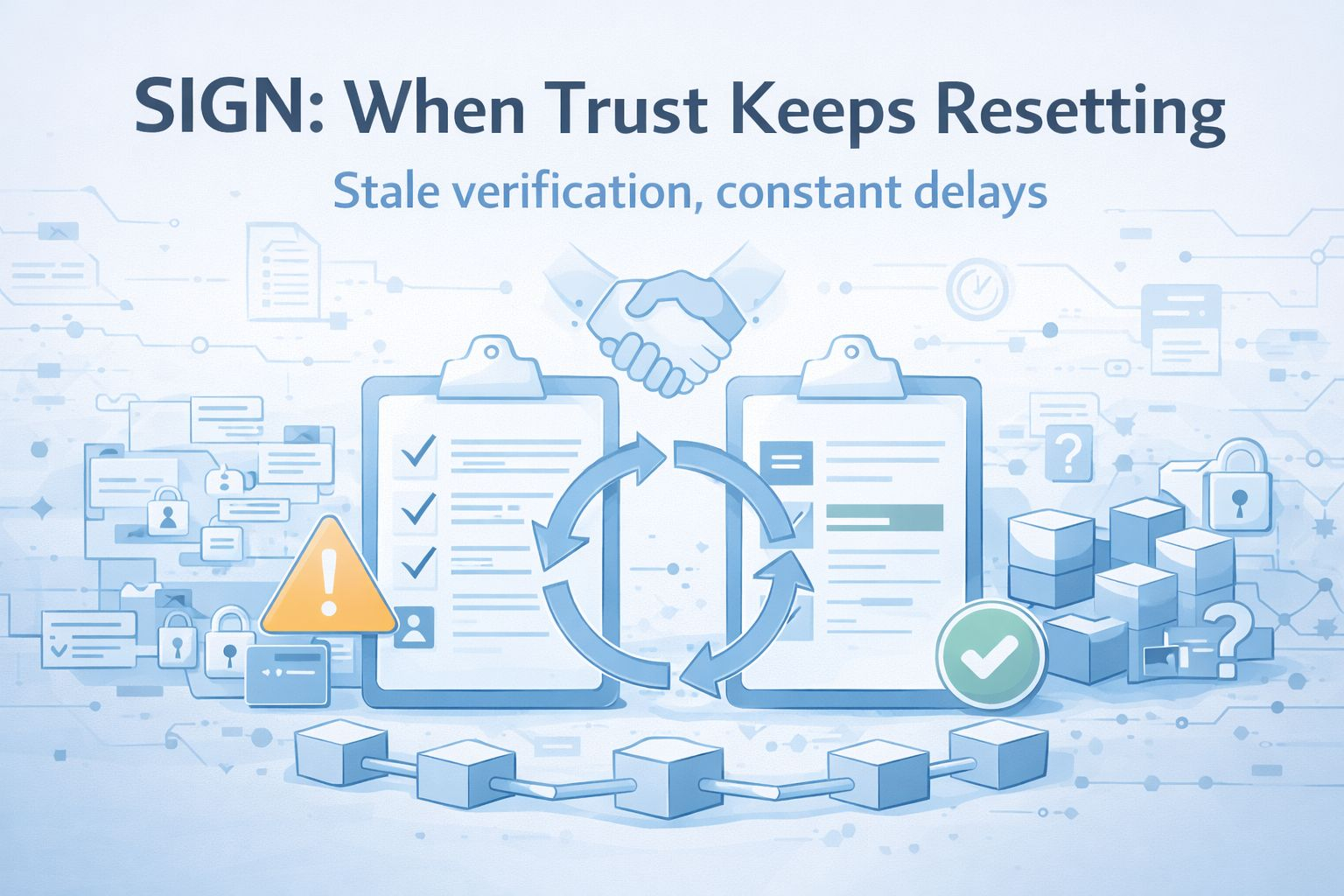
Stopped scrolling today when I realized something strange… systems don’t really trust themselves. Even after verification is done, the same proof gets checked again and again.
While learning about @SignOfficial it started to click for me. $SIGN is not trying to just verify things better, it’s trying to stop this constant reset of trust. In most setups, once data moves to another system, it loses its history. Everything starts from zero again. That’s where delays quietly come from, not because things are unclear, but because systems don’t share memory.
SIGN changes that by turning verification into something reusable. Through attestations, once something is proven, it can move across different environments without being rebuilt every time. It sounds small, but for developers and real-world systems, it removes a lot of hidden friction. Less repetition, less delay, more continuity.
What makes it more interesting is how it fits real environments. In regions growing fast, where multiple systems are connecting, this kind of shared verification layer starts to matter more than expected. Instead of slowing down at every checkpoint, trust can move forward with the process.
I’m not saying it’s fully proven yet. Systems like this need time and adoption. But the direction feels practical. It’s not about making things look faster, it’s about removing the part that quietly slows everything down.