
I think one of the biggest mistakes I’ve made in crypto is trying to understand every project too quickly.
If it didn’t “click” in the first few minutes, I’d usually move on. And honestly, that’s exactly what almost happened when I first came across @SignOfficial
It didn’t immediately fit into any category I was used to.
Not a typical DeFi app.
Not a simple token narrative.
Not even something I could easily explain in one sentence. So I ignored it at first.
But after seeing it come up a few times, I decided to look again, this time without trying to force a quick conclusion.
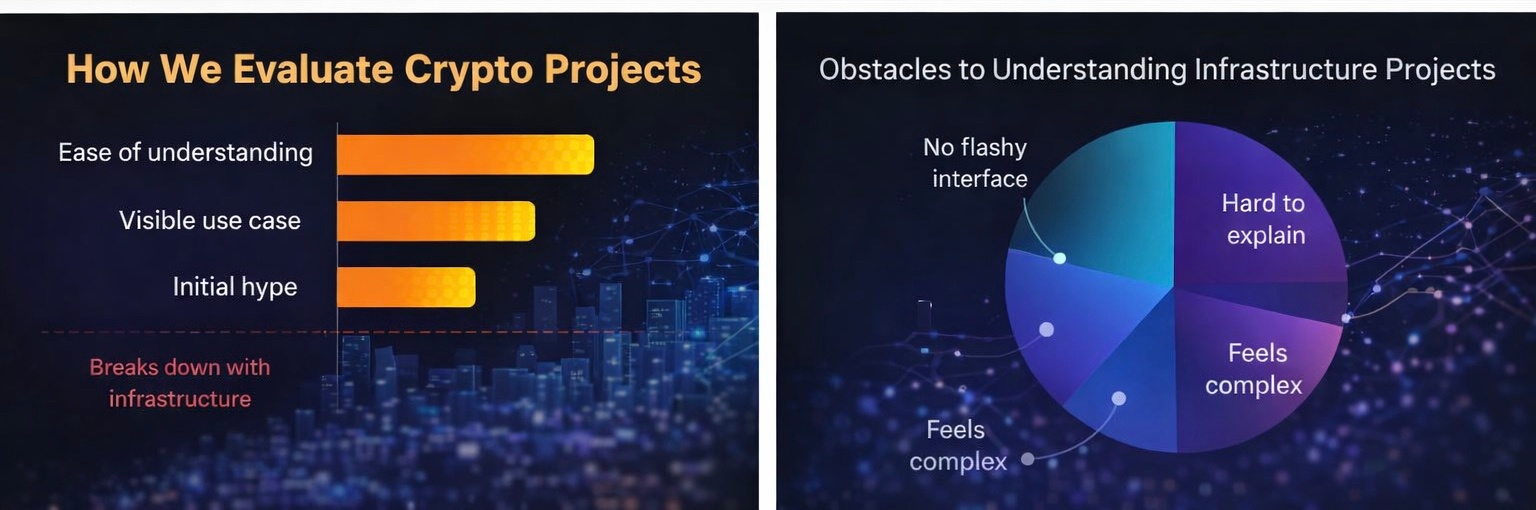
The Problem With How We Evaluate Projects
Most of us (myself included) tend to evaluate projects based on:
How easy they are to understand
How quickly we can see the use case
Whether there’s immediate hype or momentum
That works fine for simple ideas.
But it completely breaks down when you’re dealing with infrastructure. Because infrastructure is not designed to be obvious.
It’s designed to work in the background.
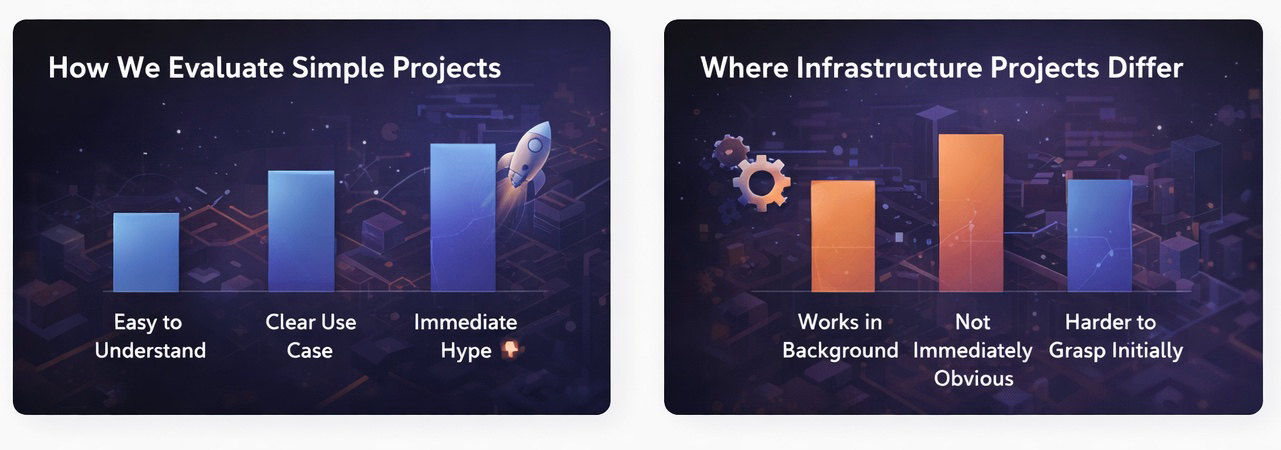
Where Sign Feels Different
When I looked at Sign the second time, I stopped trying to categorise it and instead focused on what it’s trying to enable.
From what I understand, it’s focused on verification and trust at a system level, not just for one app, but potentially across different use cases.
That’s when it started to make more sense.
It’s not something you necessarily “use” directly.
It’s something that makes other things work better. And that’s probably why it feels harder to grasp at first.
Why This Doesn’t Get Immediate Attention
Let’s be real, infrastructure is not exciting. It doesn’t give you that instant “this is going to 10x” feeling.
There’s no flashy interface or obvious end-user experience to latch onto. That’s why most people skip it. And I get it.
Even now, I’m still trying to fully understand how Sign fits into the bigger picture.
But I’ve also learned that just because something isn’t exciting at first glance doesn’t mean it’s not important.
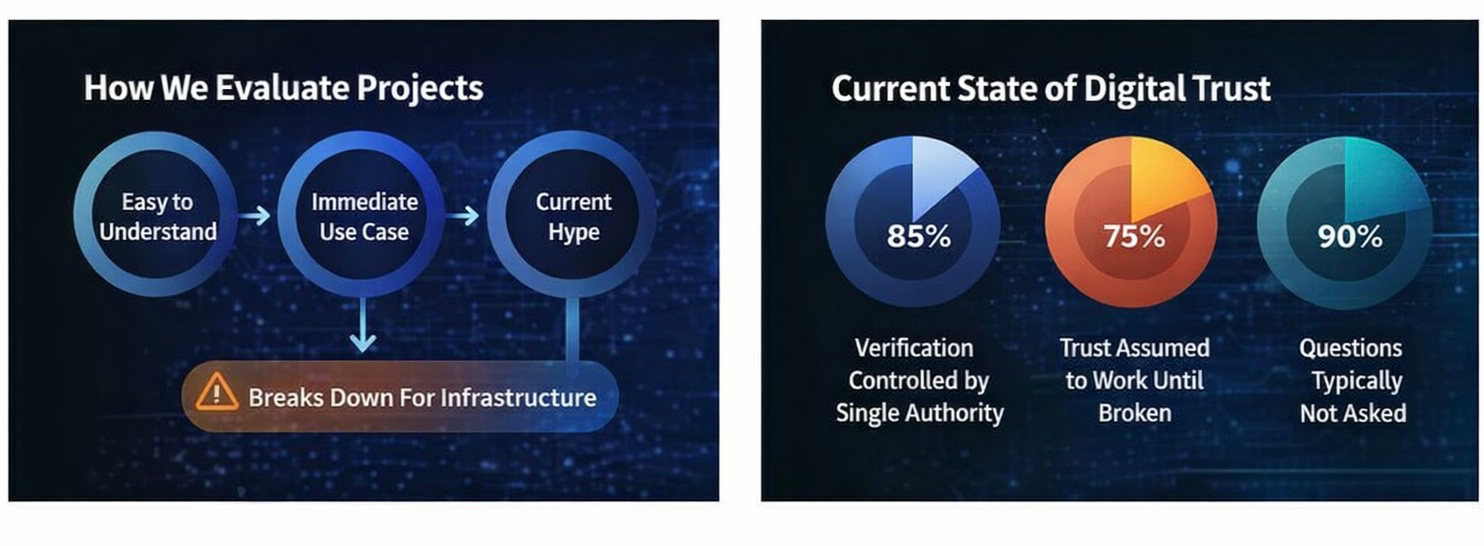
The Trust Layer Is Still Undervalued
Here’s something I’ve been thinking about recently:
We assume a lot of things “just work” in digital systems.
But behind the scenes, there’s always a question of:
Who verifies the data?
Who controls the system?
What happens if that trust breaks?
Most of the time, we don’t question it, until something goes wrong.
If Sign is trying to build a layer where verification doesn’t depend on a single authority, that could be more impactful than it seems at first.
But again, that’s a big “if.”
Where I’m Still Unsure
I don’t want to make this sound like blind optimism, because it’s not.
There are still things I’m not clear about:
How quickly can something like this actually be adopted?
What are the real-world implementations right now?
How easy is it for developers to integrate $SIGN
These are the kinds of questions that matter more than the concept itself.
Because we’ve all seen good ideas fail due to lack of execution.
A Small Shift in Perspective
One thing this experience changed for me is how I approach new projects.
Instead of asking:
“Do I understand this immediately?”
I’ve started asking:
“Is this solving something fundamental?”
Those are two very different questions.
And in the case of @SignOfficial, I think it leans more toward the second one.
Final Thoughts
I’m still not at the point where I have a strong conviction about $SIGN. But I’m also not ignoring it anymore.
It sits in that interesting space where:
It’s not obvious
It’s not fully proven
But it might be more important than it looks
And sometimes, that’s exactly where you want to pay attention. Not because it’s guaranteed to succeed, but because it challenges how things currently work.
For now, I’m just keeping it on my radar and trying to understand it better over time.
No rush, no strong bias. Just observing.
What about you, do you usually skip projects that don’t make sense immediately, or do you spend more time trying to figure them out?
#SignDigitalSovereignInfra $SIGN
