

In the beginning, blockchain was Exposed. Every transaction, every wallet balance, every smart contract interaction laid bare for anyone with an internet connection to see. Bitcoin gave us decentralized money. Ethereum gave us programmable contracts. But both came with a catch: your financial life became a public exhibition.
Then came the privacy coins. Monero. Zcash. They wrapped everything in cryptographic darkness.
But this created a new problem: total opacity made them pariahs.
Exchanges delisted them.
Regulators hunted them.
The pendulum had swung too far.
Enter @MidnightNetwork , the fourth generation of blockchain evolution.
Built by the same minds behind Cardano, Midnight doesn't ask you to choose between transparency and secrecy.
It offers something radical: rational .
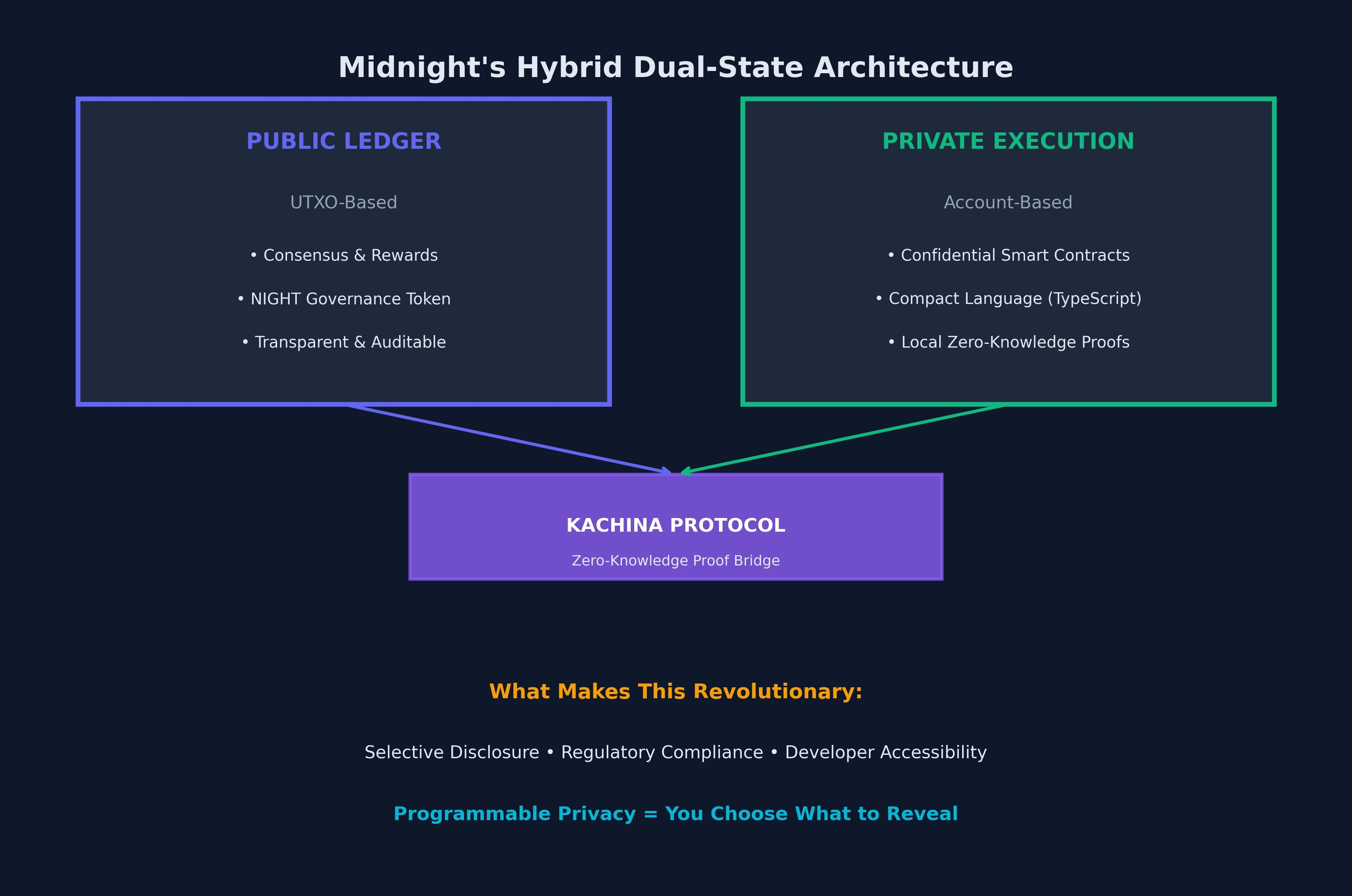
Midnight's genius lies in its hybrid dual-state architecture.
On one side, a UTXO-based public ledger handles consensus, validator rewards, and the $NIGHT governance token.
Everything transparent.
Everything auditable.
On the other, an account-based private execution environment where confidential smart contracts run locally on your machine.
The bridge between these worlds? The Kachina Protocol.
It processes private state transitions off-chain and submits only zero-knowledge proofs to the public ledger.
The network knows the transaction is valid. It just doesn't know what the transaction contains.
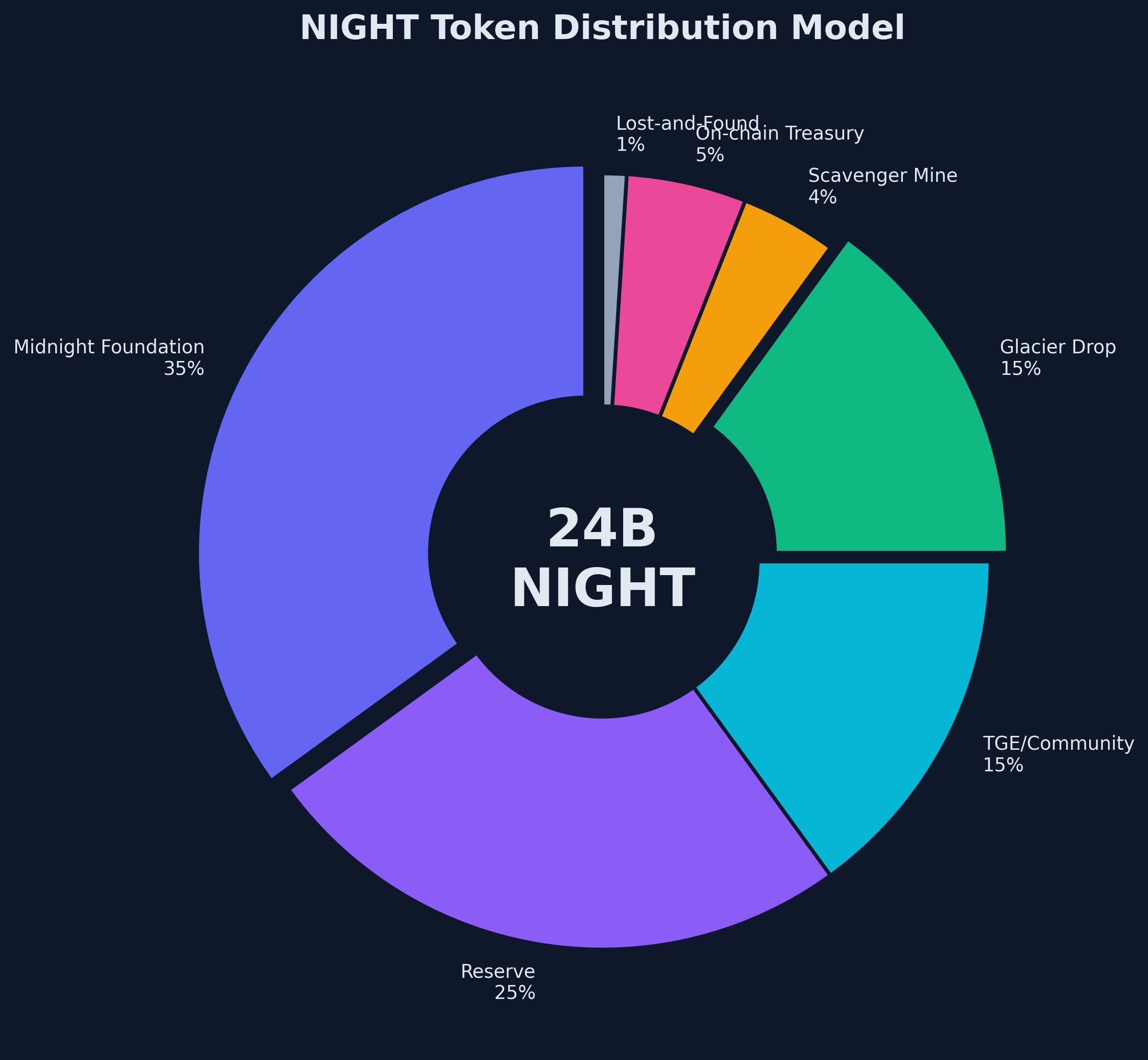
The NIGHT token distribution tells its own story about Midnight's values.
No VC rounds.
No private sales.
No insider allocations.
The entire initial supply went to community claims through the Glacier Drop, a multi-phase distribution that reached over 8 million unique wallet addresses, an industry record.
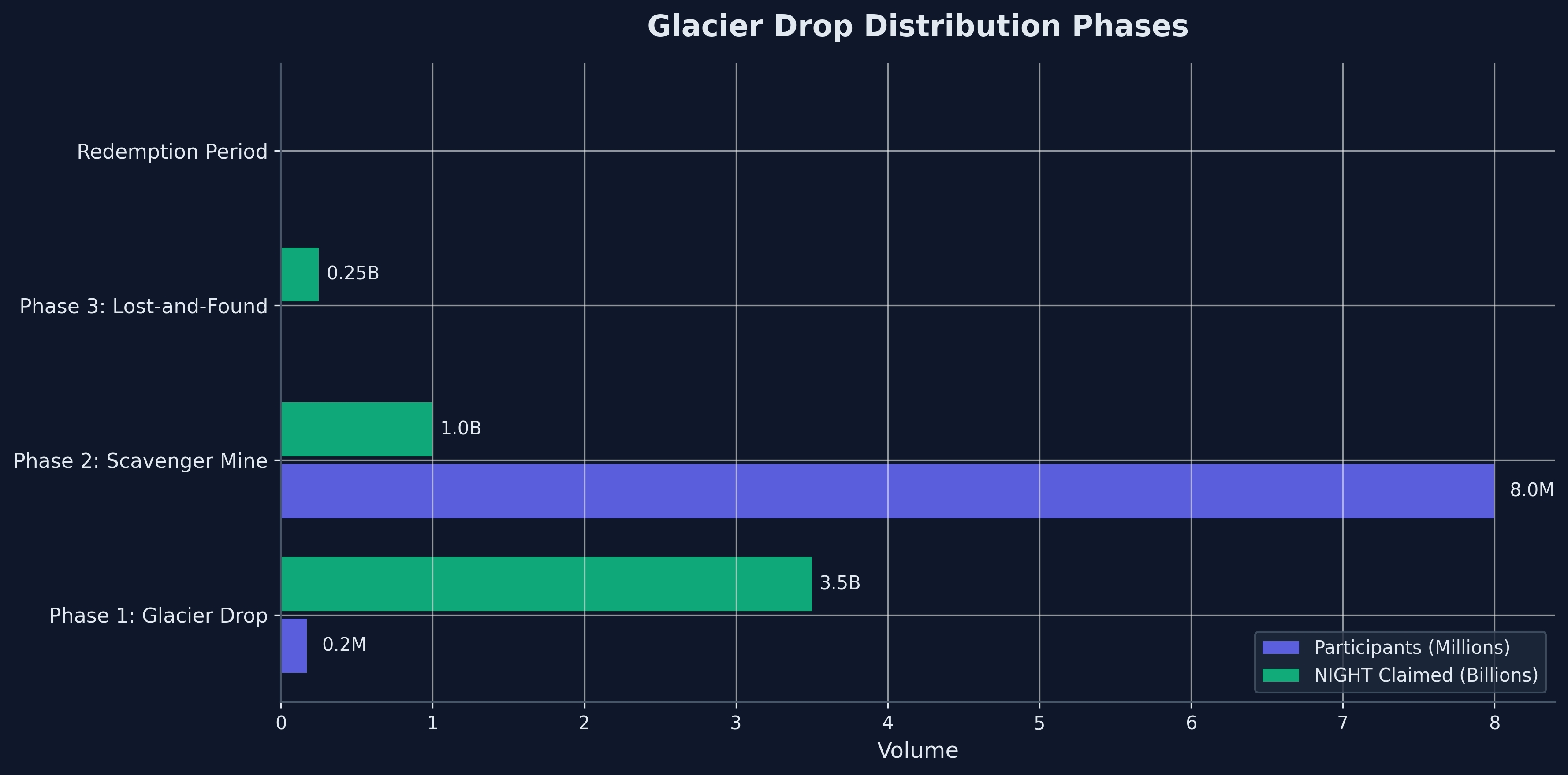
Phase 1 targeted existing blockchain communities.
Holders of ADA, BTC, ETH, SOL, XRP, BNB, AVAX, and BAT could claim based on historical snapshots.
Phase 2, the Scavenger Mine, opened to anyone with a CPU and internet connection. Over 8 million participants proved that true decentralization isn't just a marketing slogan.
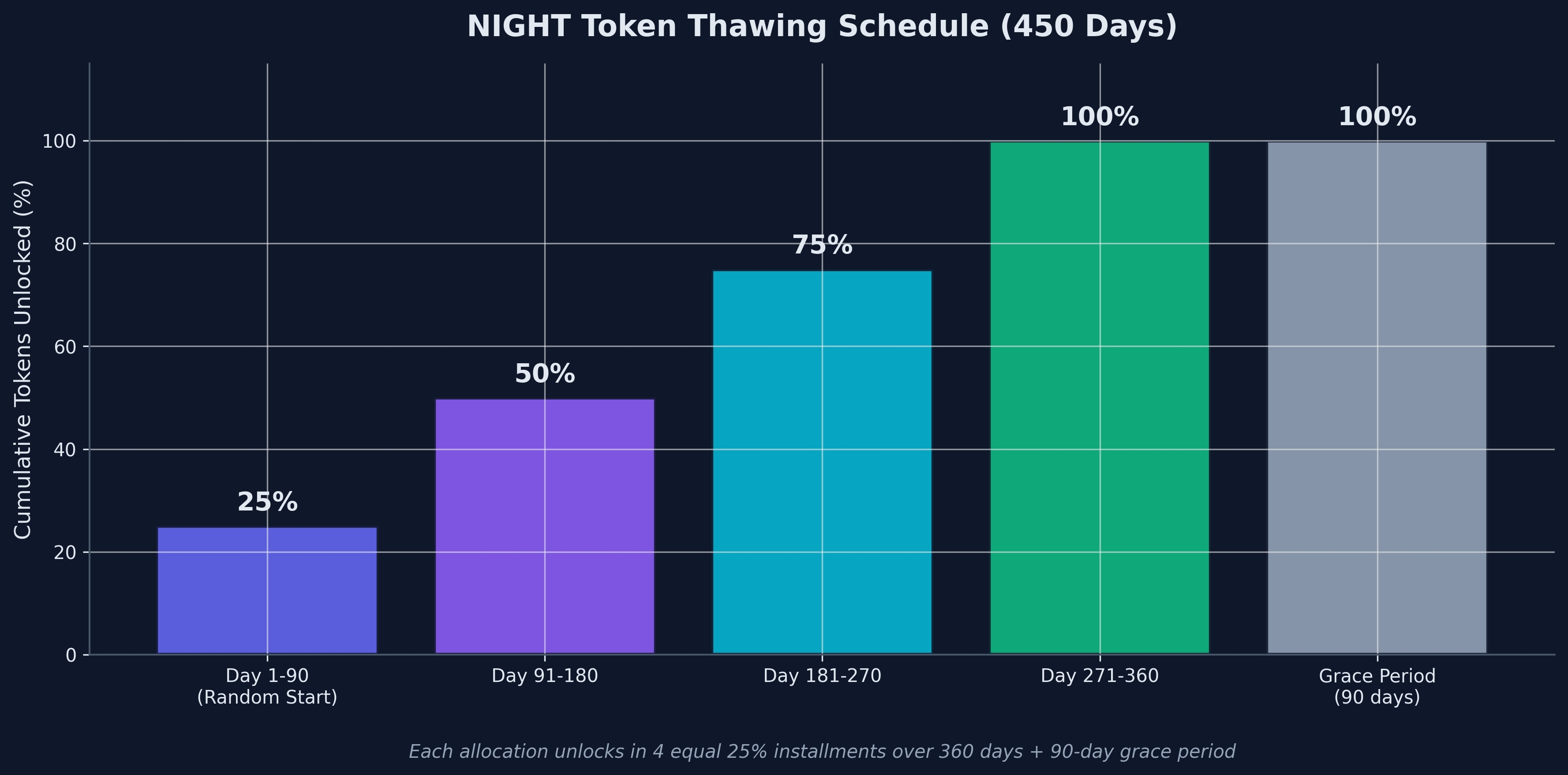
The thawing mechanism ensures no sudden dumps.
Tokens unlock gradually over 450 days in four equal installments.
Each allocation gets a randomized start date. It's fairness engineered into the protocol itself.
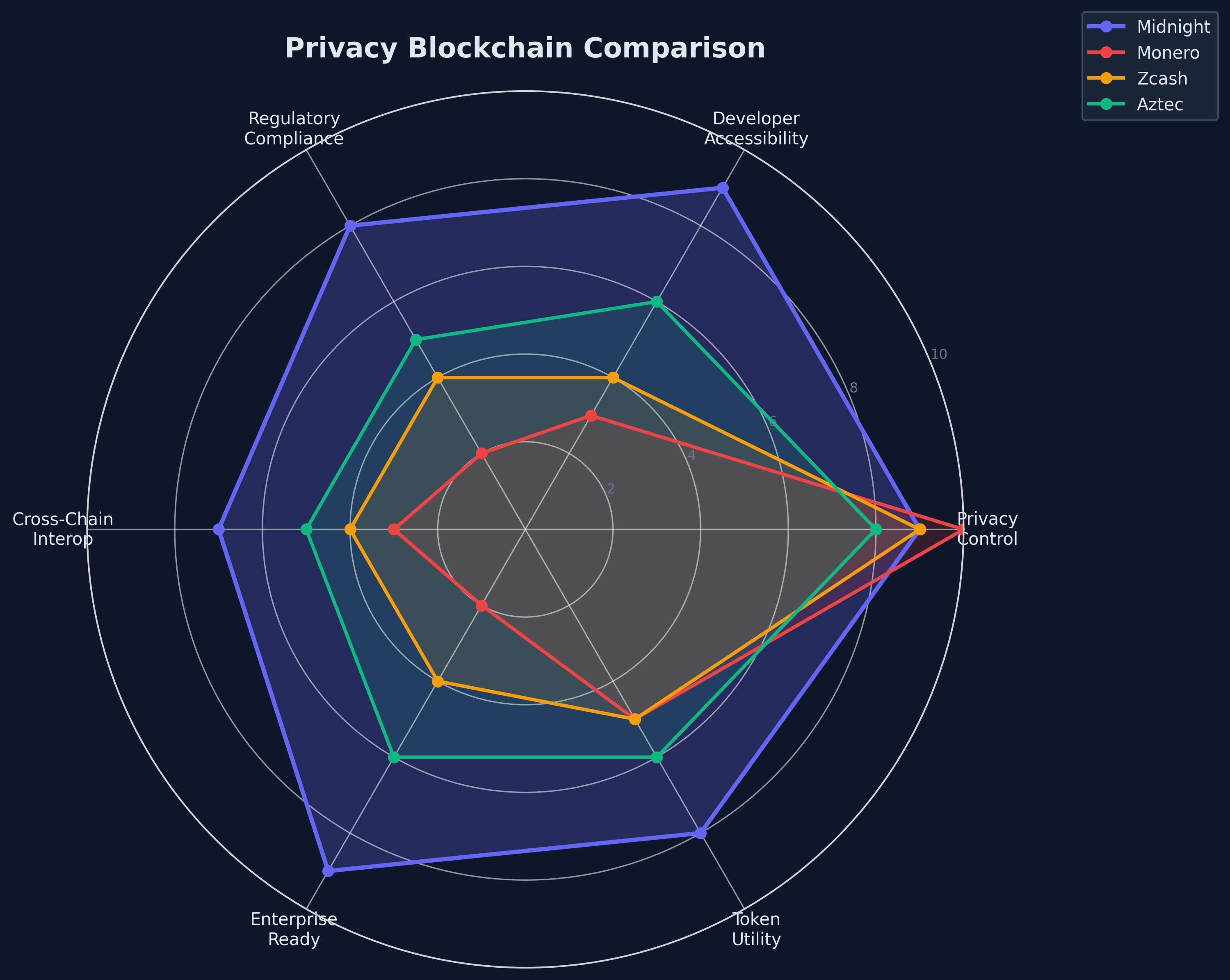
Unlike privacy coins that obfuscate everything, Midnight enables selective disclosure.
Developers write contracts in Compact, a TypeScript-based language that automatically generates zero-knowledge circuits.
You don't need a PhD in cryptography to build privacy-preserving applications.
This is the key insight: privacy isn't about hiding everything.
It's about controlling what you reveal.
A healthcare app can prove you're insured without exposing your diagnosis.
A voting system can verify eligibility without revealing your choice.
A business can demonstrate solvency without opening its books.
The Future Is Programmable Privacy
Midnight isn't just another blockchain.
It's a bet on a future where privacy and compliance aren't enemies but partners. Where developers can build applications that respect user data without sacrificing regulatory alignment.
Where the word 'private' doesn't automatically trigger alarm bells.
The Glacier Drop is just the beginning.
As the network transitions to Cardano stake pool operators for block production and the mainnet comes online, NIGHT holders aren't just investors.
They're participants in a new paradigm of rational privacy.
So the question isn't whether you want privacy or transparency.
The question is: what will you build when you can have both?