

I wasn’t even looking for anything new when I came across SIGN. It just sort of showed up in my feed, one of those projects people were casually mentioning like it was obvious I should already know about it. I didn’t. So yeah, I clicked.
At first, I thought it was just another blockchain project trying to sound bigger than it really is. I’ve seen plenty of those. Big promises, complicated words, and not much underneath. But the more I read, the more I realized this one was poking at something real… something I’ve actually felt myself.
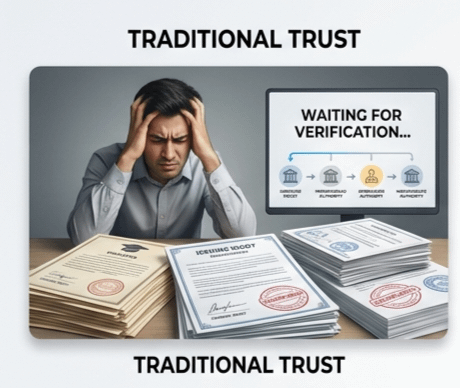
I’ve applied for things online before. Jobs, programs, random opportunities. Every time, I upload my documents and then just sit there waiting. Waiting for someone to “verify” me. And honestly, I never know what’s happening behind the scenes. Did they check? Did they care? Did my application just disappear?
So when I saw what SIGN was trying to do, I paused.
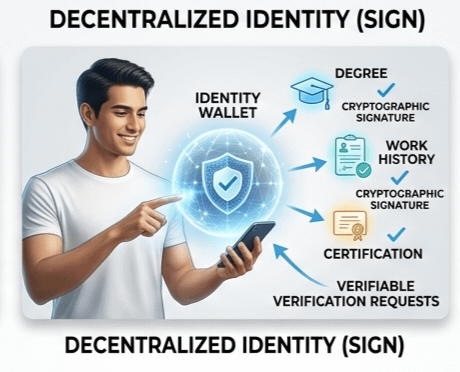
The idea is simple, at least on the surface. Instead of relying on institutions to manually verify everything about you every single time, SIGN turns your credentials into something instantly verifiable. Your degree, your work history, your certifications they become cryptographic proofs. You store them yourself, in a digital wallet, and when someone needs to check them, they just… verify the signature.
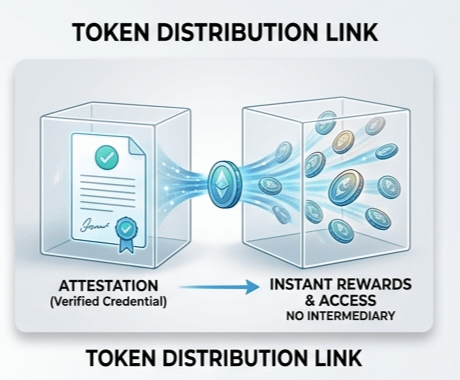
No emails. No waiting. No middleman.
I’ll be honest, that sounds almost too clean. But that’s what pulled me in.
As I kept digging, I realized SIGN isn’t just about verification. That’s only half the story. The other side is token distribution. And yeah, I know, “tokens” gets thrown around a lot in crypto, but this felt different.
These tokens aren’t just about money. They can represent access, rewards, even participation in digital systems. So when your credentials are verified, that action itself can trigger something. You get access to a platform, you earn rewards, maybe you unlock opportunities automatically.
That connection between identity and value… that’s where it clicked for me.
And apparently, this isn’t just some small experiment. SIGN has already processed millions of credential attestations. That number alone made me take it more seriously. On top of that, billions of dollars worth of tokens have been distributed to tens of millions of users. That’s not early-stage noise. That’s real activity.
Still, I had to understand how it actually works, not just what it claims.
So here’s how I see it.
At the core, there’s something called decentralized identity. Instead of your identity being held by a government or a company, you control it. It’s yours. Then there are verifiable credentials, which are basically digitally signed proofs issued by trusted organizations. You keep them, not the issuer.
And when someone wants to verify something about you, they don’t ask the organization again. They just check the cryptographic signature. It’s instant.
On top of that, smart contracts handle the token side. Conditions are set, and when those conditions are met, tokens move automatically. No approvals, no delays.
I like the logic of it. It feels efficient. But I can’t ignore that it also feels like a big shift.
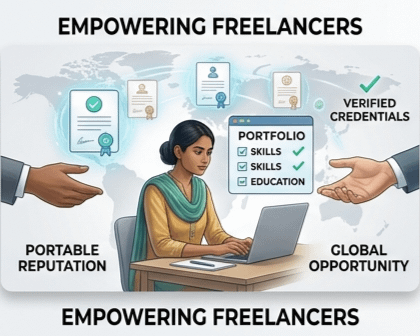
I started thinking about freelancers, especially in places like here in Pakistan. I’ve seen how talented people struggle not because they lack skills, but because they can’t easily prove them to the right people. So they depend on platforms that act as trusted intermediaries and take a cut.
If something like SIGN actually works at scale, that dynamic changes. Your reputation becomes portable. Your credentials speak for themselves. You don’t need permission to prove your worth.
That’s powerful.
But yeah, I’m not fully sold without questioning it.
Privacy is the first thing that came to my mind. Even if everything is encrypted, I still have to decide what I share and when. I don’t want my entire identity exposed just to prove one qualification. That’s where things like zero-knowledge proofs come in, letting you prove something without revealing everything else. It’s a great idea, but I get the feeling it’s still evolving.
Then there’s regulation. Governments don’t exactly move fast, and crypto has always been a bit of a gray area. Some regions are trying to create structure, others are still figuring it out. That uncertainty can slow down adoption, no matter how good the tech is.
And I keep thinking about access too. Not everyone has the tools or understanding to manage digital wallets and identities. If this system ends up benefiting only people who are already ahead, then it misses something important.
But even with all that, I can’t ignore the bigger idea behind it.
For so long, we’ve trusted institutions to define who we are. They issue our IDs, our degrees, our records. They hold the power to verify us. SIGN flips that and says maybe the system itself can handle trust.
I don’t know if I’m completely comfortable with that yet. Part of me still leans toward traditional systems because they feel familiar. But another part of me sees how inefficient they’ve become.
I also noticed how the market reacted. The token associated with SIGN saw a huge surge recently. That kind of movement usually means attention, speculation, maybe belief. But I’ve been around long enough to know that price spikes don’t always mean long-term success. Sometimes they’re just excitement getting ahead of reality.
So I’m left somewhere in the middle.
I like what SIGN is trying to do. I see the potential. I see how it could make things smoother, faster, more fair in some cases. But I also see the gaps, the uncertainties, the human hesitation that always comes with big shifts.
Maybe this becomes something we use every day without even thinking about it. Or maybe it stays an experiment that never fully crosses into the mainstream.
I guess what I keep coming back to is this… if I really had the choice today, would I trust a decentralized system with my identity more than the institutions I’ve grown up relying on?
I’m not sure yet. Are you?
