In crypto, most people obsess over technology—ZKPs, privacy layers, scalability metrics. I used to do the same. But when I started analyzing SIGN, I realized something important: this isn’t just a technical project. It’s a macro-level play on how the global financial system is evolving.
And that completely changed how I see it.
What caught my attention first wasn’t the whitepaper—it was the capital behind it. Seeing names like Tim Draper, Changpeng Zhao, and the three independent arms of Sequoia Capital (U.S., China, and India) on the same early investment table felt almost unreal.
Let’s be honest—these are players shaped by very different geopolitical realities. In traditional finance and politics, they don’t always align. Yet here, they converged on SIGN. That alone signals something deeper than just a promising startup.
To me, it points to a single underlying truth: SIGN is addressing a structural gap that no single system currently solves.
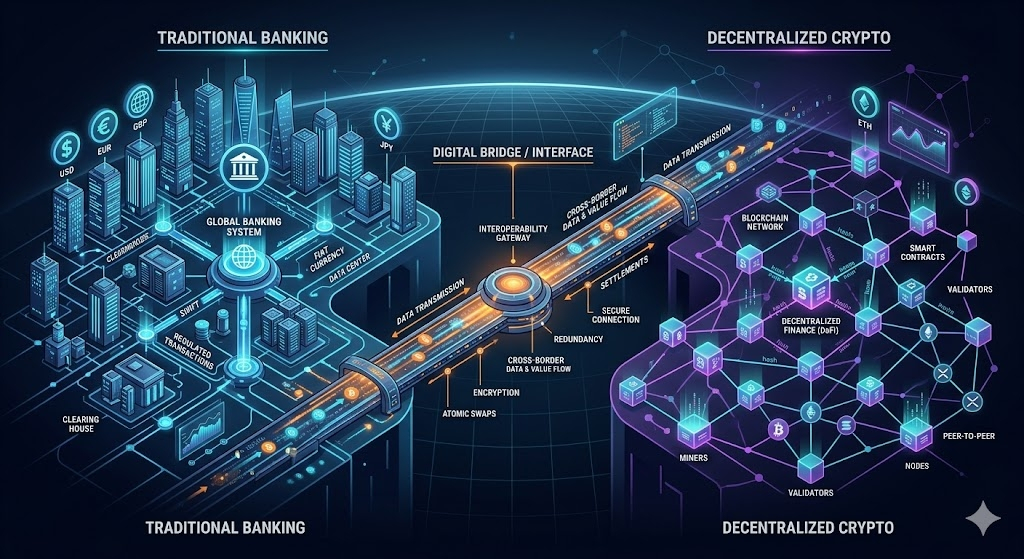
We are no longer living in a world moving toward one unified financial order. Instead, we’re entering an era of fragmentation. Countries and regions are building parallel systems—some tied to the dollar, others experimenting with local currencies, and many exploring digital assets and CBDCs simultaneously.
Take regions like the Middle East, Central Asia, and parts of Africa. These are not fully integrated into the traditional dollar-dominated system, yet they also cannot independently build a complete alternative. What they need is not replacement—but connection.
This is exactly where SIGN positions itself.
Unlike legacy systems such as SWIFT, which operate within a fixed financial order, SIGN is designed to function in the spaces between systems. It doesn’t try to compete directly—it builds an interface layer that allows multiple financial ecosystems to coexist and interact.
And this is where the narrative becomes powerful.
Recent developments in global finance only reinforce this direction. We are seeing increasing momentum around central bank digital currencies (CBDCs), cross-border settlement innovation, and regional payment networks. Pilot programs in emerging markets, combined with growing interest in blockchain-based identity and compliance layers, highlight a clear trend: the future will not be dominated by a single system, but by interconnected ones.
SIGN fits directly into this shift.
From my perspective, what SIGN is really offering is redundancy. Not in a negative sense, but as a strategic necessity. In a world where financial access can be restricted, sanctioned, or disrupted, having an alternative pathway is no longer optional—it’s essential.
This aligns perfectly with how nations are thinking today. They are not abandoning existing systems, but they are preparing for scenarios where those systems may not be accessible. Energy may still be settled in dollars, but parallel mechanisms are being built quietly in the background.
SIGN becomes that second path.
And this explains why such diverse investors are aligned. Tim Draper is betting on decentralization at a global scale. Changpeng Zhao sees the expansion of crypto infrastructure into sovereign-level use cases. Meanwhile, regional venture arms recognize the opportunity to support new financial corridors in their respective markets.
They don’t need identical views—they just need to agree on one thing: the world is no longer converging into a single system.
For retail investors, it’s easy to focus on features like privacy, identity, and zero-knowledge technology. And yes, those are important. But in my view, they are not the core variable.
The real question is simple:
Will the global financial system continue to fragment?
If the answer is yes—and all signs suggest it will—then infrastructure like SIGN, built to operate in the gray areas between systems, becomes not just relevant, but critical.
This is why I don’t see SIGN as just another crypto project.
I see it as a long-term macro bet on the future architecture of global finance.
And in a world that’s increasingly divided, the platforms that connect those divisions may end up being the most valuable of all.