
I’ve been looping on this for weeks and something feels off in a good way.
@SignOfficial Protocol isn’t really an attestation tool. It’s closer to an evidence constraint system. Big difference.
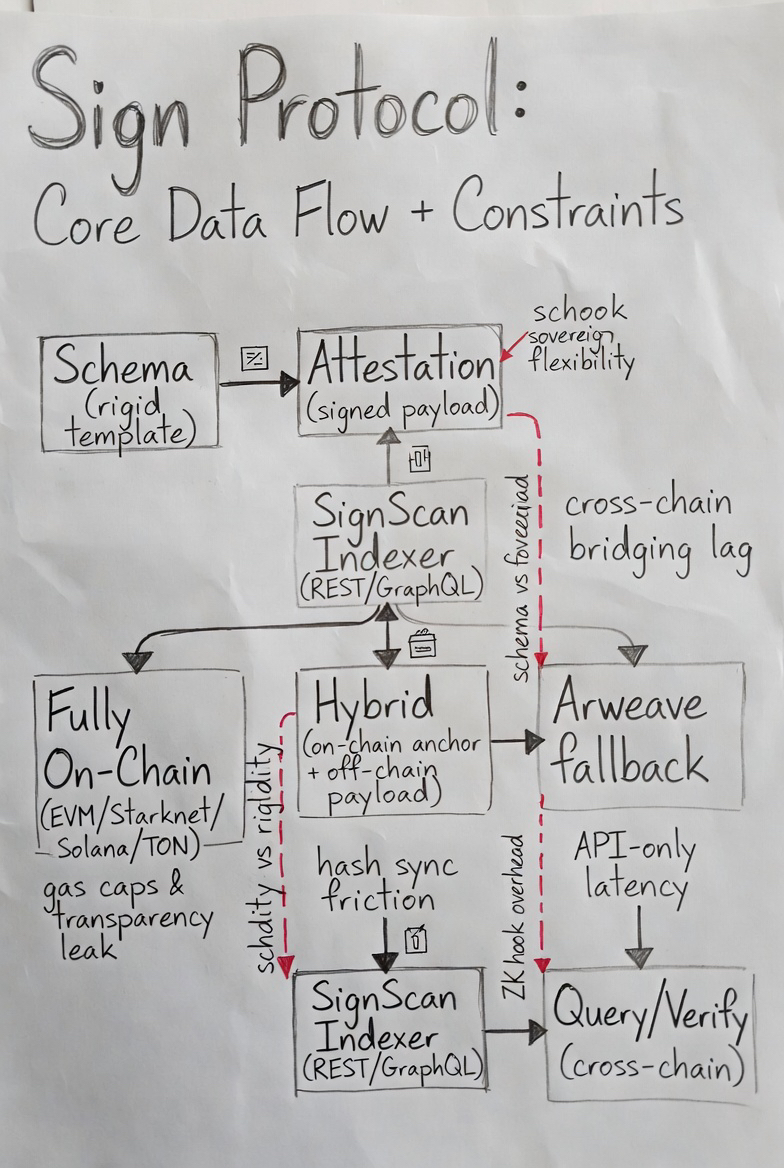
Schemas are where it starts. And yeah people treat them like just structure…but they’re not flexible at all. One schema = one idea. That rigidity is doing heavy lifting.
But then you think about a government trying to update a national ID format halfway through rollout
it’s not a patch. It’s basically a fork or migration pain. No clean middle.
That part feels intentional. Still messy at scale.
Attestations themselves are simple on paper. Signed data tied to a schema.
But storage choice leaks into everything.
Full on chain sounds nice until gas turns into national infra cost.
Hybrid works better but now you’re quietly depending on off-chain persistence not breaking.
Arweave route is cleaner, but introducing external calls into something that’s supposed to be pure verification idk, trade offs stack.
Then the ZK hooks.
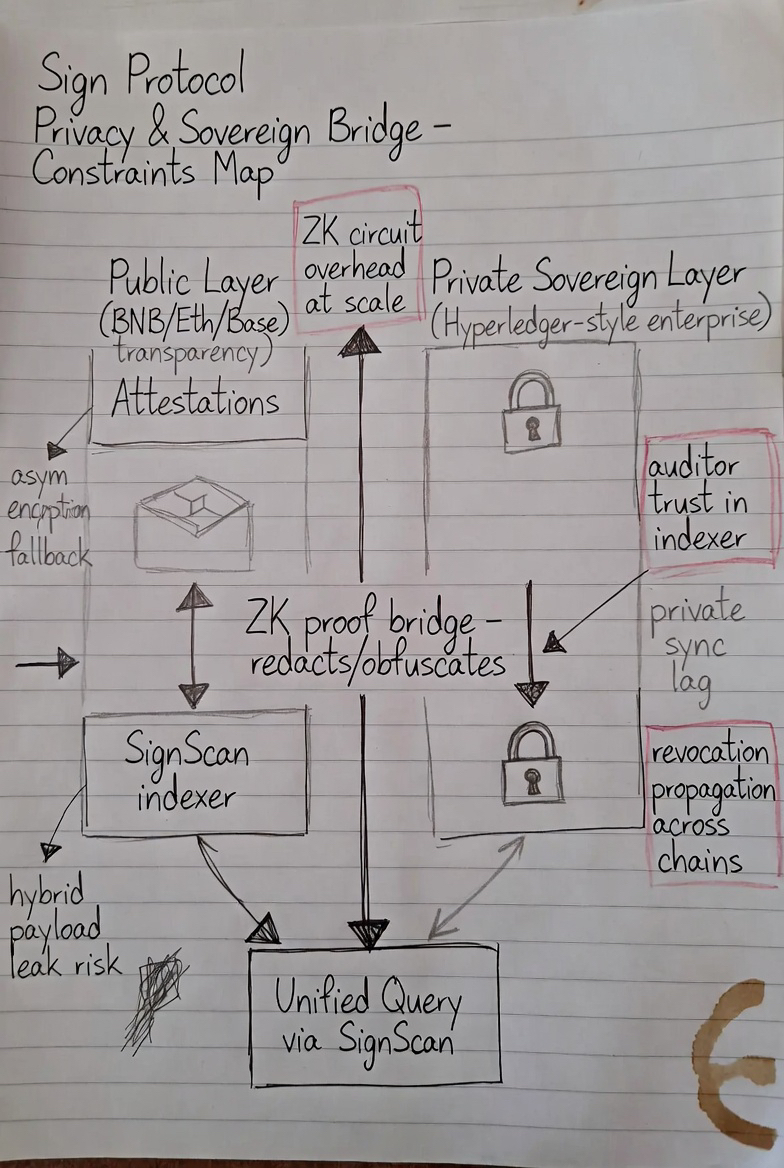
This is where it gets interesting but also heavy.
Selective disclosure is powerful, especially for state systems. You can prove something without showing the whole record.
But every circuit adds latency. Proof generation isn’t free.
At millions of attestations a day I’m not fully convinced the curve stays smooth.
Maybe it does. Maybe not.
Verification layer kind of narrows everything.
In theory you can read contracts directly. In practice, no one will at scale.
Everything routes through SignScan.
That’s the convenience layer. Also the pressure point.
If that indexing layer slows down or throttles, the whole queryable truth idea starts to feel less real-time than advertised.
Not broken. Just constrained.
Token side is also more real than people admit.
$SIGN isn’t just governance fluff. It meters creation, execution, querying.
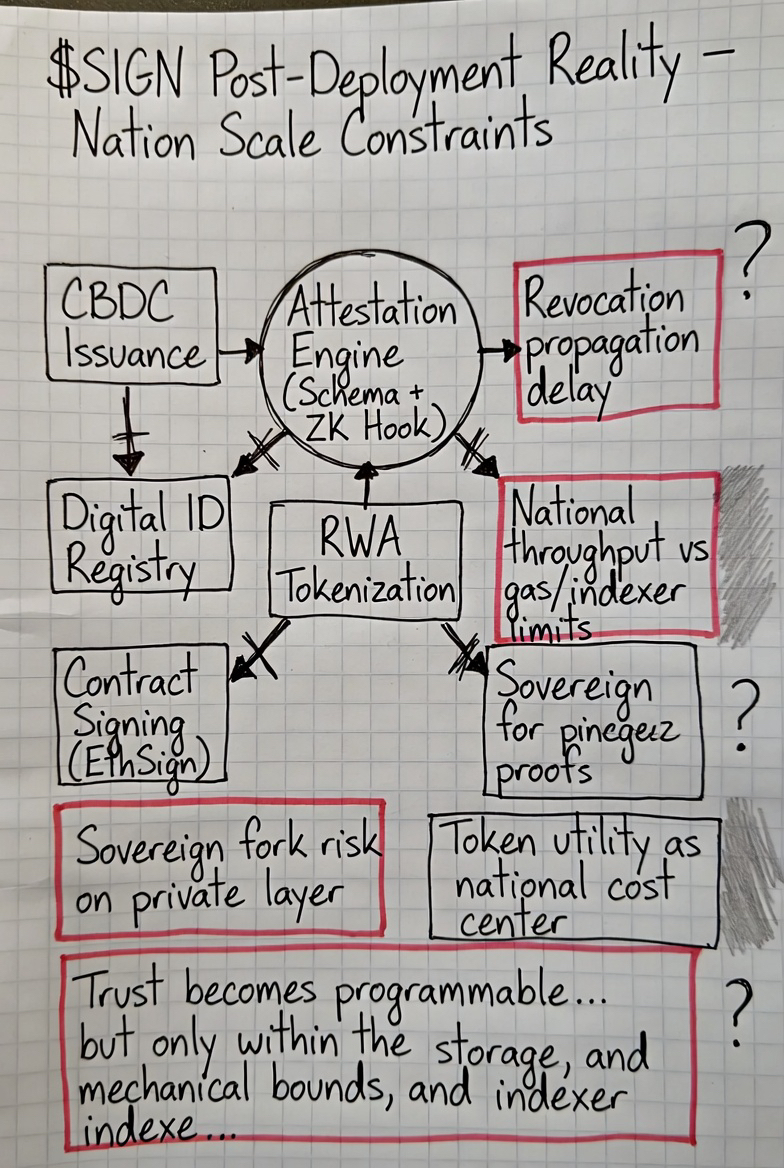
At small scale it’s invisible. At national scale it becomes a throughput limiter.
Which is weird to think about your ability to produce truth tied to token economics.
After that, things don’t break instantly. They just get tight.
You have IDs, payments, distributions all flowing.
TokenTable handling schedules. Attestations recording everything.
Looks clean from far away.
But then revocations pile up.
Schemas need upgrades.
Cross-chain verification starts lagging behind governance speed.
That’s where friction shows up. Not at launch.
I keep landing on the same thing.
This system doesn’t try to remove constraints. It forces everyone into them schemas, storage choices, proof costs, indexing.
And yeah that’s probably why it works at all.
Just not sure people are pricing in what happens when millions actually depend on it daily.
That’s the part worth watching.
#SignDigitalSovereignInfra $SIGN
