

I’ve been thinking about how often we’re asked to prove who we are.
Not in a dramatic way—just the everyday stuff. Logging into accounts, uploading documents, sending screenshots of certificates, waiting for someone on the other side to say, “yes, this checks out.” It’s kind of funny when you notice it. So much of modern life is just… proving things over and over again.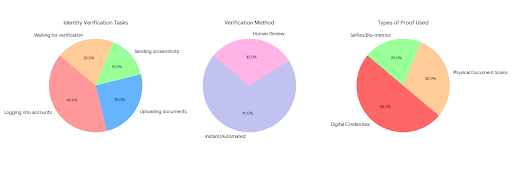
That’s why the idea behind something like SIGN caught my attention. A global system where your credentials—your identity, your skills, your records—can be verified instantly. No back-and-forth emails. No waiting days for approval. Just… done. Clean and simple.
At first, it sounds like a relief.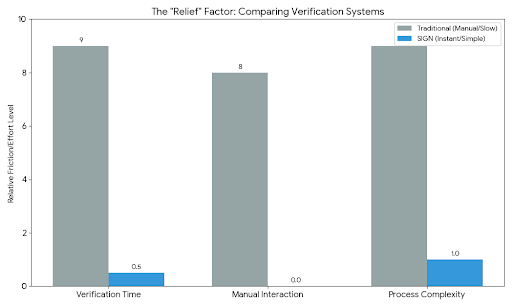
I imagine a world where you don’t have to dig through old folders to find a document, or worry about whether someone will accept your proof. Everything is just there, already verified, ready to be used anywhere. There’s something very appealing about that kind of smoothness. Life feels lighter in that version of the world.
But then I start thinking a little deeper, and things get less straightforward.
Because who decides what gets counted as a “real” credential in a system like that?
It’s easy to say everything will be verified, but verified by who? And based on what standards? Even today, not all credentials are treated equally. Two people can have the same skills, but if one has a certificate from a well-known place and the other doesn’t, they’re seen differently. That’s not really about truth—it’s about perception.
So I wonder… does a system like SIGN fix that, or does it just make it more official?
There’s also something slightly uncomfortable about having everything tied together in one place. All your achievements, your identity, your history—neatly packaged and always accessible. On one hand, it’s convenient. On the other, it feels a bit like you’re always being watched, even if no one is actively watching.
And then there’s the idea of tokens—this part feels even more abstract to me. Turning credentials into something that can be distributed, maybe even traded or rewarded. I get the logic. It creates incentives. It gives value to participation.
But I also wonder what happens when everything starts to feel like it has a score attached to it.
Do people start doing things because they care, or because it earns them something? Do we slowly shift into measuring ourselves through systems instead of just… living and learning naturally?
I don’t think the idea is bad. In fact, parts of it make a lot of sense. The current way we handle verification is messy, slow, and sometimes unfair. A better system would genuinely help a lot of people, especially those who struggle to get their credentials recognized.
But I can’t shake the feeling that something important might get lost along the way.
Maybe it’s the human side of things. The context, the stories behind achievements, the parts that don’t fit neatly into a system. Not everything meaningful can be verified or tokenized, and I worry that those things might start to matter less.
At the same time, I know we can’t just stay where we are. The world is moving toward more digital systems, whether we’re fully comfortable with it or not. Something like SIGN feels less like a wild idea and more like a direction we’re already heading in.
So I guess I’m somewhere in between.
Part of me likes the simplicity it promises. The other part keeps asking quiet questions in the background. Not loud enough to reject it, but enough to stay cautious.
Maybe that’s the right place to be for now—interested, but not completely sold.