
I woke up in the morning and saddenly a thought came to me, to be honest, I've been th
inking about something for a while now... What exactly @SignOfficial trying to build - I was trying to understand this a little deeper. What exactly @SignOfficial trying to build - I was trying to understand this a little deeper. At first, I thought, okay... another attstation layer, nothing new in crypto. But after reading for a while, I realized that real game here is somewhere else. When we usually say "digital ID", we imagine a system - a database, where all the information is stored. But reality is completely different. No country starts from scratch. There are already many things - birth registration, NID, bank KYC, passport database... but they don't work together. Each one is a separate island. This is where Sign is thinking a little differently. They are saying that - there is no need to build everything anew. Instead, build a layer that will connect them. I mean... not replace, integrate. But here the question arises - this "connecting" thing has tried before. Why doesn't it work? They talked about three models - centralized, federated, wallet-based.And honestly…
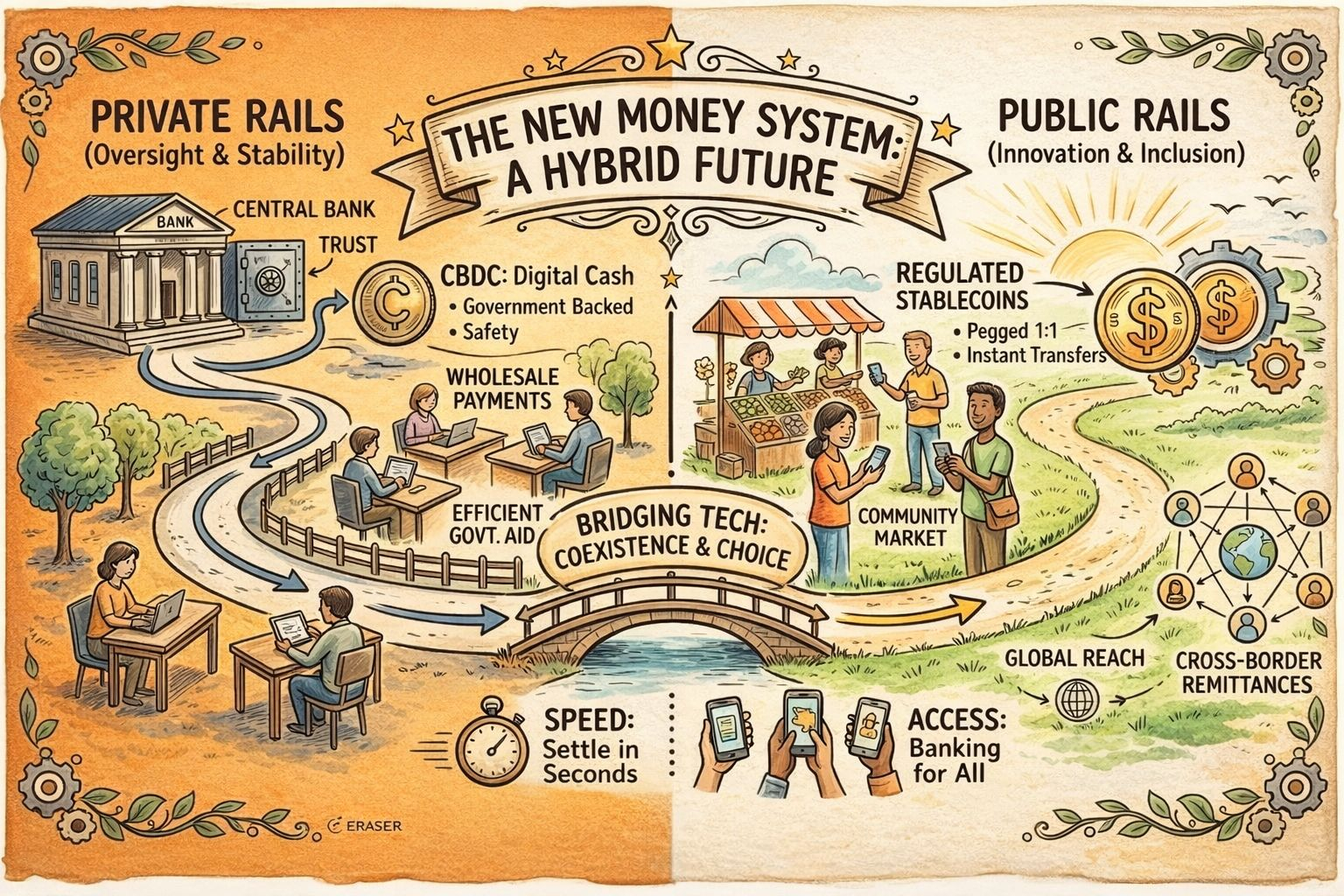
All three models have some problems. In the centralized model, it's easy. Everything is in one place. But at the same time, it is a big problem. If everything is in one place, it means it is a huge target. Hack, misuse – everything is there. There is an interesting point by Sign. Do not keep it to yourself; give it to the user... but in the form of credentials. That means... less database; more proof. In the federated model, there is a different problem. In this model, one system talks to another system. But there is a broker between them. And honestly, that broker knows everything. Where did you log in? What did you verify? Everything is traceable. There is a point by Sign about direct verification. Getting rid of unnecessary observers between the issuer and the verifier. It sounds good… but how well it can be done is also an open question. In the wallet model, there are some interesting points. It is personally the most interesting model to me. In this model, the user has his own credentials in the wallet. It sounds powerful. But at the same time, there is a big problem. What used to happen before -
If you wanted to prove your age, you would need to show your entire NID. That means exposing a lot of information that is not really needed. But here, Sign says no more. Just prove that you are 18+. Simple. Or at least, it sounds simple. But really, it is a paradigm shift. Because here, data is not being shared. The condition is being proved. And that is where ZKP comes into play. Zero knowledge proof. Well, this thing was a little abstract to me until now. But here, it makes a lot of sense. You are going to prove that this is valid. But not share the data. Well, the system trusts you. But not taking your data. Well... this is the part of the system that I personally think is the most interesting. It is all about privacy. No, it is controlled exposure. But there is a tension here. Because who is going to define the proof? Well... what is going to be considered true and what is not going to be true. That is a tough one. That is where the schema system of Sign comes into play. It is being Another thing I noticed -
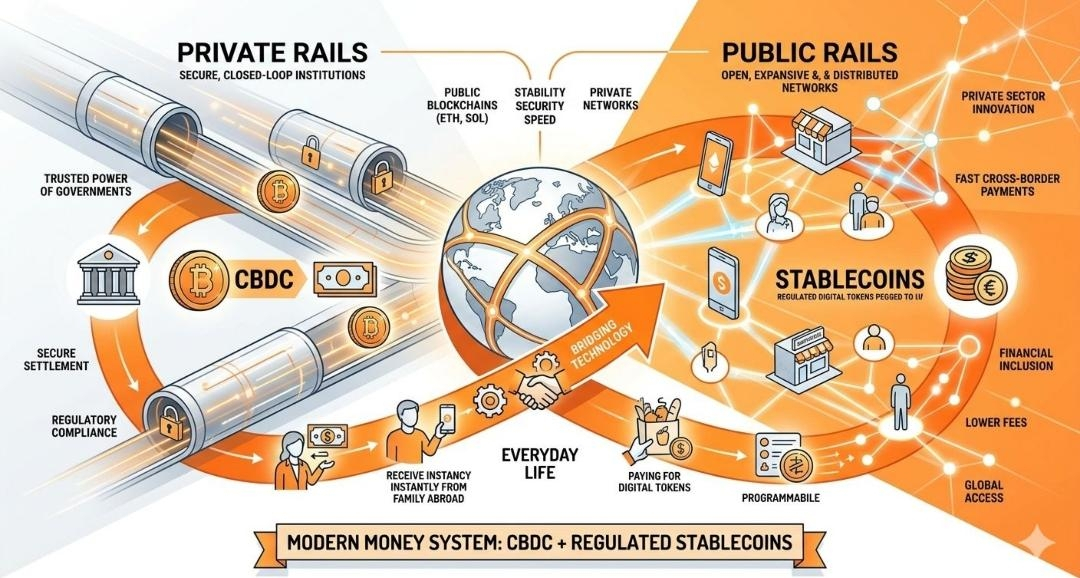
@SignOfficial actually wants to reduce data flow, wants to increase proof flow. I mean, what used to be - data everywhere. Now, they are saying - data stay, proof move. This is theoretically very clean. But, you know, will it be accepted by systems or not? Because, you know, companies have been able to create value by collecting data. Now, if they do not have data, will they be able to work on proof only? This is not an easy transition.
Another side - economic side. If everything is based on proof, then cost of infrastructure, cost of computation, cost of verification - all this will increase. It is not cheap, ZKP. It means architecture is strong, but cost dynamics are not clear...
In the end, what I feel is-
@SignOfficial is not a product. They want to develop a base layer. A trust fabric... that will allow the connection of systems, without the exposure of data. The idea is great. The execution is difficult. And, honestly speaking... assessing this kind of project is a bit tricky. Because it should not be assessed based on hype, and it is not right to ignore this one. I am not fully convinced, but I am not fully dismissing this one, too. Because the problem is real. And at least, they have identified the problem in the right place. The rest is just execution. But this is one place to see, really. I am tho obak 🚀
