
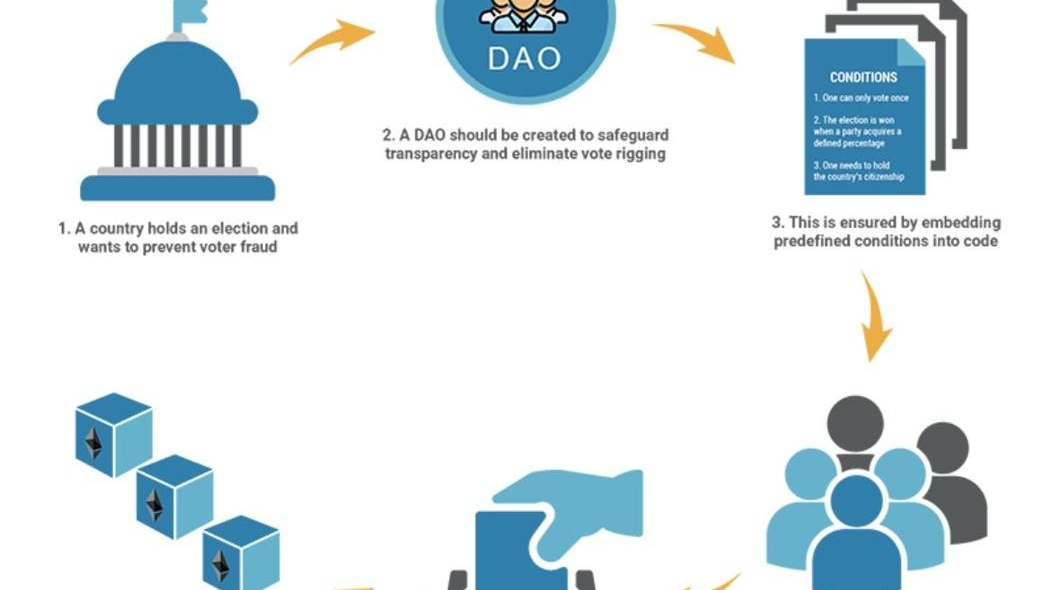

Decentralized governance has long been one of the core promises of the crypto industry. However, recent criticism is raising questions about whether current systems truly reflect decentralization.
A study of decentralized autonomous organizations (DAOs) revealed that a single large token holder can influence up to 35% of voting outcomes. This raises concerns about fairness and the concentration of power within supposedly decentralized systems.
Ethereum ($ETH ), which hosts the majority of DAO projects, plays a central role in this discussion. While it provides the infrastructure for decentralized governance, the design of voting systems remains a challenge.
Bitcoin ($BTC ), on the other hand, operates differently. Its governance is more conservative and community-driven, relying on consensus rather than token-based voting. This approach reduces the influence of large holders but also slows down decision-making.
Solana ($SOL ) and other emerging ecosystems are experimenting with new governance models, aiming to strike a balance between efficiency and decentralization. These innovations could shape the future of how decisions are made in crypto networks.
The issue of token concentration highlights a broader challenge: decentralization is not just about technology — it’s about distribution. If a small group holds a large percentage of tokens, true decentralization becomes difficult to achieve.
Despite these concerns, DAOs remain an important experiment in governance. They offer a new way of organizing communities and managing resources without centralized control. The current limitations may simply represent an early stage of development.
In conclusion, the debate around token voting is a reminder that the crypto industry is still evolving. As new models emerge, the goal will be to create systems that are both fair and efficient.


💬 Do you think DAO governance needs a complete redesign or just improvement?
#BinanceSquare #DriftProtocolExploited #Write2Earn #crypto #defi