
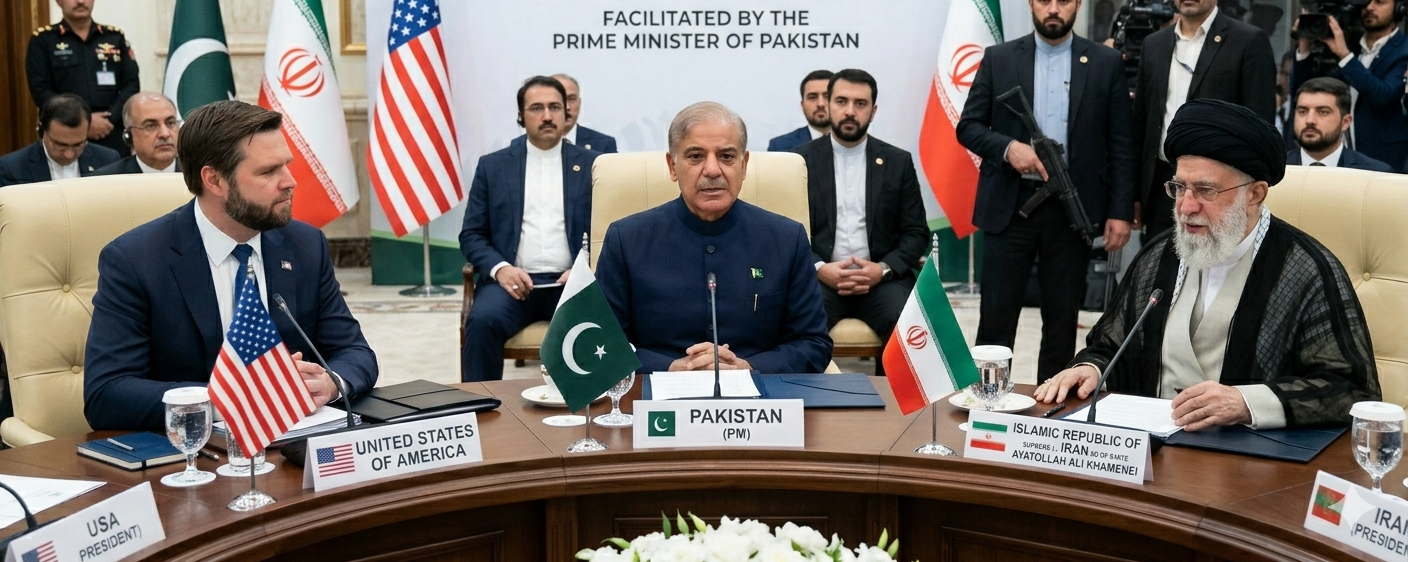
Diplomatic Breakthrough: U.S.–Iran Negotiations Commence in Islamabad
ISLAMABAD — In a landmark shift for regional stability, high-level discussions between the United States and Iran have officially transitioned from back-channel signaling to formal negotiations in Pakistan’s capital. The U.S. delegation, led by Vice President JD Vance, is engaging in a strategic dialogue aimed at de-escalating long-standing regional tensions.
The Strategic Mandate
The summit’s agenda is centered on four critical geopolitical objectives:
• Energy Security: Negotiating the unconditional reopening of the Strait of Hormuz to stabilize global oil prices.
• Non-Proliferation: Establishing enforceable limits on Iran’s nuclear enrichment activities.
• Economic Reciprocity: Discussing a framework for sanctions relief contingent upon verifiable compliance.
• Ceasefire Consolidation: Transforming the current fragile cessation of hostilities into a permanent regional peace agreement.
Pakistan’s Intermediary Role
Serving as the primary mediator, Pakistan has provided a secure and neutral environment for these delicate proceedings. By facilitating indirect communication between the two delegations, Islamabad’s diplomatic corps is playing a vital role in bridging the trust deficit that has historically hindered direct U.S.–Iran engagement.
The Path Ahead
While the atmosphere remains cautious, the initiation of these talks represents a significant milestone. The success of the Islamabad Summit will ultimately depend on whether both parties can reconcile national security requirements with the mutual benefits of economic and maritime stability.
Support My Work
Found this analysis insightful? Follow for professional updates, like this post to boost its reach, and consider leaving a Tip to support my independent reporting. Thank you for your support!