
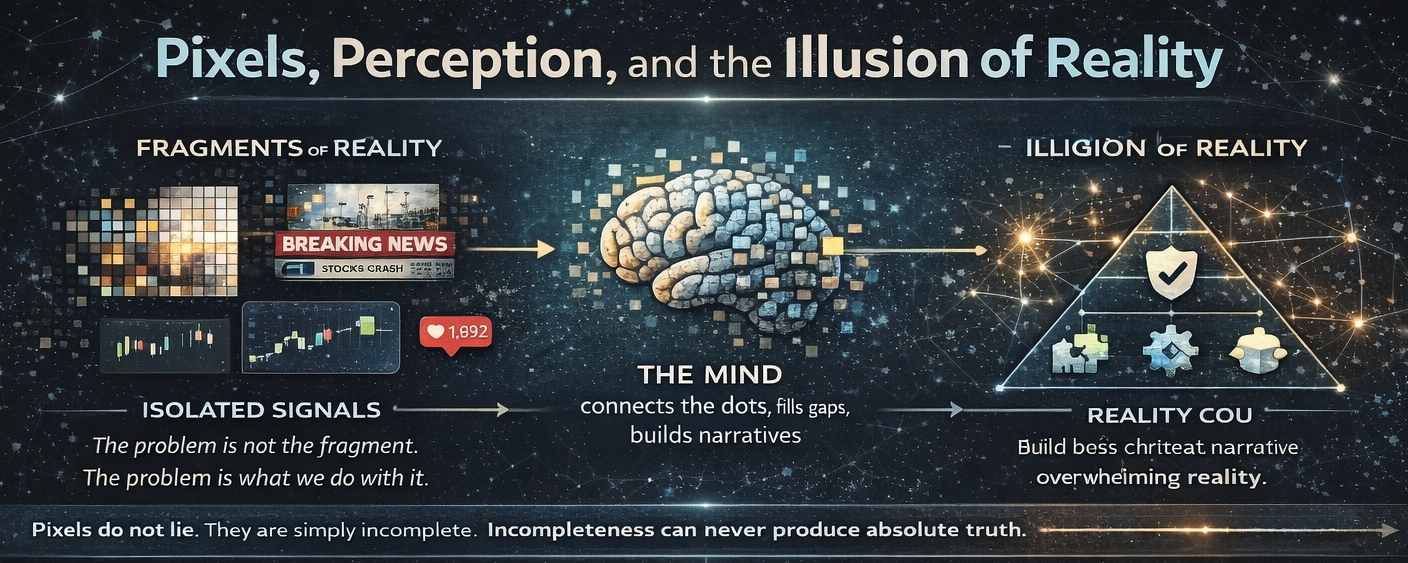

. То, что мы переживаем, не является полной картиной, а лишь фрагментами — маленькими, несвязанными сигналами, которые наши умы пытаются собрать во что-то целостное.
Пиксель сам по себе не является истиной. Он не несет смысла без структуры, нет уверенности без контекста. Тем не менее, в сегодняшнем мире мы в значительной степени полагаемся на эти «пиксели» информации — посты в социальных сетях, рыночные графики, срочные заголовки. Каждый из них является образцом, а не целым.
Проблема не в фрагменте. Проблема в том, что мы с ним делаем.
Человеческий ум настроен на завершение паттернов. Он заполняет пробелы, соединяет точки и строит нарративы — даже когда исходные данные неполные. Здесь восприятие расходится с реальностью. Мы не просто наблюдаем информацию; мы интерпретируем ее, часто принимая нашу сконструированную версию за абсолютную истину.
На рынках это становится еще более опасным. Одна зеленая свеча указывает на импульс. Заголовок подразумевает уверенность. Вирусный пост создает убежденность. Но ничто из этого не представляет собой полную систему — это лишь ее фрагменты.
Истинное доверие не возникает только от видимости. Видеть больше не значит понимать больше. Доверие строится через структуру — через системы, которые связывают фрагменты, проверяют их и ограничивают их значение в надежной рамке.
Слабые системы приравнивают экспозицию к истине. Они усиливают шум, создавая иллюзию ясности. Сильные системы, однако, организуют хаос. Они берут неполные сигналы и преобразуют их во что-то полезное, что-то основанное.
@Pixels Не лгите. Они просто неполные.
И неполнота никогда не может производить абсолютную истину.
Понимание этого — разница между реакцией на шум и навигацией по реальности.
